

On this page
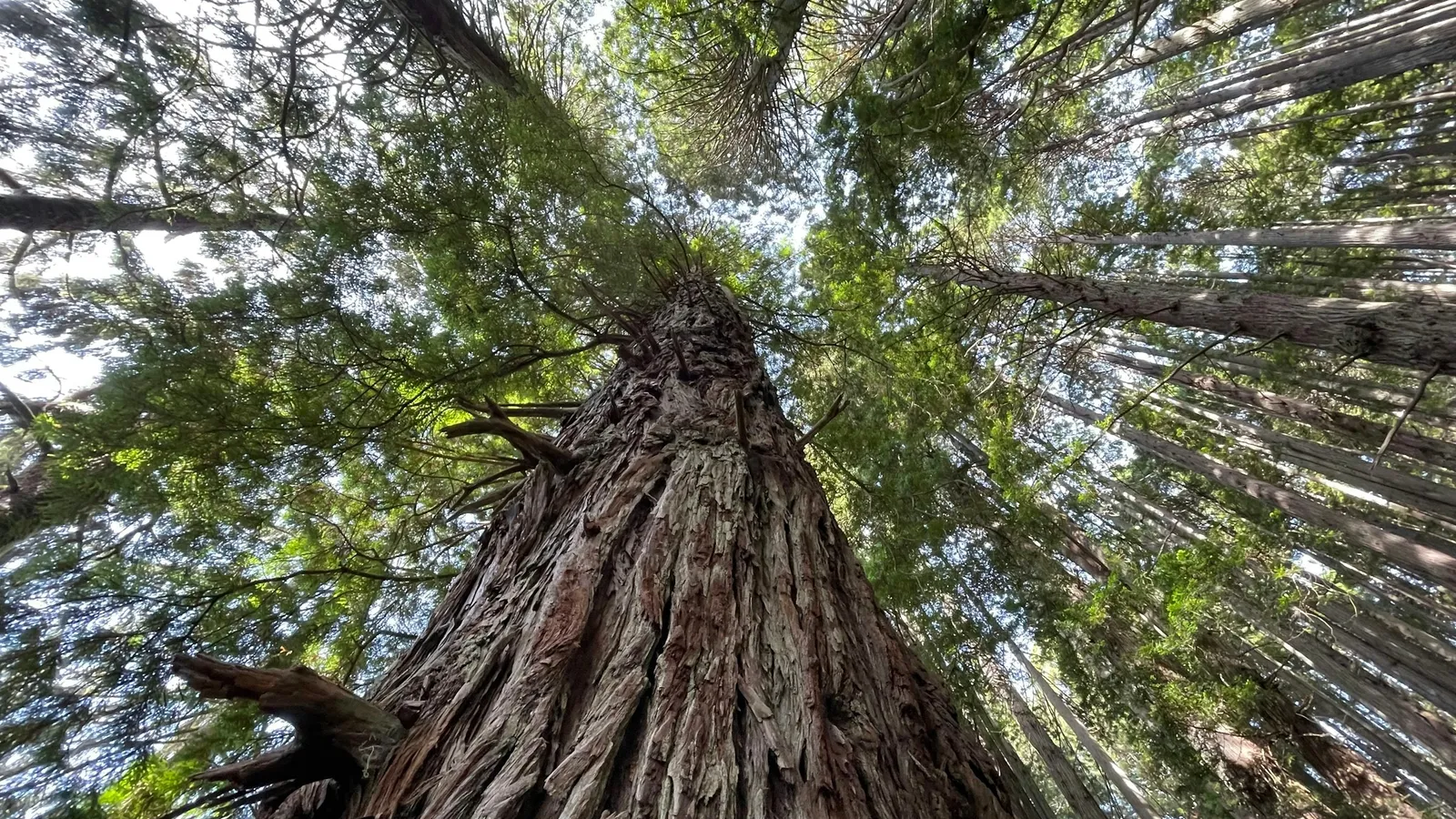
A tall tree lifts water to its highest leaves with no pump. Root pressure matters mainly at night, and sap keeps rising in tall trees when root pressure is not acting at all. In 1894 a young botanist and a physicist in Dublin proposed the answer your Class 10 textbook calls transpiration pull. This post shows how they argued for it, what they measured, and how to check their numbers with the physics you already know.
Who were Dixon and Joly?
Henry Horatio Dixon (1869 to 1953) and John Joly (1857 to 1933) both worked at Trinity College Dublin; the dates come from their Royal Society obituary notices. Their paper "On the Ascent of Sap", read to the Royal Society on 15 November 1894 and published in the Philosophical Transactions in 1895, lists Dixon as assistant to the Professor of Botany and Joly as already a Fellow of the Royal Society.
They write that the problem caught their attention in Bonn in the summer of 1893, when the botanist Eduard Strasburger showed them his experiments. As their 1894 preliminary note explains, Strasburger had ruled out living cells as the pump, leaving only the dead conducting tissue and the leaf.
What exactly did they propose?
Their theory, in their own framing, was that the suction of the leaf is the all-sufficient cause of the rise of sap. It works not by changing gas pressure but by putting a simple tensile stress on the liquid in the conduits. Their analogy was a porous pot with extremely fine pores: water evaporates from tiny curved surfaces in the pores, and the column below is pulled up to replace it, held together because water can withstand being stretched.
For this to work, two things had to be true:
Leaves must be able to keep evaporating water even when strongly opposed.
Water in the conduits, which contains dissolved air, must hold together under tension instead of snapping.
How did they test the leaf's pull?
They sealed leafy branches of maple and lime inside a thick glass receiver, with only the cut stem outside in a weighed tube of water, and pumped the air inside up to 3 atmospheres. The leaves kept transpiring. With the stem at 1 atmosphere and the leaves at 3, the leaves were working against 2 atmospheres of extra pressure.
You can convert that to a water column with p = ρgh:
Extra pressure: 2 × 101,325 Pa = 202,650 Pa
Height: h = p ÷ (ρg) = 202,650 ÷ (1000 × 9.81) ≈ 20.7 m
That matches their statement that the evaporating surfaces kept working at a pressure equal to about 20 metres of water.
Can water really be stretched?
Next they sealed water, deliberately left with dissolved air, in glass vessels with a small bubble, heated them until the bubble dissolved, then cooled them so the water was put under tension. Chips of yew wood were sealed in to see if wood surfaces would make the water break. It never broke at the wood, only at the glass or in the liquid.
In their most careful run, the bubble that formed on breaking had a volume of 0.041 cm³. Separate tests showed that one atmosphere of tension corresponded to 0.0058 cm³ in vessels of that size. Dividing gives 0.041 ÷ 0.0058 ≈ 7.1, and they concluded the stress was probably close to 7 atmospheres.
Their final step: 7 atmospheres can support a column of 7 × 101,325 ÷ (1000 × 9.81) ≈ 72 m. They put it as enough for sap in a tree 70 metres high.
Where does cohesion-tension stand today?
The name cohesion-tension captures both halves: cohesion keeps the water column continuous and tension pulls it. A 1997 review by Melvin Tyree examined challenges from pressure-probe experiments in the 1990s and concluded that much of the current evidence went against those challenges, while calling for further tests.
For Indian students, NCERT Class 10, Chapter 5 (Reprint 2026-27) explains that evaporation from leaf cells creates a suction that pulls water from root xylem, and that root pressure matters more at night while transpiration pull dominates in the day. Transport in plants is not in the NEET-UG 2026 syllabus, so check your own board or exam syllabus for the current year.
Common mistakes:
Saying water is pushed up by the leaves. It is pulled; the column is under negative pressure.
Mixing up root pressure and transpiration pull, or their times of day.
Using 1 atm ≈ 10 m of water without stating it. Show ρgh so the examiner sees the physics.
What can a student take from Dixon and Joly?
A botanist and a physicist together asked a question neither field would have settled alone. They named what their theory needed, tested its weakest assumption directly, and reported the limits of their rough apparatus honestly. If the pressure arithmetic is where you lose marks, the Fermi Problem Library has a step-by-step solver that explains the reasoning rather than printing an answer. For the earlier history of this question, read about Stephen Hales and transpiration.
Today, calculate the height of water that 3 atmospheres of tension could hold, then say in one line why a single air bubble in a vessel could break the column.


