

On this page
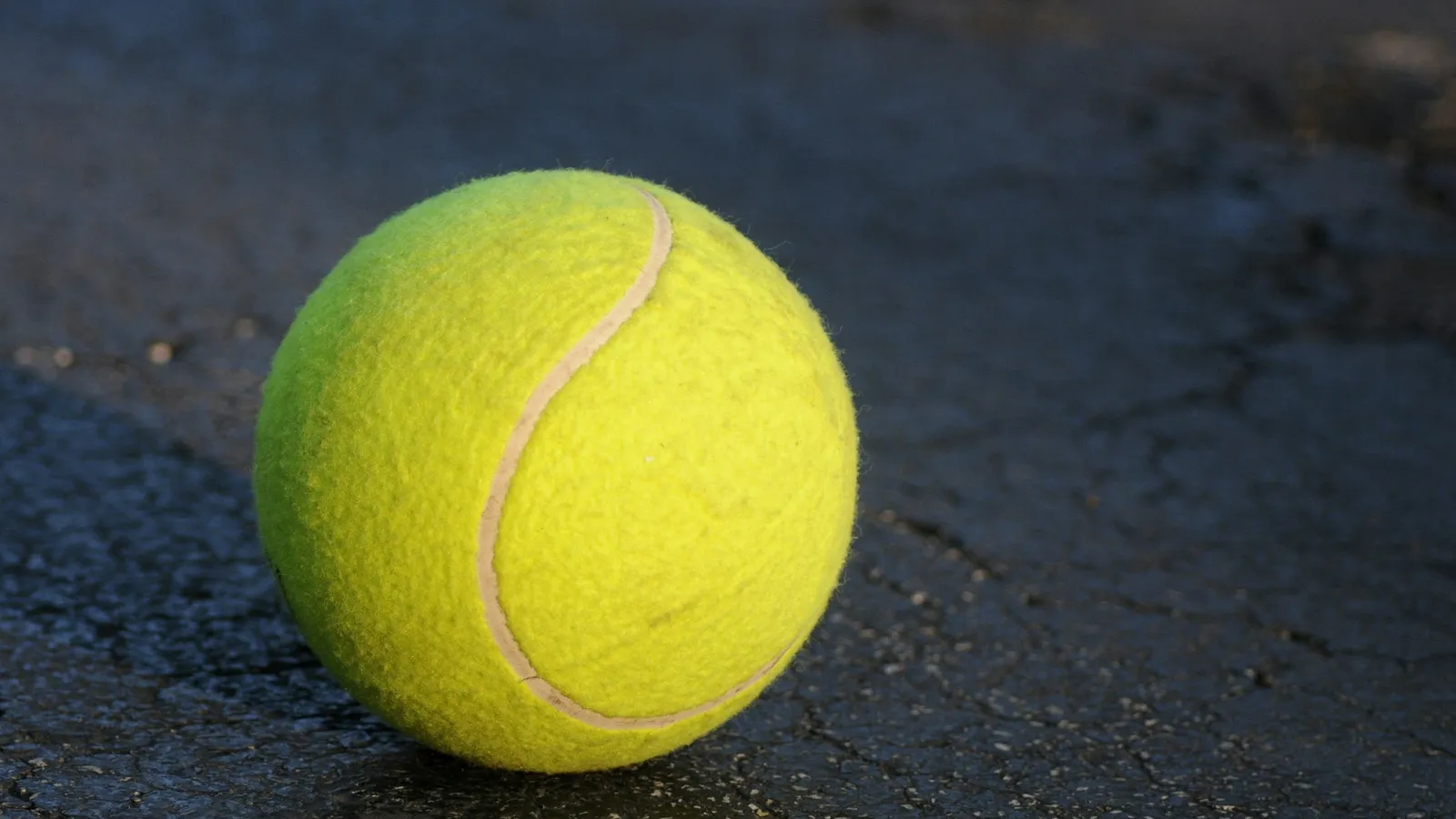
A spinner makes a cricket ball drift, a footballer bends a free kick, a table-tennis player adds topspin. NCERT's Class 11 fluids chapter names the force behind all of these the Magnus effect. This post covers who Gustav Magnus was, what he actually showed, why spin produces a sideways force, and a worked calculation using NASA's ideal-flow formula.
Who was Gustav Magnus?
The Neue Deutsche Biographie, the standard German biographical dictionary, records that Heinrich Gustav Magnus was born in Berlin on 2 May 1802 and died there on 5 April 1870. He studied chemistry at the University of Berlin from 1822 and took his doctorate in 1827 with a thesis on tellurium. He then trained with the Swedish chemist Jöns Jacob Berzelius in Stockholm before returning to Berlin, where he became a full professor in 1845.
He was an important teacher. From 1843 he hosted a physics colloquium in his house; some younger members wanted to meet more freely, and in 1845 they founded the Berlin Physical Society. In 1863 he opened a physics laboratory in his own home, and almost 50 papers came out of it in his last seven years. His students included August Kundt and Emil Warburg.
His own research ranged widely. In 1837 he found carbon dioxide in venous blood, showing that it forms during circulation and not only in the lungs. He later showed that gases conduct heat, not only carry it by flow or radiation, and that hydrogen conducts best.
What did he show about spinning projectiles?
The Neue Deutsche Biographie describes his 1852 study "Über die Abweichung der Geschosse" ("On the deviation of projectiles"). He took up the observation that a spherical shot whose centre of mass was off-centre spins as it is fired and then strays from the expected parabola. Magnus traced the cause to the lopsided flow of air around the spinning ball. He then made a small laboratory version, blowing air from a blower at a rotating cylinder, and showed the sideways force directly.
The paper was printed in Annalen der Physik in 1853, with a second title that translates as "On a striking phenomenon in rotating bodies". Britannica's entry on the Magnus effect credits him as the first to investigate the effect experimentally and notes that it affects tennis balls, golf balls and artillery shells.
Why does spin push a ball sideways?
NCERT's Class 11 chapter Mechanical Properties of Fluids (section 9.4.2, Dynamic Lift) explains it with Bernoulli's principle. A spinning ball drags air around with it. On one side, the surface moves the same way as the air rushing past, so the air there speeds up. On the other side, the surface moves against the air and slows it. Faster air means lower pressure, so the ball is pushed towards the fast side. NCERT adds that a rough surface drags more air along.
Worked example: ideal lift on a spinning cylinder
NASA Glenn Research Center's page on the lift of a rotating cylinder gives the Kutta–Joukowski result. Lift per metre of cylinder is L = ρVΓ, where V is the air speed and Γ (the vortex strength) is 2πb × V_r. Here b is the radius and V_r = 2πb × s is the surface speed for a spin of s revolutions per second.
Sample values: a cylinder of radius 5 cm and length 0.5 m, spinning at 20 revolutions per second, in air of density 1.2 kg/m³ moving at 10 m/s.
Surface speed: V_r = 2π × 0.05 × 20 = 6.28 m/s.
Vortex strength: Γ = 2π × 0.05 × 6.28 = 1.97 m²/s.
Lift per metre: L = 1.2 × 10 × 1.97 = 23.7 N/m.
Total for 0.5 m: 23.7 × 0.5 ≈ 11.8 N, about the weight of 1.2 kg.
Double the spin and V_r and Γ double, so the lift doubles. Double the air speed and the lift doubles too.
NASA warns that this is an ideal-flow model with no viscosity, even though viscosity is what sets the air circulating in reality. Real flow can separate and become unsteady, so treat the number as a first estimate that experiments refine.
Common slips:
Using rpm as rev/s. 1,200 rpm is 20 rev/s; forgetting to divide by 60 makes the lift 60 times too big.
Using the diameter for b. Because b appears twice, that makes the lift four times too large.
Getting the direction wrong. The force is perpendicular to the airflow, towards the side where the surface moves with the air.
NASA's page also notes that in the 1920s Anton Flettner built a ship driven by large spinning cylinders instead of sails. It worked, but gave less push than the same engine would have through a propeller.
What can a student take from Magnus's way of working?
Shrink the problem. A battlefield puzzle became a tabletop experiment with a blower and a cylinder.
Stay close to the evidence. The Neue Deutsche Biographie says Magnus avoided going beyond what his experiments showed and gave no mathematical theory of the effect. Others later supplied the equations.
Build a place where people can work. His home laboratory and colloquium trained a generation of physicists.
If the pressure and flow picture is hard to imagine, the Fermi Simulation Lab has interactive simulations for ideas that are easier to see than read. For Bernoulli problems, see our guide to common fluids and Bernoulli mistakes, and for the man behind the principle, our post on Daniel Bernoulli.
Next step: rework the example for a spin of 600 rpm and an air speed of 15 m/s, and check that your lift comes out near 8.9 N.


