On this page
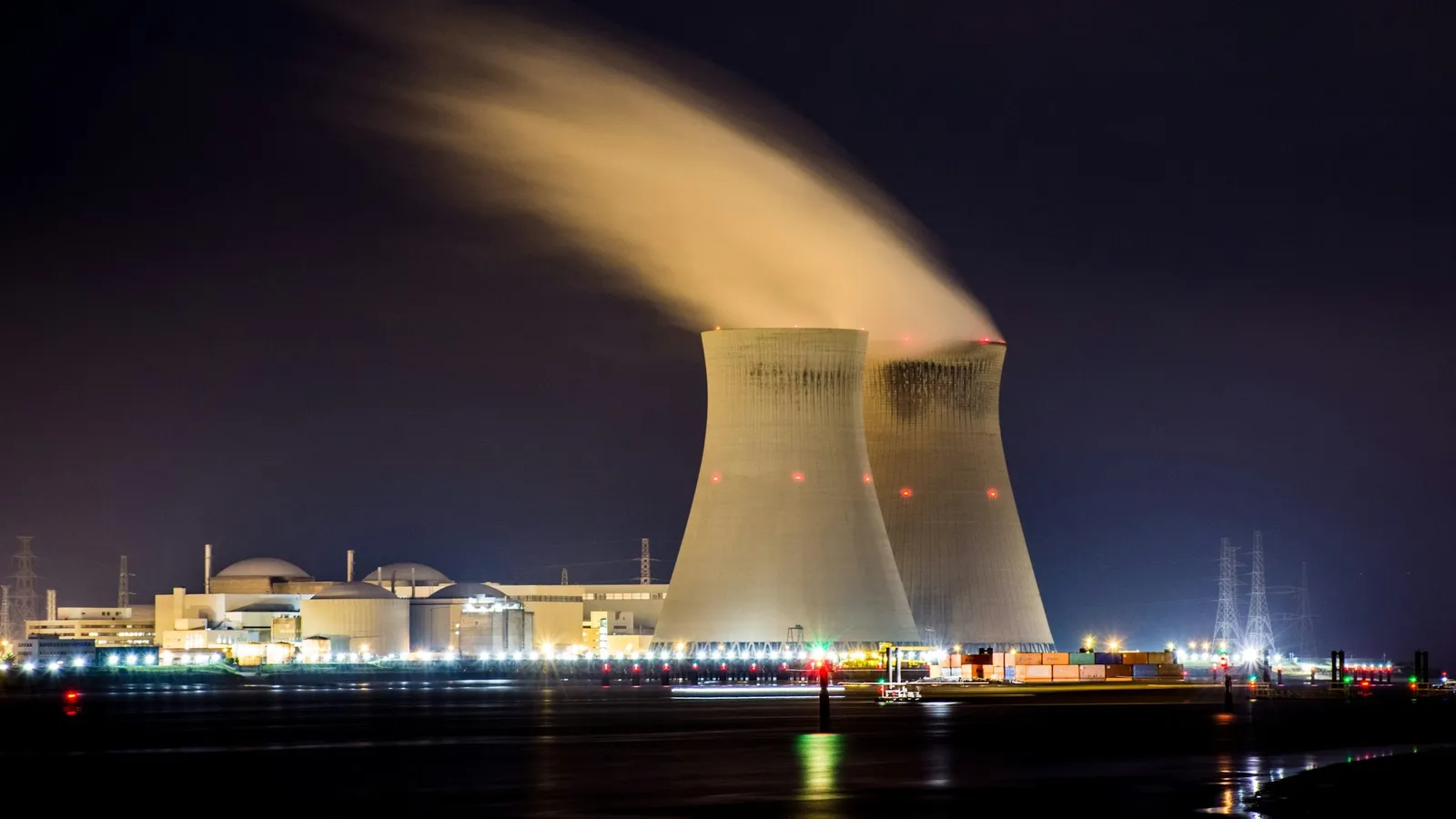
Every nuclear power station in the world, including India's, rests on an idea first made to work in a squash court in Chicago. A chain reaction, in which one split nucleus triggers more, was proposed by Leo Szilard in 1933, as APS News notes. Making one that ran steadily, and could be stopped, took a team led by Enrico Fermi. This post tells that story with the physics a Class 12 student needs, and ends with what you can borrow from how Fermi worked.
Who was Enrico Fermi?
Fermi was born in Rome on 29 September 1901 and died in Chicago on 28 November 1954, according to his Nobel Prize facts page. He won the 1938 Nobel Prize in Physics "for his demonstrations of the existence of new radioactive elements produced by neutron irradiation, and for his related discovery of nuclear reactions brought about by slow neutrons."
The same page explains the key discovery. In 1934, Fermi and his colleagues found that when neutrons are slowed down, for example by paraffin, they interact with nuclei much more readily. Remember this: slow neutrons are the reason the Chicago pile was full of graphite.
According to an APS News history of the experiment, Fermi used his trip to the Nobel ceremony in Stockholm to emigrate to the United States, worried about the safety of his Jewish wife, Laura, under Mussolini's regime. He joined Columbia University.
What is a nuclear chain reaction?
When a neutron is absorbed by a uranium-235 nucleus, the nucleus can split into two medium-sized nuclei. Your NCERT Class 12 chapter on nuclei gives examples of this fission, each releasing two, three or four neutrons. If those neutrons cause more fissions, the process can keep itself going.
Physicists describe this with a multiplication factor, usually written k: the average number of neutrons from one generation that go on to cause fission in the next.
k less than 1: each generation is smaller and the reaction dies out. Starting with 1,000 neutrons and k = 0.9, you get 900, then 810, then 729.
k equal to 1: each generation is the same size. The reaction is self-sustaining, or critical.
k greater than 1: each generation is larger. With k = 2, ten generations turn 1 neutron into 2¹⁰ = 1,024.
A reactor has to be controlled near k = 1. Neutrons are lost when they escape from the surface or are absorbed without causing fission, so the size and arrangement of the pile matter. Slowing neutrons with a moderator such as graphite makes fission more likely.
How was Chicago Pile-1 built?
Fermi moved to the University of Chicago to supervise the design and assembly of the pile, which was built in a squash court under Stagg Field, the university's football stadium, as APS News describes. It had no radiation shielding and no cooling system.
Fermi's own report, written at the time and published after declassification as Experimental Production of a Divergent Chain Reaction, describes the pile as roughly a flattened ellipsoid of graphite, with an equatorial radius of 388 cm and a polar radius of 309 cm. Lumps of uranium metal and uranium oxide sat inside the graphite in a cubic lattice with a cell side of about 21 cm. The graphite was the moderator. Cadmium-coated control rods, which absorb neutrons, kept k below 1 until the team was ready.
The report also describes the experimental procedure the team followed as the pile approached its critical size, and compares the critical dimensions they observed with what earlier tests on the graphite and uranium had predicted.
What happened on 2 December 1942?
APS News gives the timeline. The control rods were withdrawn step by step, and neutron activity rose with each move. A young physicist, George Weil, removed the final control rod under Fermi's supervision, and the pile reached criticality at 3:25 p.m. Fermi shut the reaction down 28 minutes later by putting the cadmium rods back.
The pile ceased operation in February 1943 and was rebuilt, this time with a radiation shield, at the site of what became Argonne National Laboratory, under the name Chicago Pile-2. The original site is a US national historic landmark. Its plaque, quoted by APS News, reads: "On December 2, 1942, man achieved here the first self-sustaining chain reaction and thereby initiated the controlled release of nuclear energy."
The pile was part of the wartime race, described by APS News, to build the first atomic bomb. The same physics serves both power and weapons, a tension the scientists of the time argued about and that remains in public debate today.
Common mistakes students make about chain reactions
"A reactor is a slow bomb." A reactor is designed to hold k at 1 under control; a weapon is designed for rapid, uncontrolled growth.
"The moderator absorbs neutrons." The moderator slows neutrons. Control rods absorb them.
"More uranium is always more dangerous." What matters is whether enough neutrons are kept in play to reach k = 1, which depends on size, shape and materials, not mass alone.
For the discovery of fission itself, read our post on Lise Meitner and the explanation of nuclear fission.
What can a student learn from how Fermi worked?
Fermi did not switch on a finished machine and hope. His team tested the materials first, predicted how the pile should behave, approached the critical size in stages and compared what they observed with the prediction. The last control rod came out only after that.
You can solve problems the same way. Estimate the answer before you calculate, check your working at each step rather than only at the end, and when a result surprises you, ask whether the prediction or the measurement is wrong. If you want to revise fission, binding energy and radioactivity one idea at a time, the Fermi Concept Library has a lesson for every concept in physics.
Before your next nuclear physics problem set, write down what k means in one sentence, and check that you can explain why control rods change it.