

On this page
In 1872, the construction of the Brooklyn Bridge was in jeopardy. Chief Engineer Washington Roebling developed decompression sickness (then known as "caisson disease") after spending extensive time working in the underwater caissons. Bedridden, partially blind, and unable to visit the site, he needed a proxy. His wife, Emily Warren Roebling, stepped in, acting as the sole liaison between Washington and the work site for the final decade of the project.
How did the Roeblings prepare for the project?
Emily's involvement with the bridge began long before her husband's illness. Following their marriage in 1865, the newlyweds traveled to Europe on what was partly a research trip. Washington's father, John A. Roebling, had tasked them with studying the use of pneumatic caissons for underwater foundations. During this trip, Emily was exposed to the advanced engineering concepts that would later prove crucial to the Brooklyn Bridge. By the time John A. Roebling died in 1869 and Washington took over as Chief Engineer, Emily was already familiar with the project's foundational requirements.
How did Emily Warren Roebling learn engineering?
To effectively relay instructions to assistant engineers and contractors, Emily could not simply memorize messages; she had to understand the physics and mathematics behind them. Under her husband's tutelage and through intense self-study, she mastered complex engineering principles.
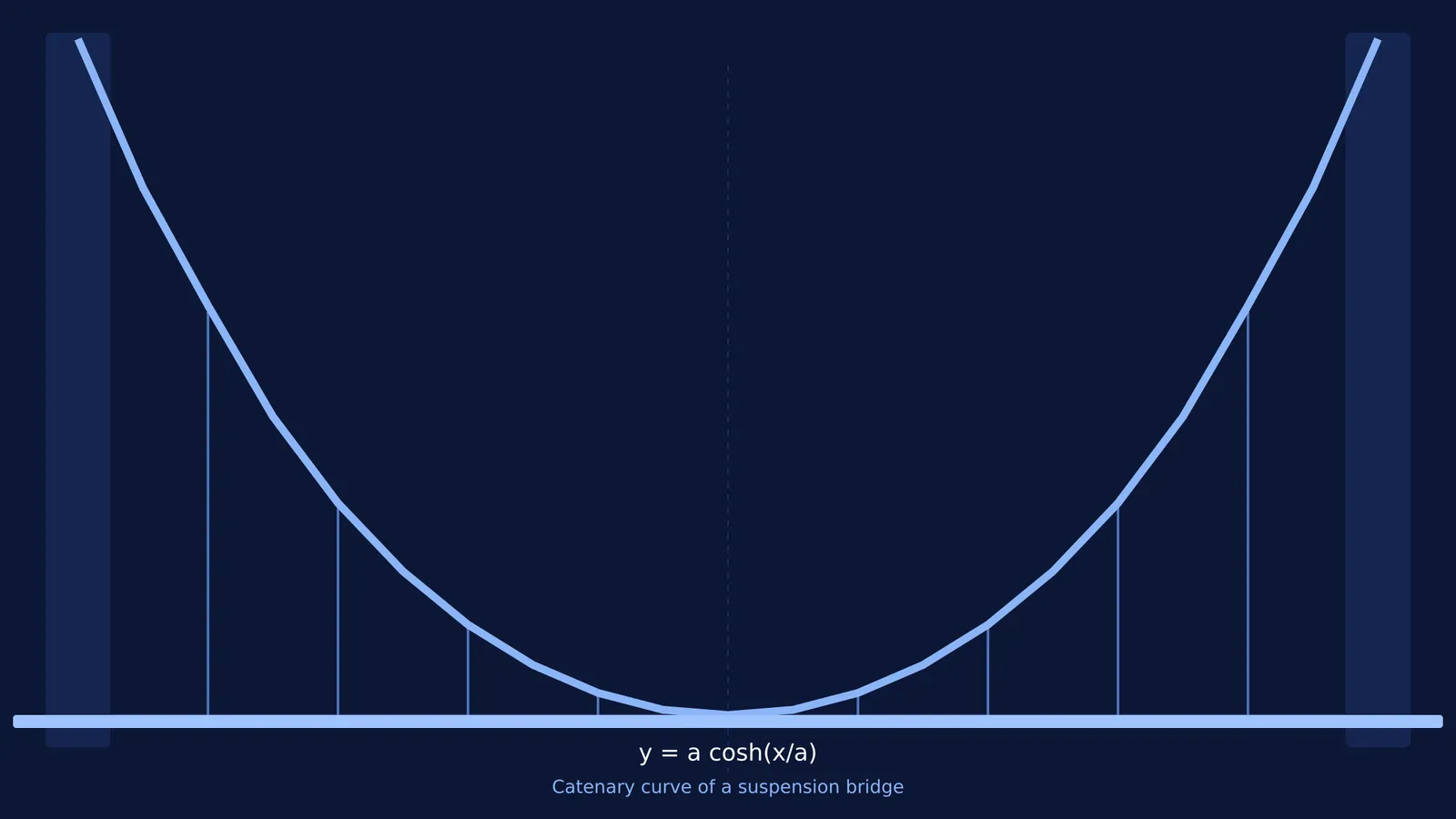
She learned how to calculate catenary curves—the natural curve formed by the bridge's massive suspension cables. She studied the strength of materials and stress analysis to understand how forces and loads affected the steel structure. (If you are studying these principles today, understanding stress is much like calculating the tension in a heavy rope or the elongation of a rod stretching under its own weight, and analyzing the tube design of skyscrapers).
Tackling university-level physics from scratch is daunting. Today, Fermi's AI tutor can work out what you already know and build a plan for the session, teaching through the concepts as you go. Emily had to rely on textbooks and her husband's guidance, transforming herself into a capable engineer.
What did Emily Roebling actually do on the Brooklyn Bridge?
Emily's role quickly evolved from messenger to de facto project manager. She supervised the intricate process of spinning and securing the bridge's suspension cables. Beyond the technical work, she handled the project's diplomacy, managing relationships with politicians, competing engineers, and suppliers. When the bridge's board of trustees attempted to remove Washington as Chief Engineer in 1882 due to his illness, she successfully lobbied to defend his title.
Her contribution was recognized when the Brooklyn Bridge was completed in 1883. She was the first person to cross it by carriage, carrying a rooster as a symbol of victory. At the opening ceremony, Congressman Abram S. Hewitt honored her work, stating that the bridge was "...an everlasting monument to the sacrificing devotion of a woman and of her capacity for that higher education from which she has been too long disbarred."
What did she accomplish after the bridge was finished?
Emily's pursuit of education did not end with the Brooklyn Bridge. She went on to earn a law certificate from New York University in 1899. She also wrote an award-winning essay, "A Wife's Disabilities," which argued for greater legal rights for women. In her later years, she traveled extensively, including attending the coronation of Tsar Nicholas II in Russia, before her death in 1903.
How do you master a difficult subject from scratch?
Emily Roebling's decade-long crash course in civil engineering is a masterclass in active learning. If you are facing a difficult physics or mathematics syllabus, try her approach:
Find a structured guide: Emily had her husband's expertise to direct her reading. Do not wander through textbooks aimlessly; use a syllabus or a tutor to map out what you need to know first.
Master the vocabulary: Before solving equations for catenary curves, she had to understand the language of materials. Learn the definitions before you attempt the problems.
Learn by relaying: Emily had to explain technical instructions to the assistant engineers on site. This forced her to understand the "why" behind the numbers. Test your own knowledge by explaining a concept out loud without looking at your notes.


