

On this page
In roughly 60 AD, the Greek physician Pedanius Dioscorides documented over 600 medicinal plants in his five-volume encyclopaedia De Materia Medica 1. This text remained the primary reference for herbal medicine across the world for over 1,500 years 2.
Pedanius Dioscorides was a Greek pharmacologist and botanist who served in the Roman army 2. Working in the first century AD, he travelled widely, observing the natural world and cataloguing the therapeutic uses of local flora. The result of this work was a Greek encyclopaedia that laid the foundation for pharmacology.
For students of biology or anyone preparing for medical entrance exams, understanding how we classify and use plant-derived compounds is a core part of the syllabus. Similar to how Li Shizhen mapped out medicinal substances centuries later in China, Dioscorides provided a rigorous, structured way to look at the chemistry of nature.
What medicinal plants are in Dioscorides' De Materia Medica?
De Materia Medica (meaning "On Medical Material") contains over 1,000 recipes for medicines derived from natural sources 1. While it includes some animal and mineral substances, the text is most famous because it describes over 600 medicinal plants.
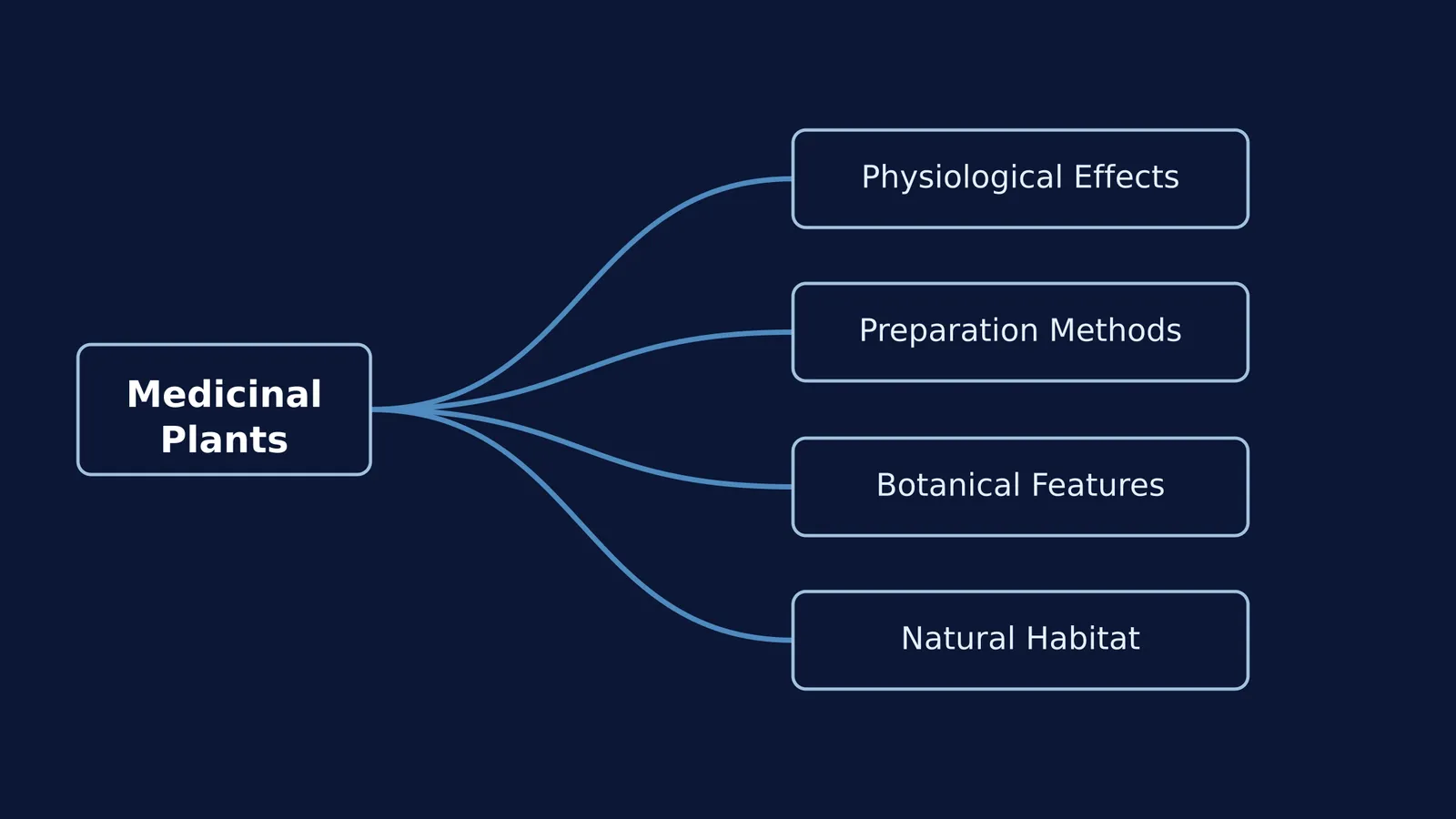
Rather than listing plants alphabetically—which was common in later, less scientific herbals—Dioscorides grouped them by their medicinal properties and effects on the human body. This approach was highly empirical and practical for its time. He meticulously detailed the plant's natural habitat, its distinct botanical features, methods of proper preparation, and the specific physiological conditions it could treat. Today, modern drug research still relies heavily on the field of ethnobotany to discover new pharmacologically active substances, a direct legacy of this systematic cataloguing.
How did De Materia Medica last for 1,500 years?
The survival of Dioscorides' work is notable in the history of science. For more than 1,500 years, De Materia Medica was an authoritative text on plants and plant drugs 2.
It achieved this longevity because it was continuously copied, translated, and practically updated by physicians across different cultures. From its original Greek, the text was translated into Syriac, Arabic, Latin, and eventually into modern European languages during the Renaissance. It was fundamentally a practical, working manual rather than just a theoretical treatise. When you explore the chemistry of neem compounds or study NEET's drug-abuse facts on opioids and cannabinoids, you are looking at the modern biochemical descendants of the exact type of classification system Dioscorides pioneered centuries ago.
What is the biochemical basis of medicinal plants?
While Dioscorides observed the visible effects of these plants, he could not know their molecular structures. Today, we know that medicinal plants synthesize diverse chemical compounds primarily for defense against insects, fungi, and herbivores 1.
Most of these active therapeutic substances fall into four main biochemical classes 1:
Alkaloids: Nitrogen-containing compounds that often have profound physiological effects (such as quinine and opium).
Glycosides: Molecules where a sugar is bound to a non-carbohydrate moiety (like digoxin).
Polyphenols: Compounds with multiple phenol rings, often acting as antioxidants.
Terpenes: A large, diverse class of organic chemicals that give plants their strong odours.
If you are reviewing these molecular structures and biological pathways, the Fermi Concept Library covers every concept in physics, chemistry, biology, mathematics and computing. When you need to understand the mechanism of a specific reaction or why a certain alkaloid behaves as a base, Fermi's AI tutor can work out what you already know and build a plan for the session.
How should you study medicinal plants?
When studying biology or organic chemistry for your exams, you will inevitably encounter dozens of complex plant families and their active medicinal compounds. Trying to memorise them randomly is a recipe for forgetting them during a test. Instead, use this systematic checklist to ensure you capture the most highly examinable facts, mirroring the rigorous, structured approach that Pedanius Dioscorides took:
Botanical Name: Write down both the scientific (binomial) name and the common name.
Plant Family: Identify the biological family (e.g., Solanaceae, Liliaceae) to spot shared evolutionary characteristics.
Active Compound: Name the primary biochemical molecule (e.g., a specific alkaloid or terpene).
Source Part: Note exactly which part of the plant is used (root, bark, leaf, or seed).
Medicinal Use: State the specific physiological effect or the disease it is traditionally known to treat.
Chemical Structure: Identify the key functional groups on the active molecule to understand its chemical reactivity.
By breaking down complex botanical data into these six clear categories, you stop relying on rote memorisation and start seeing the underlying patterns in natural chemistry.


