

On this page
When Jamaican physician Cicely Williams was posted to the Gold Coast (modern Ghana) by the Colonial Medical Service in 1929, she faced a medical mystery. Toddlers were presenting with swollen bellies, swollen feet and stick-thin limbs. Despite the efforts of colonial doctors, these children almost always died.
The medical establishment of the time insisted the children were suffering from pellagra, a vitamin deficiency. But Williams, who made a point of taking local knowledge seriously, asked the mothers what they called the illness. They gave her a word in the Ga language: *kwashiorkor*, which Williams translated as "the disease of the deposed child".
What did Cicely Williams discover in Ghana?
Williams realised that the timing of the illness was the clue. The "deposed child" was a toddler who had been abruptly weaned from breast milk because a new baby had arrived.
Breast milk contains the essential amino acids a growing child needs. After weaning, these toddlers were moved to a diet of gruel made almost entirely from maize or cassava. While this diet provided enough calories to keep the child going, it was severely deficient in protein. Williams realised she was not looking at a vitamin deficiency, but a severe form of protein malnutrition.
She published her initial findings in the *Archives of Disease in Childhood* in 1933. Her colleagues, particularly those in London who considered themselves experts on tropical diseases, rejected her claims. Rather than backing down, Williams conducted autopsies on the victims—at great personal risk in the era before antibiotics, even contracting a severe streptococcal infection from a cut during one such procedure—and gathered undeniable proof. She followed up with a landmark paper in *The Lancet* in 1935, titled "Kwashiorkor: a nutritional disease of children associated with a maize diet".
Why do children get kwashiorkor?
Kwashiorkor is a specific type of protein-energy malnutrition. The hallmark sign is bilateral edema—fluid building up in the tissues, causing the feet and abdomen to swell.
This happens because the blood lacks albumin, a protein that maintains osmotic pressure. Without enough albumin, fluid leaks out of the capillaries and into the surrounding tissues. It also leads to a fatty liver, where the organ becomes enlarged with fat infiltrates, alongside striking skin changes and hair that turns thin and reddish-grey. It is a completely different mechanism from the wasting seen in overall starvation, and it requires a different clinical response.
Before Williams, nutrition science was heavily focused on vitamins, driven by discoveries like those of Casimir Funk and the idea of vital amines, or vitamins. Her work forced medicine to look closely at macronutrients and the cultural context of how children were fed. Her legacy paved the way for later researchers, such as C. Gopalan and the science of nutrition for Indian diets, to map out the exact protein needs of growing populations.
How are kwashiorkor and marasmus different?
If you are studying human physiology for board exams or NEET, distinguishing between these two forms of malnutrition is a standard test of your understanding.
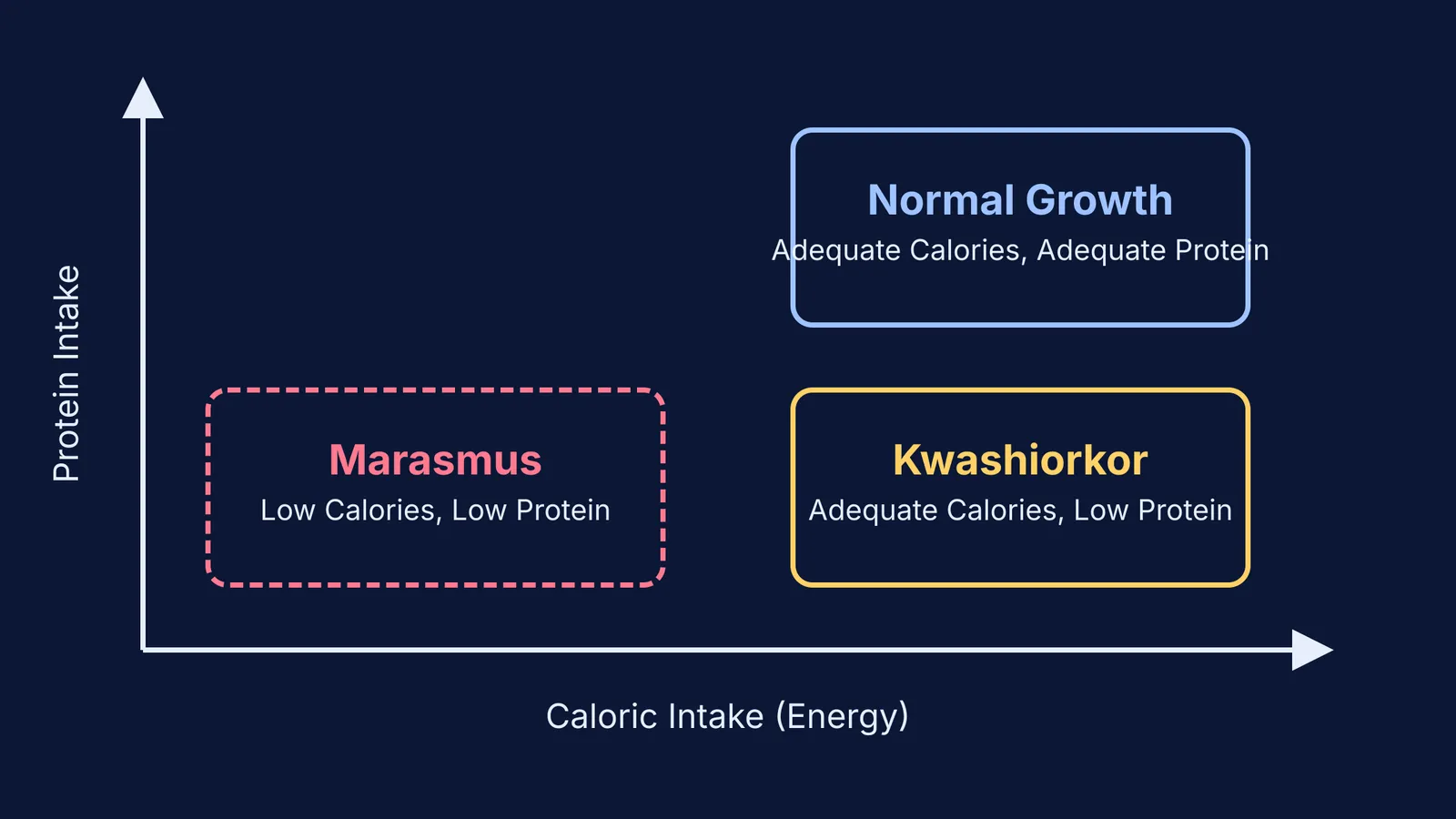
Marasmus is a severe deficiency of all macronutrients, including both calories and protein. It leads to severe wasting of muscle and subcutaneous fat, leaving the child looking emaciated, with ribs and joints protruding sharply.
Kwashiorkor is a severe deficiency of protein, even when caloric intake is adequate. It leads to edema, a fatty liver, and a swollen appearance.
When you need to review metabolic disorders, the Fermi Concept Library has a lesson on protein-energy malnutrition. You can learn exactly how a lack of amino acids disrupts the body's osmotic balance.
How did Cicely Williams change global health?
Despite her groundbreaking findings, Williams met with professional hostility and was transferred to Malaya in 1936. There, she encountered another threat to child health: the aggressive marketing of sweetened condensed milk, which she campaigned against in a famous 1939 speech titled "Milk and Murder".
During World War II, Williams was captured by the Japanese and interned as a prisoner of war in Changi Prison for three and a half years. She endured starvation and illness, yet she continued to lead, ensuring that every baby born in the camp was breastfed and survived.
After the war, her expertise could no longer be ignored. In 1948, she was appointed the first director of Maternal and Child Health at the newly formed World Health Organization (WHO). She travelled to over 70 countries to advocate for local knowledge and breastfeeding.


