On this page
Karl Landsteiner showed which blood can safely be given to whom. The other half of the transfusion problem was practical: blood spoils soon after it leaves the body, and in a war it is needed far from the donors. Charles Drew, an American surgeon, helped turn blood storage into a reliable system. This post draws on the US National Library of Medicine's account of his life, works through the numbers from his best-known project, and asks what students can learn from him.
Who was Charles Drew?
According to the National Library of Medicine's biographical overview, Drew was born in Washington, DC, on 3 June 1904. He was a star athlete at school and at Amherst College, where he graduated in 1926. Racial segregation limited where he could train, so he went to McGill University in Montreal, graduating second in a class of 137 in 1933. There he worked with John Beattie on treating shock with transfusion.
He joined Howard University in 1935, then went to Columbia University and Presbyterian Hospital in New York to work with John Scudder. In June 1940 he became the first African American to earn a doctorate in medical science at Columbia.
Why is blood so hard to store?
The NLM's page on Drew's blood research sets out the problem. Outside the body, blood starts to clot, its cells deteriorate, especially white cells, and its salt levels change. Earlier researchers had found that sodium citrate stops clotting and that dextrose, a sugar, keeps blood usable for up to two weeks in a refrigerator. But in the 1930s there was still no standard way to collect blood, keep it free of germs and protect the patient. If you want the biology of clotting itself, our post on the blood clotting cascade explains it step by step.
What did his thesis test?
For his doctorate, Drew reviewed the research on stored blood and examined every variable that might affect its shelf life: how it was collected, which anticoagulants and preservatives were used and how much, the shape of the storage containers and the storage temperature. He also surveyed the directors of six leading transfusion clinics.
In August 1939 he and Scudder opened an experimental blood bank at Presbyterian Hospital. Every donation had to be collected with sterile equipment, typed, tested for syphilis and kept at a constant temperature. The seven-month trial became his thesis, "Banked Blood".
Why ship plasma instead of whole blood?
Plasma is the liquid part of blood, carrying proteins and salts but no cells. It cannot carry oxygen, but it works well to replace lost fluid and treat shock. The NLM lists its advantages for war: it keeps longer without refrigeration, does not spoil when shaken in transport, can be used with any blood type and is much less likely to transmit disease. Landsteiner's blood groups, covered in our post on the ABO discovery, are the reason whole red cells need matching.
How did Blood for Britain work?
In 1940 Britain was being bombed and needed plasma. New York hospitals began collecting blood and shipping plasma in August 1940. The NLM describes each step:
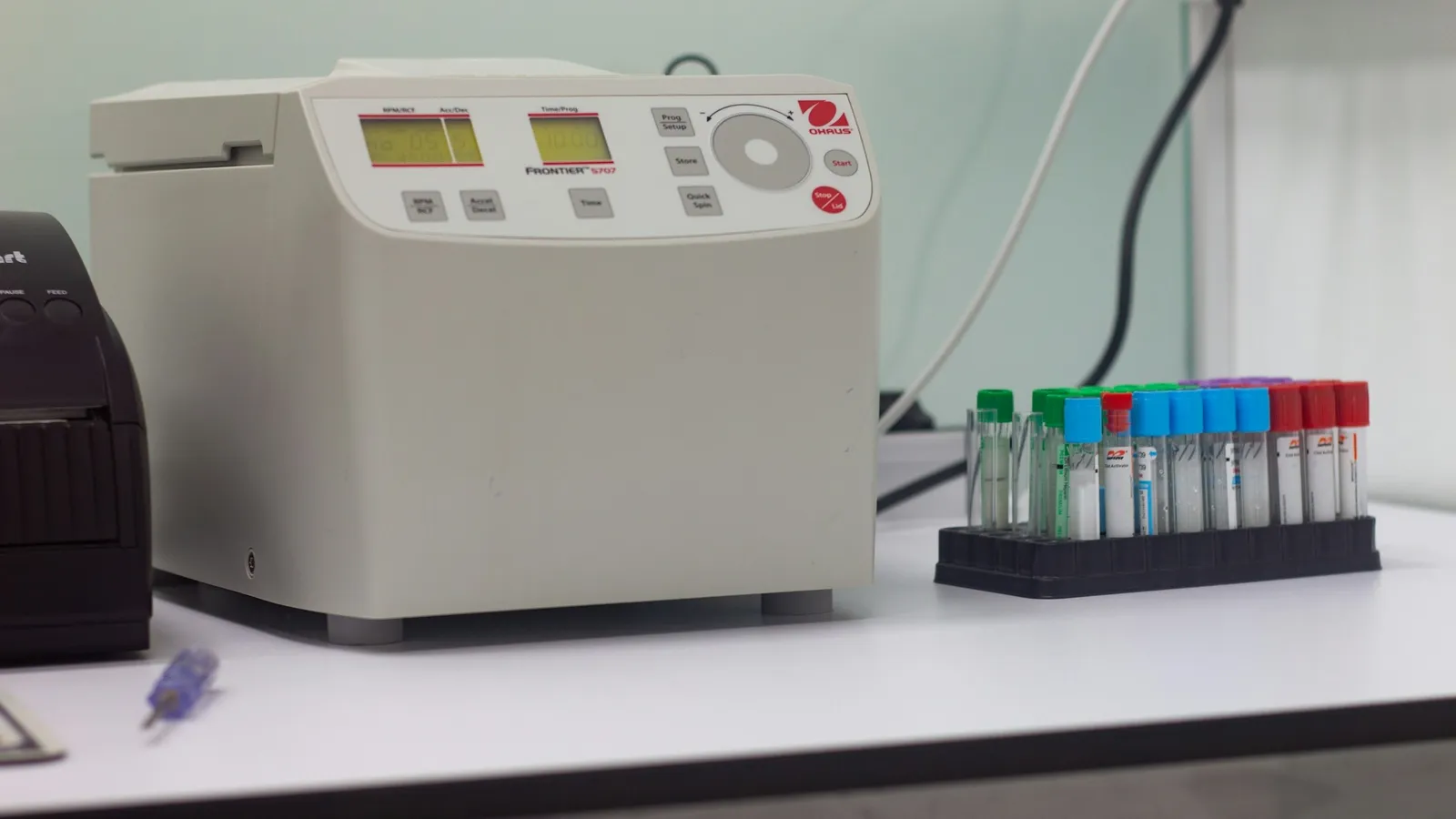
Plasma was separated from cells by centrifuging or by letting the cells settle.
Plasma from an average of eight bottles was pooled in a dust-proof, ultraviolet-lit room.
A sample was cultured for bacteria, an antibacterial called merthiolate was added, and the batch was tested again after a week.
The batch was diluted with sterile saline and sampled one final time before sealing.
The American Red Cross timeline of blood transfusion calls it Plasma for Britain and records that it ran under Drew's direction. In September 1940 Drew was called back to New York as full-time medical supervisor. He standardised the collection procedures, equipment and records, and set up a central laboratory for the final bacteria check. The NLM is careful to say that he did not "discover" plasma as a blood substitute. His contribution was making a large, multi-hospital system safe.
What do the project's numbers show?
When the project ended in January 1941, it had collected 14,556 donations and shipped more than 5,000 litres of plasma saline solution.
Average solution shipped per donation: 5,000 L ÷ 14,556 ≈ 0.34 L. Because the total was "more than" 5,000 litres, the true average was a little higher.
Pooling eight bottles means one contaminated donation could spoil the plasma of seven others. That is why each pool was cultured twice before shipping.
A common mistake is to treat 0.34 L as the plasma in one donation. The shipped liquid was plasma diluted with saline.
What did he do about segregated blood?
Drew went on to run a Red Cross pilot programme in 1941 and introduced mobile collection units, later called bloodmobiles. But, the NLM records, the armed forces at first had the Red Cross exclude Black donors, and from January 1942 blood from Black donors was accepted but kept separate. Drew said there was no scientific evidence for any difference between the blood of different races. In his 1944 Spingarn Medal speech he said: "It is fundamentally wrong for any great nation to willfully discriminate against such a large group of its people."
He returned to Howard in 1941 as chair of surgery and trained a generation of surgeons. He died on 1 April 1950 after a car accident in North Carolina. The NLM notes that the story that he was refused treatment because of his race is a myth that has been debunked repeatedly.
What can a student take from Drew's way of working?
Read everything before you design. His thesis began with a full review of what others had found.
Write the procedure down. Standard steps are what let many hospitals produce a safe product.
Separate science from prejudice. He judged claims about race by the evidence.
If the parts of blood and what each one does are fuzzy, the Fermi Concept Library covers every concept in physics, chemistry, biology, mathematics and computing, so you can review plasma, cells and clotting one at a time.
Next step: open the NCERT Class 11 chapter Body Fluids and Circulation, list what plasma contains, and write two lines on why Blood for Britain shipped plasma rather than whole blood.