

On this page
In the mid-1930s Hideki Yukawa predicted that a particle of medium mass carries the force that holds the nucleus together. Finding it took a new kind of detector, a high mountain and a 22-year-old from Brazil. This post is about that young physicist, Cesar Lattes: what he added to the search, how he later made the particle in a machine, and what he did back home. Yukawa's side of the story is in our post on Hideki Yukawa and the meson.
Who was Cesar Lattes?
A biographical page from Brazil's Centre for Physics Research (CBPF), which he helped found, says Cesare Mansueto Giulio Lattes was born in Curitiba on 11 July 1924. He finished his physics degree at the University of São Paulo in 1943. His first paper, on the abundance of nuclei in the universe, was supervised by Gleb Wataghin. He then joined Cecil Powell's group at the University of Bristol in England. A tribute in Revista USP records that he died on 8 March 2005.
Why use photographic plates?
The presentation speech for Powell's 1950 Nobel Prize explains the method. When a charged particle passes through a photographic emulsion, the silver bromide grains along its path can be developed into a dark track. Slow particles ionise more, so their grains sit closer together. Unlike a cloud chamber, which records only at the moment it expands, a plate records all the time. The speech adds that in 1946 the Bristol group began using a new Ilford emulsion called C2, which gave clearer tracks, and that plates were exposed on the Pic du Midi at 2,800 metres.
What did Lattes add?
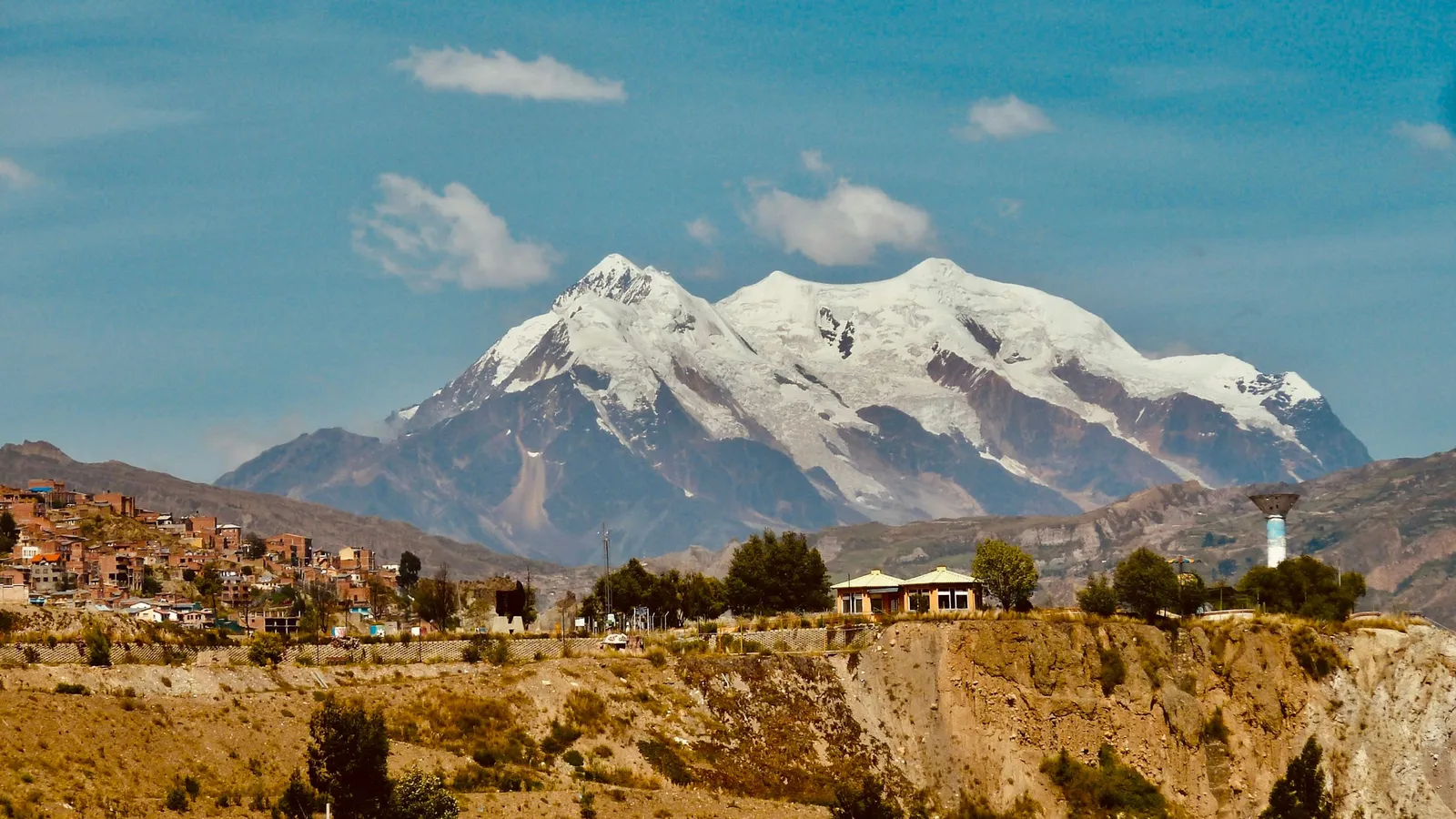
In his own account, quoted by the University of Campinas newspaper Jornal da Unicamp, Lattes had found a weather station at about 5,600 metres on Mount Chacaltaya, around 20 km from La Paz in Bolivia. He offered Powell and Occhialini to expose plates treated with borax there for a month if they paid for his flight. He also recalls choosing a Brazilian plane against advice; the British plane crashed at Dakar.
The CBPF page says he later turned that old weather station into a cosmic-ray laboratory with Bolivian colleagues, and that the events behind the pion discovery came from plates exposed there.
The key paper, Processes involving charged mesons, appeared in Nature in May 1947, with Lattes as first author, followed by Muirhead, Occhialini and Powell. The Nobel speech summarises what they saw: some mesons stopped in the emulsion and gave rise to a second meson. The first was named the π-meson (pion) and the second the μ-meson, now called the muon. A longer two-part paper by Lattes, Occhialini and Powell followed in October 1947.
How did he make pions in a machine?
In 1948 Lattes went to the University of California, Berkeley. With Eugene Gardner he reported Production of mesons by the 184-inch Berkeley cyclotron in Science. The CBPF page notes that this artificial production started a race to build ever more powerful accelerators. He was 24.
That 2024 study looks at nomination letters for Lattes, Powell and Occhialini and the Nobel committee's reasons for choosing Powell only.
Worked example: why every muon had the same range
In his Nobel lecture, Powell says that when a positive pion stops in the emulsion and decays, the muon "commonly emerges with a constant velocity, so that its range varies only within the narrow limits due to straggling". From that he concludes the muon is accompanied by a single neutral particle. Here is why, using only momentum conservation.
Before. The pion is at rest, so total momentum is zero.
Two products. If it decays into a muon and one neutral particle, their momenta must be equal and opposite: p(muon) = −p(neutral). Energy conservation then allows only one value of that momentum, so every muon gets the same kinetic energy and travels the same distance.
Three products. If there were two neutral particles, the three momenta could share out the energy in many ways, and muon ranges would spread over a wide band.
How far does a pion go? Powell gives the pion's average lifetime as about 2 × 10⁻⁸ s. Even at close to light speed, 3 × 10⁸ m/s × 2 × 10⁻⁸ s = 6 m. That is why fast pions from cosmic rays decay high in the air, and why plates had to be carried up mountains. (Relativistic time dilation stretches this for very fast pions, but that is beyond the JEE syllabus.)
Common mistakes: treating a zero total momentum as "nothing moves", and forgetting that momentum is a vector, so equal and opposite momenta still add to zero.
To practise problems that turn on momentum conservation, the Fermi Problem Library has a step-by-step solver that explains the reasoning rather than printing an answer. Our post on collisions and momentum problems covers the classroom versions.
What did he do back in Brazil?
The CBPF page says Lattes led the group that founded the CBPF in 1949, helped found the cosmic-ray laboratory at Chacaltaya, served on the first board of Brazil's National Research Council in 1951, and in the 1960s helped build the physics institute at the new State University of Campinas.
What can a student take from Lattes's way of working?
Improve the tool. A small change to the plates, and a higher place to expose them, made rare events visible.
Offer to do the hard part. He volunteered for the trip that produced the data.
Build where you came from. He used his reputation to create institutions so others could do research at home.
Next step: write the momentum argument in step 2 from memory, then explain in one line what a spread of muon ranges would have meant.


