On this page
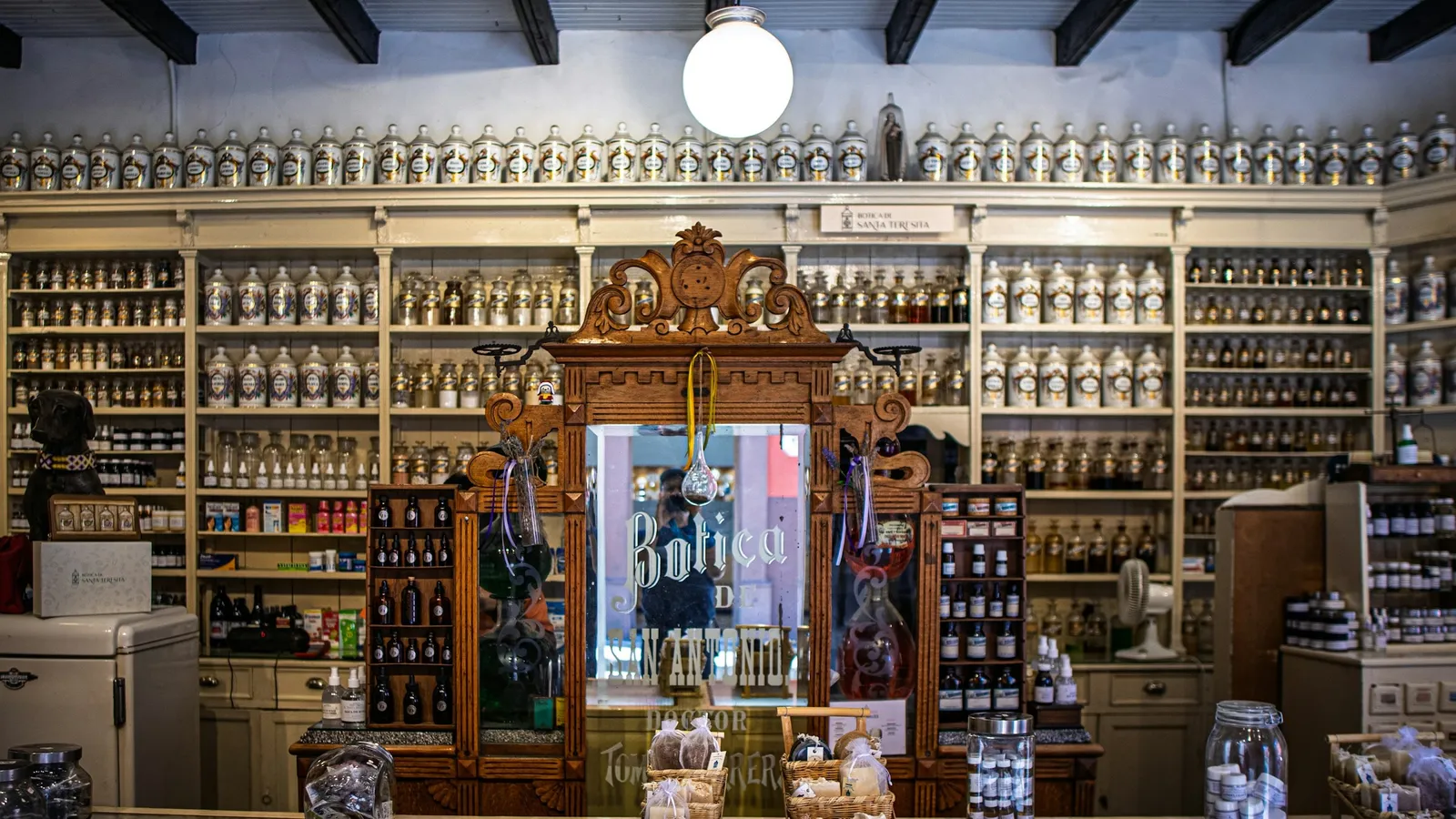
Scheele spent his working life as an apothecary. He ran a pharmacy in a small Swedish town and did his research around it. Yet two of the gases in your inorganic chemistry chapters, chlorine and oxygen, appear in his papers, along with a list of acids and minerals that still carry his work. This post looks at what he actually wrote, works through the chlorine reaction the way an exam would, and asks what a student can borrow from his method.
Who was Carl Wilhelm Scheele?
The memoir of his life printed in the 1901 reissue of The Chemical Essays of Charles-William Scheele says he was born in 1742 at Stralsund, then part of Swedish Pomerania. He trained and worked as an apothecary. In 1773 he moved to Uppsala, where he met J. G. Gahn, an assessor of mines, and, through him, the Uppsala chemist Torbern Bergman, who became his patron and friend. In 1775 he took over a pharmacy in Köping, which turned out to be in debt, and slowly put it in order while doing research. He died in May 1786, two days after marrying the widow of the shop's former owner.
How did Scheele discover chlorine?
In 1774 he published a long study of "brunsten", the black mineral we call manganese dioxide, in the proceedings of the Royal Swedish Academy of Sciences. An English translation is in The Early History of Chlorine, a 1905 collection of original papers.
When he warmed the mineral with marine acid (hydrochloric acid), a gas came off that turned a bladder yellow and had "a quite characteristically suffocating smell, which was most oppressive to the lungs". Then he tested it on everything he could hang inside a bottle. Corks turned yellow. "Blue litmus paper became almost white; all vegetable flowers—red, blue, and yellow—became white in a short time; the same thing also occurred with green plants." The colours could not be brought back with acids or alkalis. Insects died in the gas immediately.
He called it dephlogisticated marine acid, because he explained it with the phlogiston theory of the time. In 1810 Humphry Davy argued that it was an element and renamed it chlorine after its colour.
How do you work out the chlorine reaction?
In modern notation, Scheele's reaction is:
MnO2 + 4HCl gives MnCl2 + Cl2 + 2H2O
Treat it as a redox problem.
Oxidation states. Mn goes from +4 in MnO2 to +2 in MnCl2, so manganese is reduced and gains 2 electrons. Two of the four chlorine atoms go from –1 in HCl to 0 in Cl2, so they lose 2 electrons in total. The other two chlorines stay at –1 in MnCl2.
Electron balance. 2 electrons gained equals 2 electrons lost, so the equation is balanced for charge as well as atoms.
A mass calculation. Take 8.69 g of MnO2. Its molar mass is 54.94 + 2 × 16.00 = 86.94 g/mol, so this is 0.100 mol. The equation gives 0.100 mol of Cl2, which is 0.100 × 70.90 = 7.09 g, and needs 0.400 mol of HCl, which is 0.400 × 36.46 = 14.6 g.
The common mistake is to assume all four HCl molecules are oxidised. Only two are. The other two simply supply chloride ions for MnCl2. Questions that ask for "the moles of HCl oxidised" are testing exactly this. Our guide to balancing redox reactions walks through more examples.
Did Scheele discover oxygen too?
He made it independently. In his Treatise on Air and Fire, published in 1777 with an introduction by Bergman, he describes heating substances such as manganese ore with acid, and metal nitrates, and collecting a gas in which things burned well. Because "this air is necessarily required for the origination of fire", he wrote, "I shall call it after this, for the sake of shortness, Fire-air". The rest of the air he called vitiated air. Joseph Priestley had already published his own account of the gas in 1775, which is why the credit is usually shared.
Scheele then did something few chemists bothered with. He measured the fire-air in the atmosphere every day for the whole of 1778, according to the memoir, and concluded in a short essay that air always contains "nearly the same quantity of pure or fire air, viz. nine-thirty-thirds". That is 9/33, or about 27%. The modern value is 20.95% by volume, according to NASA's Earth fact sheet. His conclusion that the fraction is constant was right even though his method gave too high a number.
What else did Scheele find?
The Chemical Essays and the memoir in that volume list a remarkable range:
Baryta, a new earth he noticed during the manganese work.
Molybdic acid, prepared from the mineral molybdenite, which he showed contained no lead, unlike what was assumed.
Plumbago, which he showed in 1779 to be nearly all carbon. This is the graphite in your pencil.
Lactic acid, which he showed was the cause of the sourness of milk.
Tungstic acid, from the heavy mineral then called tungsten and now named scheelite after him.
Scheele's green, a copper arsenite pigment, which the memoir notes is "highly poisonous".
Studies of Prussian blue and prussic acid (hydrogen cyanide), the acid of lemons (citric acid) and a sweet substance from oils and fats, now called glycerol.
The memoir also says that when the Academy gave him a grant, he kept only a sixth for himself and spent the rest on experiments.
What can a student take from Scheele's way of working?
Run a test panel. He exposed chlorine to litmus, flowers, oils, metals and insects, one after another. When you learn a new reagent, list five things it does and one it does not do.
Repeat measurements. A year of daily readings told him the oxygen fraction was steady. In practicals, three readings beat one.
Work with what you have. He did his research beside a pharmacy counter. A notebook and careful habits matter more than expensive equipment.
If redox problems like the chlorine one keep tripping you up, the Fermi Problem Library has a step-by-step solver that explains the reasoning rather than printing an answer.
Tonight, balance the MnO2 and HCl equation from scratch using oxidation numbers, then work out how many moles of HCl are oxidised when 0.250 mol of MnO2 reacts.