

On this page
In the 9th century, the House of Wisdom in Baghdad was a bustling centre of translation and research. Among its scholars were three brothers, Ahmad, Muhammad, and Hasan, known as the Banu Musa. Around 850 AD, they published the *Book of Ingenious Devices*, a text that laid the groundwork for modern control engineering.
Who were the Banu Musa brothers?
The Banū Mūsā were sons of a former highwayman turned astronomer who left them in the care of the caliph when he died. Educated at the House of Wisdom, the brothers became leading scientists of the Islamic Golden Age. While they wrote on mathematics and astronomy, their most famous work focused on mechanics.
What is the Book of Ingenious Devices?
The *Book of Ingenious Devices* describes approximately 100 devices, ranging from practical tools like hurricane lamps and clamshell grabs to complex automata. About 80 of these are "trick vessels"—pitchers and fountains that appear to defy the laws of physics. For instance, a vessel might pour wine, then water, then a mixture, depending on how it was tilted. The book also describes an automatic flute player, which historians consider one of the earliest programmable machines.
How did their conical valve work?
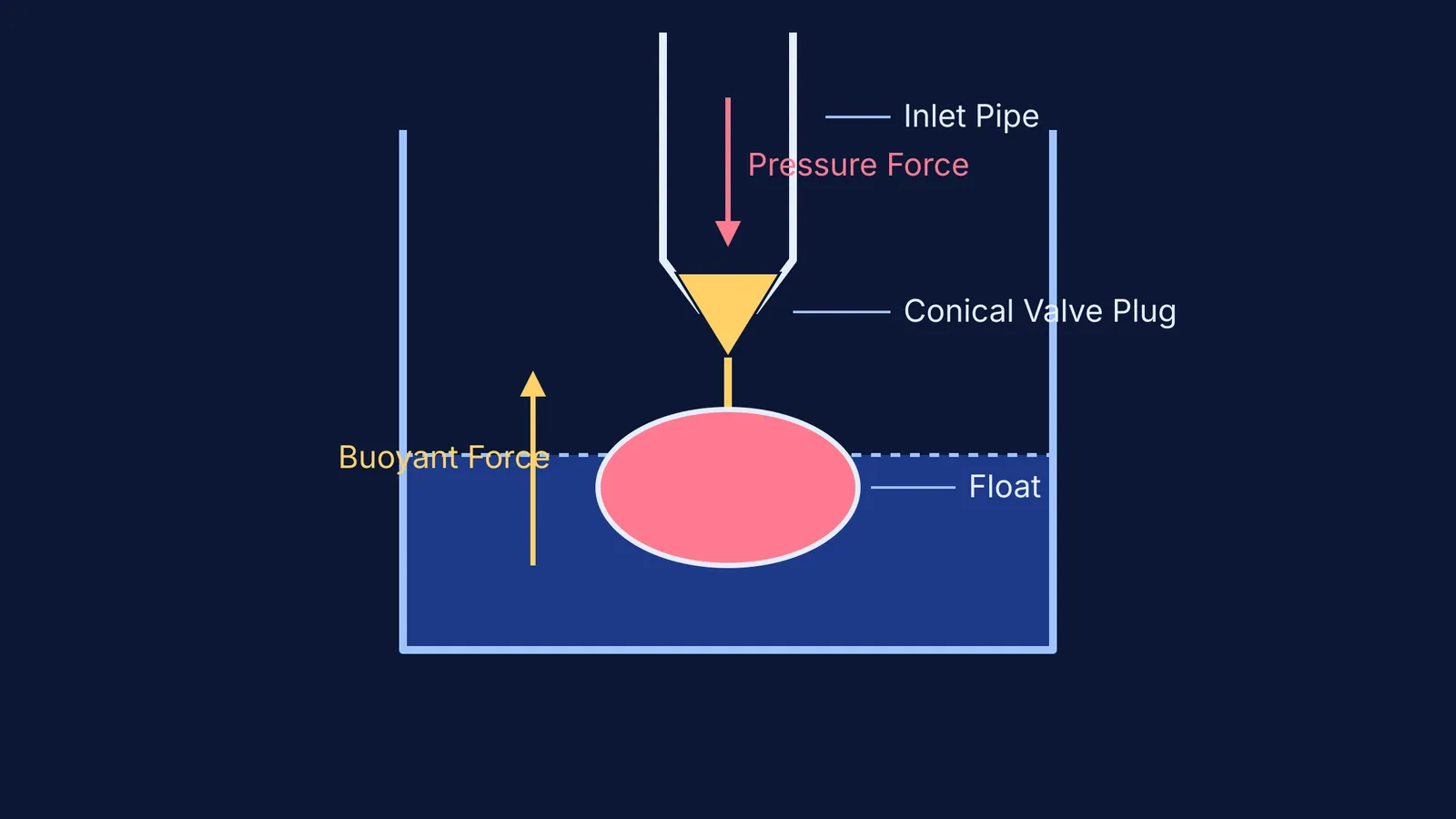
The brothers' most significant contribution was the conical valve, which they used as an automatic controller. Before them, valves were mostly simple plugs operated by hand. The Banu Musa placed a cone-shaped plug inside a tapered pipe, connecting the plug to a float.
As water filled a tank, the float would rise, pushing the cone firmly into the pipe to stop the flow. When the water level dropped, the float sank, pulling the cone down and reopening the pipe. This created a closed-loop feedback system: the machine sensed its own state and adjusted its behaviour without human intervention. This fail-safe mechanism allowed lamps to self-trim and fountains to maintain a steady pressure.
Understanding these early machines means understanding the invisible forces of air and water. If you struggle to picture how pressure changes affect fluid flow, the Fermi Simulation Lab provides interactive simulations for ideas easier to see than read.
How can you study the physics of a float valve?
When you look at a float valve today—whether in a water tank or a modern toilet cistern—you are seeing the Banu Musa's logic in action. You can break down how it works using basic physics.
The buoyant force: When a float is partially submerged, the water pushes up on it. According to Archimedes' principle, this upward buoyant force equals the weight of the water displaced by the float.
The pressure force: Water in the inlet pipe is under pressure. This pressure exerts a downward force on the conical valve plug.
The equilibrium: For the valve to close, the upward buoyant force from the float (transferred through the connecting rod) must be greater than the downward force of the water pressure and the weight of the moving parts.
By breaking the machine into its component forces, you can see how an abstract idea like pressure translates into mechanical work. When you face complex physics problems, drawing a free-body diagram of these forces is the best way to start. If you are not sure how to set up the equations for a system like this, Fermi's AI tutor can work out what you already know and build a plan for the session, so you sit down to a clear next step.
For more on how fluids and pressure behave, see our guides on Pascal's law in hydraulic machines and solving for Two immiscible liquids in a manometer.


