

On this page
In 1905, the Japanese seismologist Akitsune Imamura published an article in the magazine *Taiyō* (*The Sun*) warning that a massive earthquake would hit the Kantō region within 50 years. He was publicly ridiculed, but his prediction was tragically fulfilled 18 years later.
Why did Akitsune Imamura warn Tokyo in 1905?
Imamura looked at the historical record. He noted that large earthquakes struck the region around Tokyo periodically, and concluded that the next one was approaching.
His 1905 paper detailed "Simple Methods for Mitigating Loss of Life and Damage to Property due to Earthquakes in Urban Areas." He did not just warn of shaking. He estimated that while a few thousand people might be crushed by falling buildings, the real danger was a firestorm. Because Tokyo was a densely packed city built largely of wood, he predicted that if a major quake struck, the resulting fires could kill over 100,000 people. He urged the government to act immediately: to widen roads to act as firebreaks, and to replace dangerous oil lamps that would easily tip over and ignite wooden floors.
Why was Imamura's prediction ignored?
Imamura's warning was picked up by newspapers and caused widespread panic. To calm the public, his senior colleague and former teacher, Fusakichi Ōmori, intervened. Ōmori was the leading authority on Japanese earthquakes at the time.
Ōmori dismissed Imamura's theory as a baseless rumor lacking scientific rigour, fearing the social cost of panic. As a result, Imamura was mocked by the press as "Liar Imamura". The warnings were shelved, and Tokyo continued to grow without the broad firebreaks he had recommended.
What happened in the 1923 Great Kantō Earthquake?
At 11:58 on September 1, 1923, a magnitude 7.9 earthquake struck the Sagami Trough just southwest of Tokyo. The timing was disastrous. As Imamura had feared, it struck right as people across the city were using open stoves and braziers to cook their midday meals. The violent shaking knocked over the stoves, and high winds from a nearby typhoon whipped the flames into massive firestorms.
The disaster destroyed over half of Tokyo and nearly all of Yokohama. It left roughly 105,385 people dead or missing. The vast majority of those victims died in the fires, fulfilling Imamura's grim calculation almost to the letter. In one horrific instance at a former clothing depot, a fire whirlwind swept through a crowd of refugees, killing an estimated 40,000 people in minutes.
Ōmori was at a conference in Australia when the earthquake hit, and he reportedly realised his mistake upon hearing the news. Following the disaster, Imamura's reputation was restored. He succeeded Ōmori as a professor and spent the rest of his life leading disaster prevention efforts in Japan.
How did Imamura measure land movements?
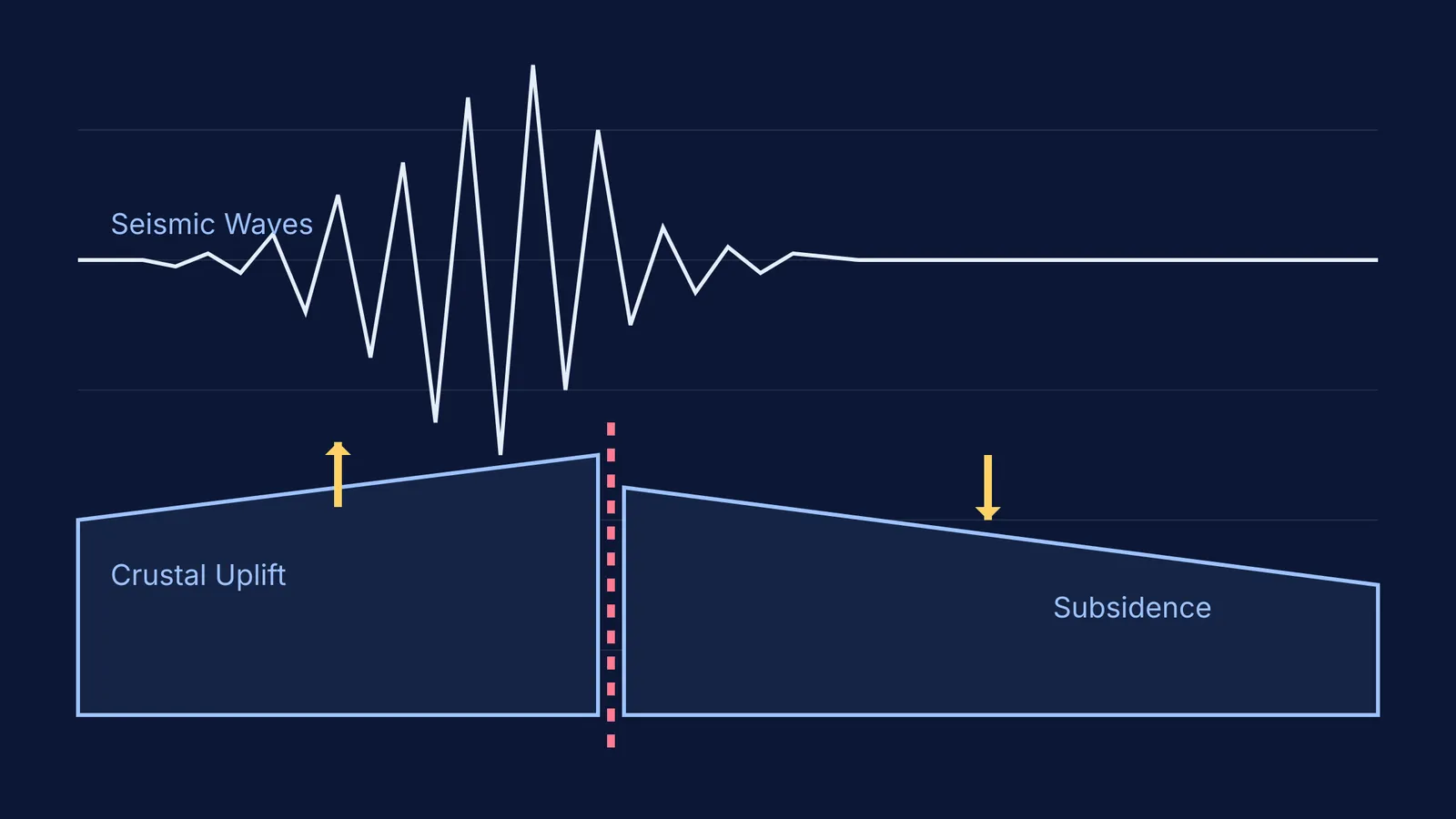
Beyond studying historical cycles, Imamura pioneered the measurement of crustal deformation—the physical warping of the Earth's surface as tectonic stress builds up. Building on the instruments of predecessors like John Milne and the horizontal pendulum seismograph, he looked for signs that the ground was storing energy before it snapped.
He used tiltmeters to measure minute changes in the angle of the ground, and he analysed tide gauge records to track slow vertical movements. If the sea level at a coastal gauge appeared to drop over decades, it often meant the land itself was rising (uplift) due to tectonic pressure. He realised that blocks of the Earth's crust tilt, rise and sink (subsidence) before an earthquake occurs. Today, tracking ground deformation using high-precision GPS is a standard part of earthquake monitoring. While researchers like Arthur Holmes and the convection currents inside the Earth later explained the deep mantle forces that drive tectonic plates, Imamura was among the first to systematically measure the strain those plates caused on the surface.
If you are studying these complex systems for an exam, finding the connections between physical forces and geological evidence can be tough. Fermi's AI tutor can work out what you already know and build a plan for the session, teaching you step by step instead of just giving answers.
A modern student's earthquake checklist
Imamura shifted seismology from just recording earthquakes to preparing for them. If you live in a seismic zone, you can apply his practical approach today:
Secure heavy items: Fasten bookshelves, wardrobes and televisions to the wall so they do not fall during shaking.
Plan for fire: Keep a working fire extinguisher in the kitchen and know how to turn off the main gas valve.
Know your exit route: Identify wide roads and open spaces near your home, just as Imamura suggested creating firebreaks.
Pack an emergency kit: Keep water, non-perishable food, a torch and basic first-aid supplies in a bag by the door.


