

On this page
Every mammal gets them, from human infants to dogs, yet hiccups serve no obvious purpose in adults. A hiccup is not a simple muscle twitch but a highly coordinated physiological sequence known as a reflex arc.
When you hiccup, your body is executing a pattern that happens in two distinct steps, separated by a fraction of a second. The diaphragm spasms, forcing a sudden breath in, and then your throat abruptly seals shut.
Why do we get hiccups?
A hiccup is a reflex arc controlled by a central "hiccup centre" located in the brainstem's medulla.
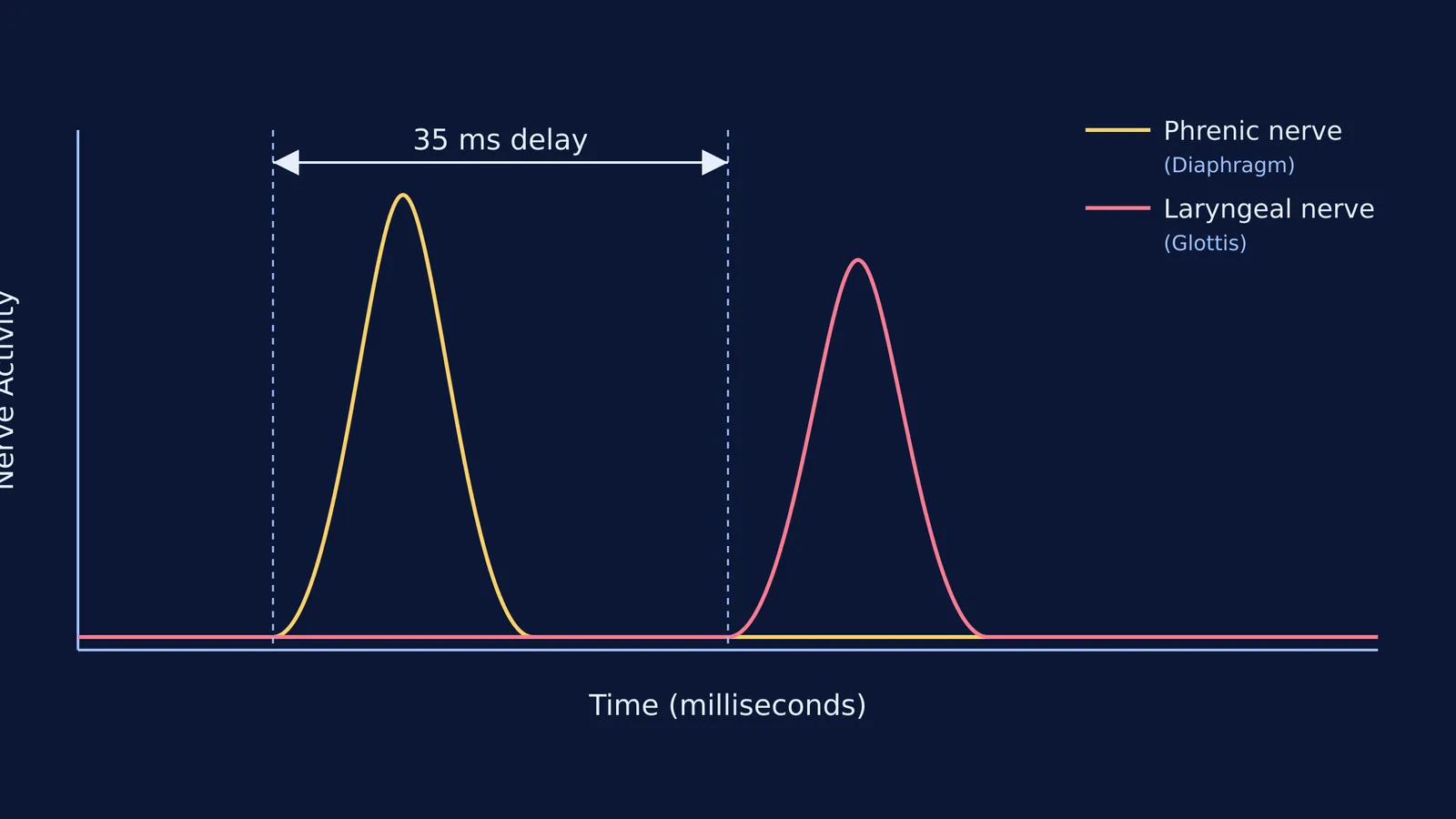
The process begins when sensory nerves—primarily the vagus nerve or the phrenic nerve—detect irritation in the digestive or respiratory tract. These nerves send an alert to the brainstem. In response, the brain fires a motor signal down the phrenic nerve to the diaphragm and intercostal muscles, causing them to contract violently.
Exactly 35 milliseconds later, a second signal travels down the recurrent laryngeal nerve to the vocal cords. The glottis (the opening between the vocal cords) snaps shut. This sudden closure cuts off the rush of air, producing the characteristic "hic" sound.
If you are studying biological processes like respiratory pathways or respiration as an amphibolic pathway, tracking these nerve signals can feel abstract. To see how pressure changes and biological rhythms work in motion, you can explore the Fermi Simulation Lab.
What triggers the reflex?
For most people, a bout of hiccups is triggered by mild irritation to the stomach or the nerves supplying the diaphragm. According to the Mayo Clinic, the most common short-term causes include eating a large meal, drinking carbonated beverages, sudden changes in temperature, or swallowing air while chewing gum. Emotional stress and sudden excitement can also set off the reflex.
In rare cases, hiccups can become persistent. If a bout lasts longer than 48 hours, it is no longer just a nuisance; it often indicates underlying nerve irritation, a metabolic issue, or a central nervous system disorder that requires medical attention.
Why did the hiccup reflex evolve?
Adults gain no benefit from hiccups, which has led researchers to look for their origin in our evolutionary past and early development. There are two leading theories.
The "burping hypothesis," detailed in a 2012 study in *BioEssays*, suggests that the reflex evolved to help suckling mammals remove swallowed air from the stomach. The sudden drop in chest pressure draws air up into the oesophagus, acting as a forced burp that creates more room for milk. This explains why infants spend a significant amount of time hiccuping compared to adults.
An earlier 2003 hypothesis in *BioEssays* points to our much deeper amphibian ancestry. The motor pattern of a hiccup—a sudden intake of fluid followed by glottal closure—is identical to the mechanism tadpoles use for gill ventilation. The reflex is inhibited by high carbon dioxide levels, a trait shared with lower vertebrates.
How can you stop hiccups?
Because the hiccup reflex is governed by the vagus nerve and carbon dioxide levels in the blood, most traditional remedies work by interrupting the reflex arc.
Increase carbon dioxide: Holding your breath or breathing into a paper bag raises the CO₂ concentration in your blood, which researchers have found naturally inhibits the hiccup centre in the brain.
Stimulate the vagus nerve: Drinking ice-cold water, sipping water while leaning forward, or briefly splashing cold water on your face stimulates the vagus nerve, which can "reset" the sensory input to the brainstem.
The Valsalva maneuver: Attempting to exhale forcefully against a closed airway (like bearing down) increases pressure in the chest and interrupts the reflex.
Learning how the nervous system regulates involuntary actions—from digestion to the movement of the human skeleton—is key to mastering human physiology. When you need to understand the mechanics behind the memorisation, you can ask Fermi's AI tutor to break down the steps of any reflex arc.


