

On this page
If you have ever tried to push through a tough physics chapter right after a large meal, you know the struggle. Your eyes glaze over, the page blurs, and staying awake feels like a physical fight. This postprandial somnolence—often called a "food coma"—is not just a lack of willpower. It is a biological response caused by the clash of your internal body clock and the chemistry of digestion.
Why do we feel sleepy after lunch?
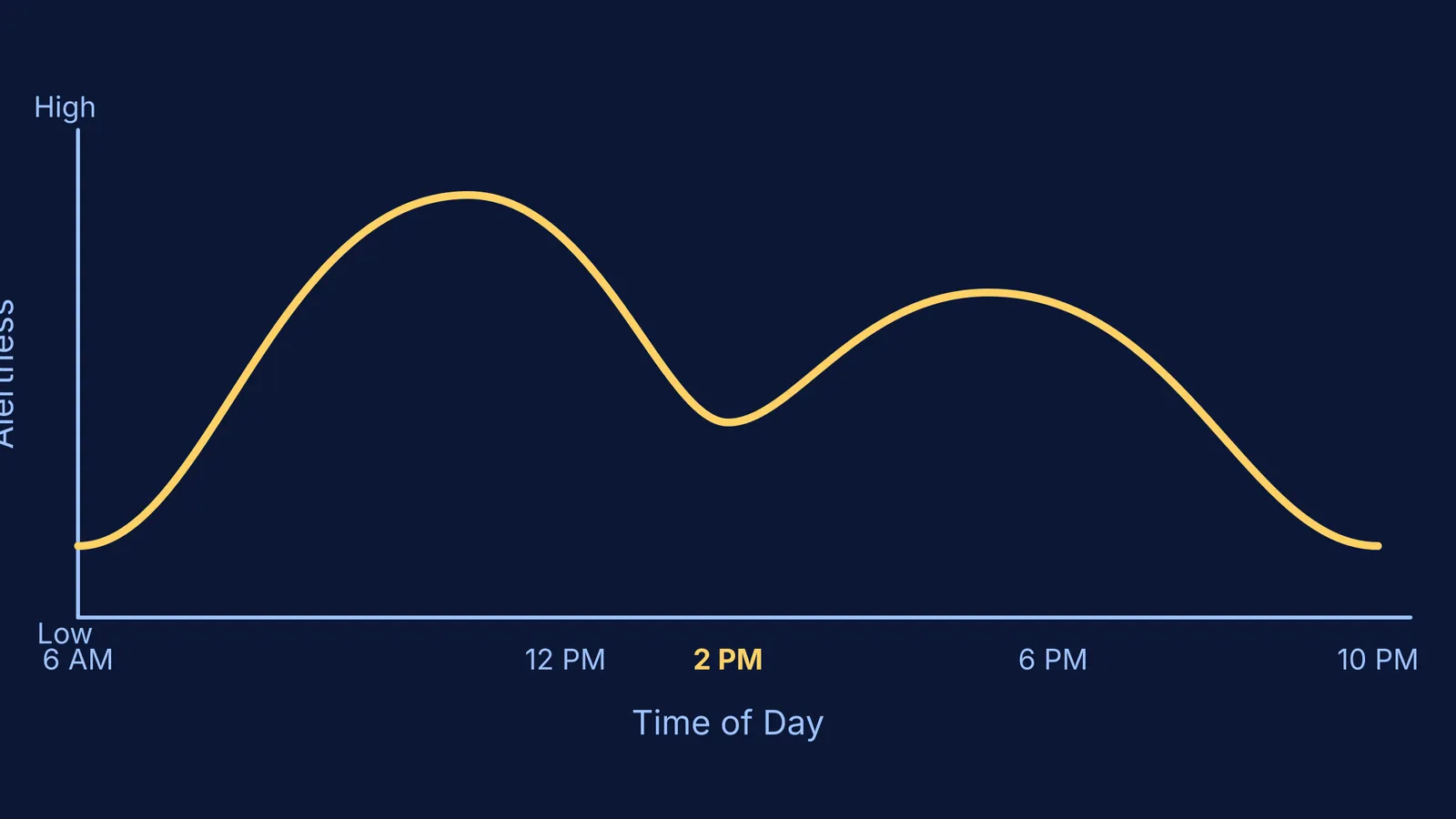
The foundation of afternoon tiredness is your circadian rhythm, the 24-hour internal clock that governs your sleep and wake cycles. Even if you skip lunch entirely, your alertness naturally dips in the early afternoon, typically between 1:00 PM and 4:00 PM.
During this window, your core body temperature drops slightly, mimicking the changes that happen right before you fall asleep at night. The brain’s wake-promoting signals quieten down, creating a secondary period of high sleep drive. When you add a heavy meal on top of this natural lull, the urge to sleep becomes overpowering.
How do carbohydrates cause sleepiness?
The composition of your lunch determines how hard the afternoon dip hits you. A 2021 study of medical students published by Abhishek Chaturvedi and colleagues found a strong link between meal heaviness and decreased responsiveness in afternoon lectures. The key mechanism involves how your body processes carbohydrates.
When you eat a meal rich in carbohydrates—like rice, bread, or potatoes—your blood sugar rises, prompting your pancreas to release insulin. Insulin is highly effective at moving most amino acids out of your bloodstream and into your muscles. However, it leaves one amino acid behind: tryptophan.
With the competing amino acids cleared out, tryptophan has a free pass to cross the blood-brain barrier. Once inside the brain, it is converted into serotonin, a neurotransmitter that regulates mood and relaxation, and then into melatonin, the primary hormone responsible for sleep. This chemical cascade directly induces a state of drowsiness.
Why does sugar turn off your brain?
It is not just the tryptophan pathway that puts you to sleep; the sheer amount of energy in your blood plays a role, too.
In a 2006 study published in the journal *Neuron*, researcher Denis Burdakov and his team at the University of Cambridge discovered a direct link between blood sugar and sleep signals. They found that high glucose levels inhibit orexin neurons in the hypothalamus.
Orexin (also known as hypocretin) is a neuropeptide responsible for keeping you awake, alert, and motivated to find food. When you eat and your blood glucose spikes, the glucose acts as a chemical signal that shuts down these orexin neurons. Essentially, once your body registers that it has been fed, the drive to stay alert and hunt for food turns off, leaving you lethargic.
How to stay alert and keep learning
If you sit down to read a textbook right after eating, your brain will struggle against its own chemistry. Passive reading is no match for the combined force of a circadian dip and a glucose spike.
To break the slump, you need to change how you study. Instead of staring at a page, switch to active learning methods that force your brain to process information. Working through problems or interacting with visual models requires a higher level of cognitive engagement, which can help override the sleep signals.
If you are trying to understand a complex physical system while battling the afternoon dip, use the Fermi Simulation Lab. Because it requires you to actively change variables and watch the immediate effects on the system, it keeps your hands and your mind moving, which is much harder to sleep through than a static diagram.
If you find yourself consistently losing the afternoon to sleepiness, it might be time to rethink how your day is structured. You can build a study routine that lasts by scheduling your most demanding, active problem-solving sessions for the early afternoon. Save lighter review tasks, or a properly scheduled study break, for the deepest part of the biological dip.
A plan for the afternoon study block
You cannot entirely switch off your biology, but you can plan around it. Here is a framework for managing the post-lunch dip:
Lighten the load: Swap heavy, carbohydrate-dense lunches for meals richer in protein and fibre. This slows the release of glucose, preventing the sudden insulin spike that drives tryptophan into the brain.
Move before you sit: Before returning to your desk, spend ten minutes moving. A short walk outside helps reset your alertness levels.
Start with output, not input: Do not begin your afternoon block by reading or watching video lectures. Start with practice questions or active recall exercises to force your brain into an engaged state.
Accept the dip: If you are too tired to do difficult physics problems, do not waste the hour staring at the wall. Pivot to low-stakes tasks like organising your notes, or take a deliberate, timed nap of 20 minutes (any longer, and you risk waking up groggy).
By understanding the chemistry behind the sleepiness, you can stop fighting it and start working with it, keeping your afternoons productive.


