

On this page
When you turn on the tap, you expect clear, scentless water. But sometimes, a distinct, bleach-like smell wafts up from the sink. While it might make you hesitate before taking a sip, this odour is actually a sign of the chemical processes keeping your water safe.
Water utilities worldwide add small amounts of chlorine-based disinfectants to public water supplies. This practice is one of the greatest public health achievements in history, as it prevents the spread of deadly waterborne diseases such as cholera, dysentery, and typhoid.
Why does tap water sometimes smell of chlorine?
Counterintuitively, a very strong "swimming pool" smell does not necessarily mean your utility has added too much chlorine. It usually means the opposite: the chlorine has actively done its job.
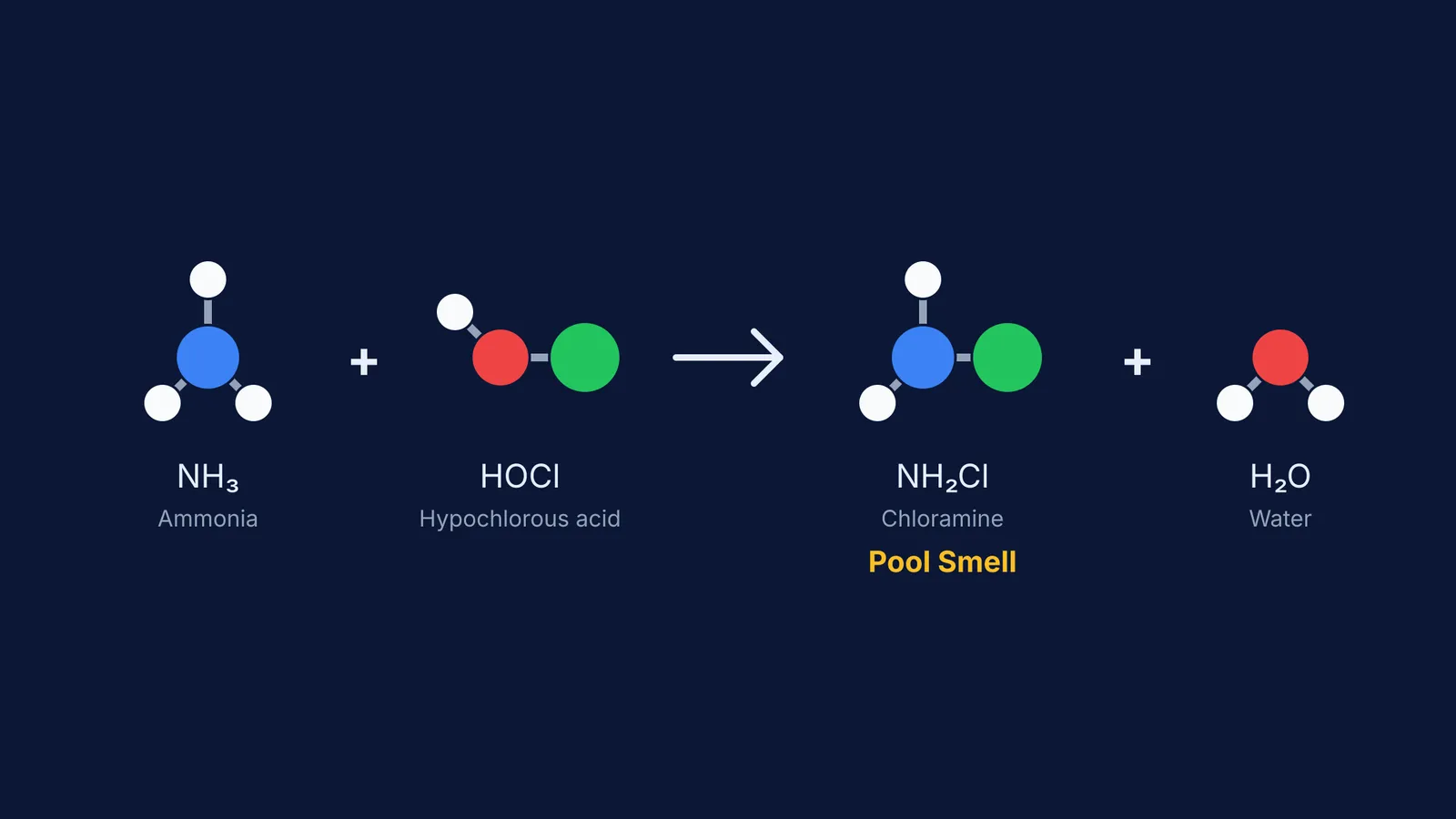
When free chlorine reacts with naturally occurring organic matter or ammonia in the water, it forms chemical compounds called chloramines. It is these chloramines—not the free chlorine itself—that give off the strong, pungent odour you associate with a public swimming pool. So, if your water smells strongly of chlorine, it is often a sign that the chlorine has combined with other elements and there is actually *less* free chlorine available to continue disinfecting.
According to the US Centers for Disease Control and Prevention (CDC), chlorine or chloramine levels up to 4 milligrams per liter (mg/L) are considered safe in drinking water. These low levels—which utilities carefully control using the same principles you learn when mixing and diluting solutions to find final molarity—kill harmful germs and are unlikely to make people sick.
The chemistry: How does chlorine kill germs?
The World Health Organization (WHO) produces international norms on water quality, advocating for chemical treatments that break down microbial hazards. But how exactly does this work at the molecular level?
When chlorine gas (Cl₂) is added to water (H₂O), a hydrolysis reaction takes place, reaching an equilibrium:
Cl₂ + H₂O ⇌ HOCl + HCl
This reaction produces hypochlorous acid (HOCl) and hydrochloric acid (HCl). The hypochlorous acid is the star of the show. Because HOCl is an electrically neutral molecule, it can easily penetrate the negatively charged cell walls of bacteria and viruses. Once inside the pathogen, it oxidizes the cell's organic molecules, destroying essential enzymes and deactivating the microbe. Knowing how oxidation states work from a molecule's structure helps explain why this oxidation is so destructive to the organism's proteins.
If you are a chemistry or biology student preparing for exams, visualising these reactions helps you understand equilibrium shifts and cellular transport. For the ideas that are easier to see than to read, the Fermi Simulation Lab offers interactive simulations that let you explore the science.
What happens when the pH changes?
The effectiveness of chlorine disinfection is highly dependent on the pH of the water. In acidic solutions, hypochlorous acid remains intact and powerful. However, in alkaline solutions (where the pH is high), HOCl dissociates into the hypochlorite ion (ClO⁻). The hypochlorite ion is negatively charged and struggles to pass through the bacterial cell wall, making it a much weaker disinfectant. You can read more about dealing with low-concentration acids in our guide on the pH of very dilute acid.
Sometimes, chlorine reacts with organic matter to form unwanted disinfection byproducts (DBPs), such as trihalomethanes. While long-term exposure to high levels of DBPs can pose health risks, municipal systems strictly monitor these levels. The WHO stresses that the risks from these trace byproducts are tiny compared to the immediate danger of waterborne diseases from untreated water.
How can you remove the chlorine smell from drinking water?
If the smell of your tap water bothers you, you can easily remove the odour at home.
Let it sit: Pour the water into a jug and let it sit uncovered in the fridge for a few hours. Free chlorine will evaporate into the air over time.
Boil it: Boiling the water for a few minutes will speed up the evaporation of the chlorine.
Use a filter: Activated carbon filters (found in many standard water filter pitchers) are excellent at removing both free chlorine and chloramines, improving both the taste and the smell.
Understanding the chemistry of your tap water reminds us that everyday phenomena are driven by molecular reactions. Whether you are balancing equations for a chemistry exam or just trying to make a better cup of tea, a little knowledge goes a long way.


