

On this page
When you take a photo of a laptop or television screen, you are layering two highly structured grids on top of each other. The first is the digital screen itself, which is composed of millions of tiny red, green, and blue sub-pixels meticulously arranged in rows and columns. The second is the camera's sensor, which relies on its own microscopic grid of light-sensitive photosites overlaid with a colour filter array.
What is the physics of the moiré effect?
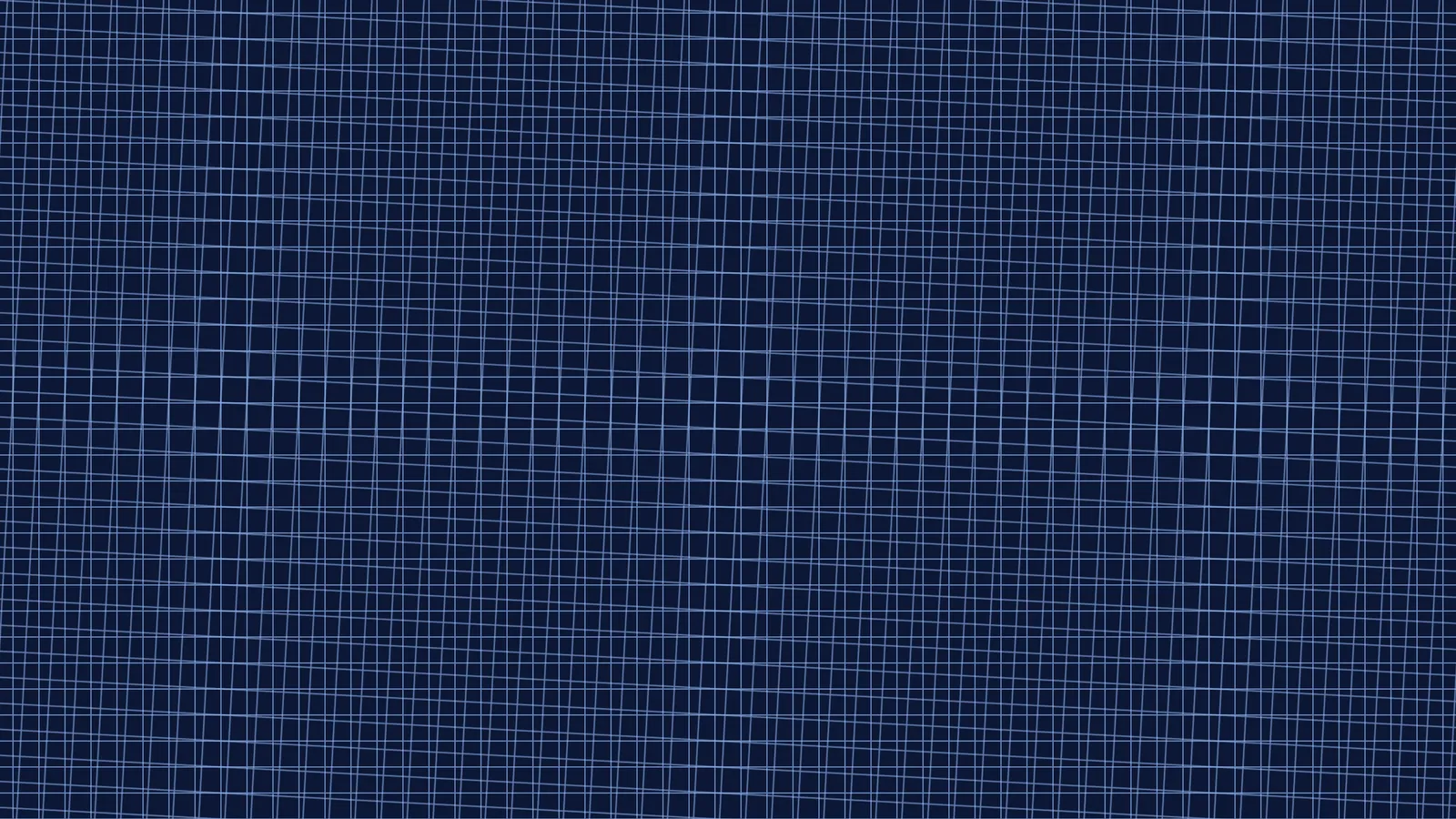
When these two precise grids are superimposed but not perfectly aligned, they produce a new, large-scale interference pattern called a moiré pattern. In physics, this phenomenon is the direct spatial equivalent of an acoustic "beat."
Just as two sound waves with slightly different frequencies combine to create a slower, pulsing thrum when played together, two physical grids with slightly different spatial frequencies interact to form a much larger, visible pattern of wavy stripes. The peaks and valleys of the screen's pixel grid periodically align and then misalign with the peaks and valleys of the camera sensor's grid. Where they align, light passes efficiently; where they misalign, the light is blocked. This creates a low-frequency repeating pattern of light and dark bands that does not exist on the screen or the sensor alone.
To explore how light entering glass changes its speed and wavelength when passing through different mediums, students often study wave properties, but interference is often best understood visually rather than mathematically. If you are struggling to picture how wave frequencies overlap and interfere to create new patterns, the Fermi Simulation Lab provides interactive simulations for the ideas that are easier to see than to read.
Why does spatial aliasing happen?
The rigorous mathematical explanation for these stripes lies in the limits of digital sampling. According to the Nyquist–Shannon sampling theorem, to perfectly reconstruct a signal without aliasing, a sensor must sample it at at least twice its highest spatial frequency.
Spatial frequency measures how often a structure repeats over a given distance. If your camera's pixel grid isn't fine enough—meaning it samples at less than twice the frequency of the TV screen's pixel grid—the camera cannot accurately resolve the individual pixels. Instead, the camera sensor "aliases" or folds this uncaptured high-frequency detail into a low-frequency signal. The physical result of this undersampling is the strange, swirling bands that appear across your photo.
A 2020 study on removing moiré patterns explains that these artifacts occur specifically because the camera's colour filter array interferes with the precise sub-pixel layout of the digital screen. Modern sensors usually apply a Bayer filter—a mosaic of red, green, and blue filters over the photosites. Because the screen also emits light in a grid of red, green, and blue, the two colour grids clash.
How can I take clear photos of a screen?
You can easily stop these stripes from ruining your photos by changing the spatial frequency or breaking the geometric alignment of the grids.
Change your physical distance: Move the camera slightly closer or further away from the screen. This scales the apparent spatial frequency of the screen's grid relative to your fixed camera sensor, often pushing it out of the aliasing zone.
Tilt the camera: Rotating your lens to the side by a few degrees breaks the parallel alignment between the two square grids, which usually makes the moiré interference pattern disappear entirely.
Defocus slightly: By tapping your smartphone screen to focus on the plastic frame of the TV rather than the pixels themselves, you slightly blur the screen's grid. If the camera can no longer resolve the high-frequency pixels, there is no fine pattern left to interfere with its own sensor.
Zoom in optically: Using an optical zoom lens rather than digital zoom enlarges the physical details of the screen's pixels, changing their spatial frequency and breaking the beat pattern.
When studying optics and interference for competitive exams, identifying how lenses, sensors, and slits resolve fine details is a common stumbling block. Instead of just returning a final number for an optics problem, the Fermi Problem Library has worked problems with a step-by-step solver that explains the reasoning rather than printing an answer, helping you master resolution limits before test day.


