

On this page
If you have ever picked up a decades-old paperback or a newspaper left in the sun, you have likely noticed that the pages have turned a brittle, yellowish-brown. This is not just accumulated dirt; it is the result of irreversible chemical reactions happening within the paper itself.
The degradation of old books comes down to the organic chemistry of the materials used to make them. Specifically, two distinct processes are at play: the oxidation of lignin, which causes the yellowing, and the acid-catalysed hydrolysis of cellulose, which causes the brittleness.
Why do pages of old books turn yellow?
To understand why paper yellows, we first have to look at what paper is made from. Wood is primarily composed of two polymers: cellulose and lignin. Cellulose provides the structural framework and is naturally white because it reflects all wavelengths of visible light. Lignin, on the other hand, acts like a glue that binds the cellulose fibres together, providing rigidity to the plant cell walls.
When wood is milled to make paper, high-quality manufacturing processes chemically bleach and remove the lignin. This is why expensive, archival-quality books remain white for centuries. However, removing lignin is expensive. Cheap paper—such as newsprint and mass-market paperbacks—retains a high concentration of lignin.
According to a review published in the journal *BioResources*, the yellowing process begins when lignin is exposed to ultraviolet (UV) light and atmospheric oxygen. The UV light provides the energy needed to cleave chemical bonds in the lignin polymer, such as the β-O-4 aryl ether bonds. This cleavage creates highly reactive phenoxyl radicals. (If you are studying organic chemistry for competitive exams, you can see similar radical intermediates discussed in the bromination of phenol).
These phenoxyl radicals then react with oxygen to form new molecular structures called quinones.
How do quinones change the colour of paper?
Quinones are a type of chromophore (from the Greek for "colour bearer"). Chromophores are the parts of a molecule responsible for its colour, determined by how their electrons are arranged.
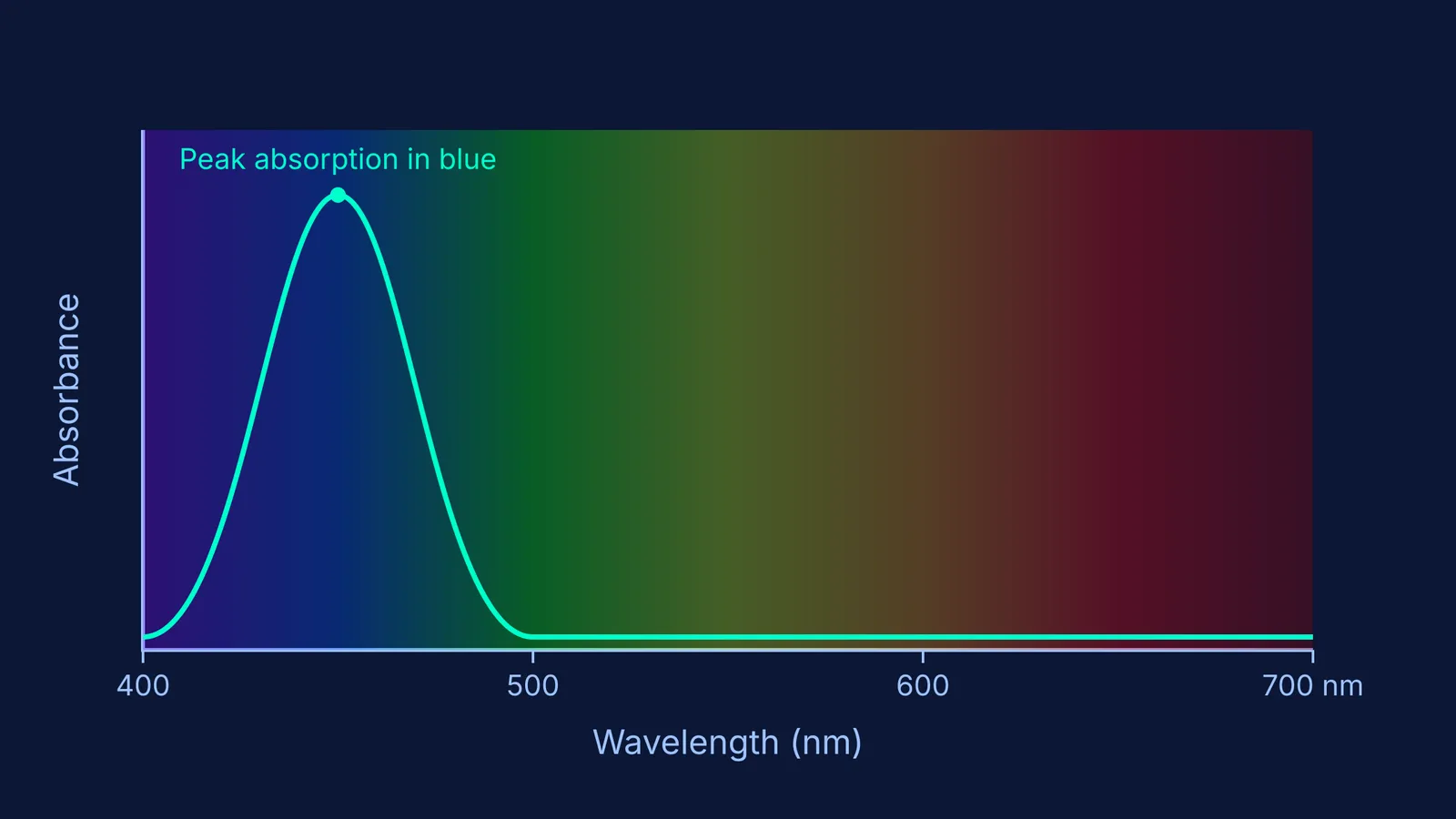
When white light (which contains all colours of the visible spectrum) hits a page containing quinones, the chromophores strongly absorb the shorter wavelengths—specifically blue and ultraviolet light. Because the blue light is absorbed, the light that bounces back to your eyes is rich in longer wavelengths like red and green, which combine to look yellow or brown.
Visualising how molecular structures absorb different wavelengths can be challenging from a textbook alone. If you want to build an intuition for how light interacts with matter, the Fermi Simulation Lab provides interactive simulations for the ideas that are easier to see than to read.
Why do old books become brittle?
Yellowing is often accompanied by extreme brittleness, where pages crumble at the slightest touch. While lignin oxidation causes the colour change, a completely different chemical process causes the structural breakdown: acid hydrolysis.
From the mid-19th century until the late 20th century, paper manufacturers commonly used alum-rosin sizing to make paper water-resistant so ink would not bleed. The sizing process used papermaker's alum (aluminium sulphate).
Over time, when exposed to environmental moisture, the alum undergoes hydrolysis to release hydronium ions (H₃O⁺), making the paper highly acidic. A study in *Carbohydrate Polymers* confirms that this acidic environment (often dropping to a pH of 4.0 to 5.5) catalyses the breaking of the β-1,4-glycosidic bonds that link the glucose units in cellulose.
As these long cellulose chains are broken into shorter pieces—a process known as reducing the degree of polymerisation—the paper loses its mechanical strength.
How can you slow down paper degradation?
While the chemical breakdown of cheap paper is inevitable, you can significantly slow the reaction rates by controlling the environment.
Here is a checklist for preserving important documents or cherished books:
Block the UV light: Store books away from direct sunlight. UV radiation is the primary catalyst for generating the phenoxyl radicals that lead to yellowing.
Control the humidity: High moisture levels accelerate both the acid hydrolysis of cellulose and the oxidation of lignin. Keep books in a dry environment.
Lower the temperature: As with most chemical reactions, heat speeds up paper degradation. Storing books in a cool room will slow the formation of quinones.
Look for the infinity symbol: When buying notebooks for long-term use, check the copyright page or the packaging for an infinity symbol (∞) inside a circle. This indicates the paper is acid-free and will resist both yellowing and brittleness.
By understanding the underlying chemistry—from oxidation pathways to acid hydrolysis—you can see that a yellowing book is not just aging; it is actively reacting with the world around it. (You can explore more about oxidation reactions in our guide to hydroboration-oxidation).


