

On this page
Cotton is a natural polymer made almost entirely of cellulose. Cellulose consists of long chains of glucose molecules packed tightly together to form robust fibres.
These chains are held in place by a dense network of hydrogen bonds. Hydrogen bonds are electrostatic attractions between the slightly positive hydrogen atoms of one chain and the slightly negative oxygen atoms of another. While a single hydrogen bond is relatively weak, the sheer number of them in a cotton shirt gives the fabric its strength and rigid structure. (For more on how these forces work within molecules, you can review the rules of intramolecular hydrogen bonding).
Why do clothes crease in the wash?
Hydrogen bonds are dynamic, meaning they can break and reform when surrounding conditions change. When you put a cotton shirt in the washing machine, water molecules rapidly penetrate the cellulose fibres.
Water is a highly polar molecule and acts as a powerful lubricant. It inserts itself between the cellulose chains, competing for the hydrogen bonding sites and effectively severing the existing links between the fibres. This allows the cellulose chains to slide past one another freely. (This is a physical change driven by water's polarity, quite different from the chemical processes involved in how soaps clean using micelles).
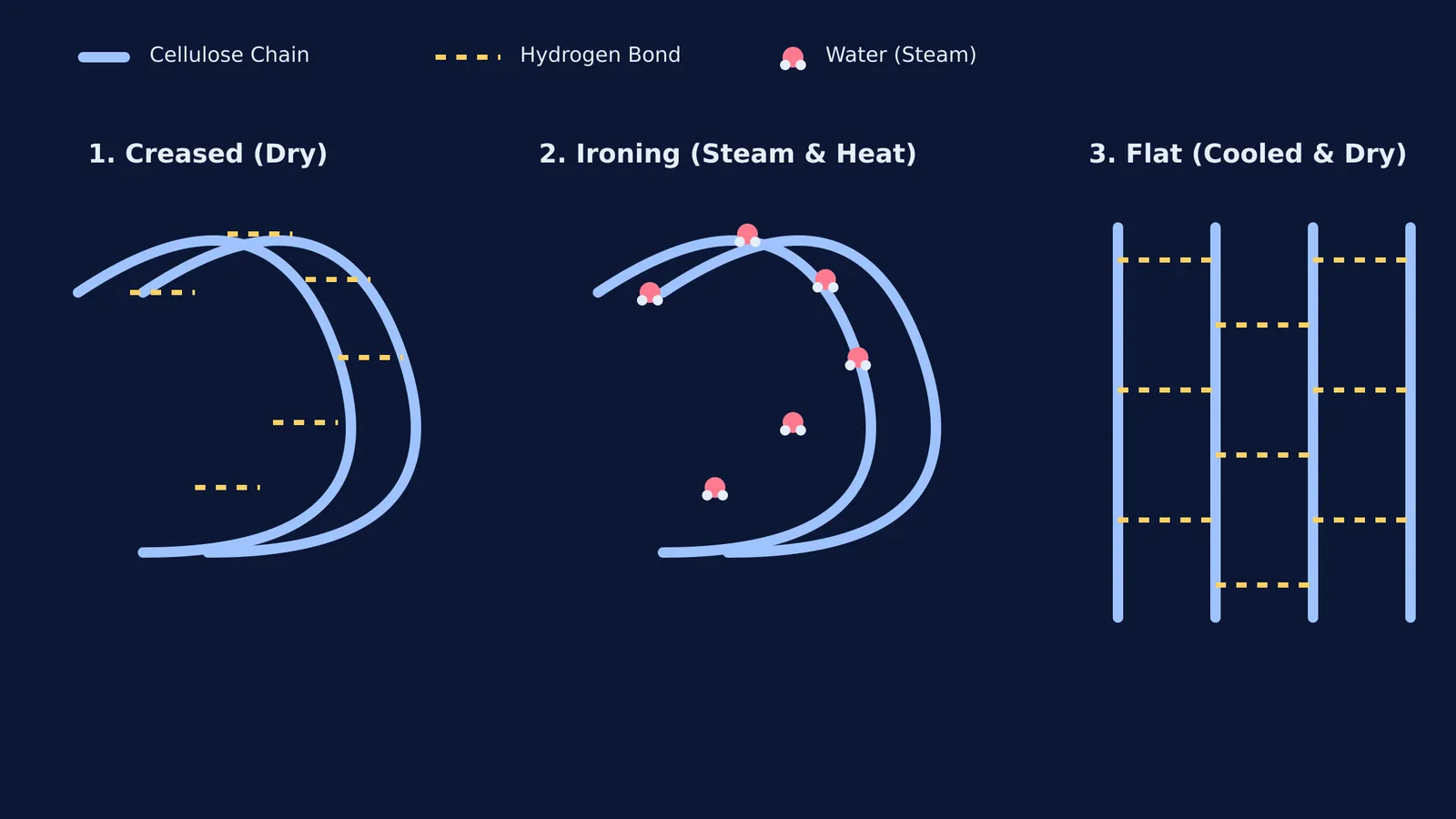
As the washing machine spins, the wet clothes become tangled, folded and twisted. When the clothes are left to dry in this crumpled state, the water gradually evaporates. Without the water molecules acting as a spacer, the cellulose chains bind to one another once again. They form new hydrogen bonds in whatever bent or folded position they happen to be in, locking those sharp creases into the fabric.
How does ironing remove creases?
To remove a stubborn crease, you have to break those newly formed, disordered hydrogen bonds and force the cellulose chains back into a uniform, flat alignment.
This process relies on a physical property known as the glass transition temperature. The glass transition temperature (T_g) of dry cellulose is approximately 220 °C. Below this temperature, the polymer remains rigid and "glassy"; once heated above it, the chains become pliable, mobile and "rubbery".
Because 220 °C is dangerously close to the temperature at which cotton will scorch or burn, ironing a bone-dry shirt with a dry iron is both difficult and risky. You simply cannot safely reach the temperature required to make the dry fibres pliable.
This is where steam becomes essential. Moisture acts as a plasticiser for the cellulose. When you apply steam or spray a mist of water onto the fabric, the water molecules wedge between the polymer chains again. This significantly lowers the glass transition temperature, allowing the fibres to become pliable at much safer, lower ironing temperatures.
If you struggle to picture how heat and moisture alter these intermolecular links, the Fermi Simulation Lab contains interactive simulations for the ideas that are easier to see than to read, letting you observe bonds breaking and reforming in real time.
How does the fabric set flat?
Once the heat and moisture have sufficiently loosened the bonds, the physical pressure of the iron comes into play. The sheer weight and steady movement of the hot metal plate force the now-rubbery, pliable cellulose chains to lie parallel to one another.
As the iron moves away from a section of the cloth, the heat dissipates into the surrounding air and the residual water evaporates. The temperature of the fabric quickly drops back below its lowered glass transition point. The hydrogen bonds reform rapidly, but this time they lock the cellulose chains into the new, smooth, flattened configuration dictated by the iron's pressure.
Understanding this underlying chemistry offers a practical rule for your everyday laundry routine: always aim to iron cotton clothes while they are still slightly damp. The residual moisture lowers the glass transition temperature before you even apply the iron, meaning you need less heat and significantly less effort to achieve a crisp, flat finish.


