

On this page
Coriander—also known as cilantro in many parts of the world—is an herb that divides the dinner table. While many people love its fresh, citrusy flavour and consider it an essential garnish for curries, salsas, and soups, others insist it tastes exactly like a bar of soap. This culinary divide is not just a matter of picky eating or cultural unfamiliarity. It comes down to a fascinating interplay between organic chemistry and human genetics, specifically a variation in a gene that builds our smell receptors.
Why does coriander taste like soap to some people?
The characteristic scent of coriander comes from a group of organic compounds known as aldehydes. Specifically, lipid-rich molecules like decanal and (E)-2-decenal are responsible for the herb's distinct aroma.
Aldehydes are a broad class of chemical compounds, and they are incredibly common in nature. However, these exact same aldehyde molecules are also produced as a byproduct during the soap-making process. Furthermore, they are secreted by certain insects, such as stinkbugs, as a chemical defence mechanism to ward off predators.
When you eat coriander, your olfactory system detects these volatile compounds as they travel from the back of your throat up into your nasal cavity—a process called retronasal olfaction. For most people, the brain processes these specific aldehyde signals as a pleasant, herbal flavour. However, if you possess a specific genetic variant, your smell receptors become highly sensitive to these specific aldehydes, causing your brain to interpret the chemical signal as a mouthful of soap.
How does the OR6A2 gene affect taste?
The biological root of this soapy aversion lies in your DNA. A 2012 study of 26,455 people by Nicholas Eriksson and researchers at 23andMe found that a specific genetic variant near the OR6A2 olfactory receptor significantly influences coriander preference.
The OR6A2 gene is located on human chromosome 11 and encodes a Class II olfactory receptor protein in the nose. This receptor is a G-protein-coupled receptor (GPCR) that is highly responsive to aldehyde chemicals. Individuals who inherit a specific single-nucleotide polymorphism (SNP) near this gene—particularly those with two copies of the variant—are structurally predisposed to detect the soapy aroma with much greater intensity. Because our perception of flavour is overwhelmingly driven by our sense of smell, this nasal receptor directly dictates how the herb tastes on the tongue.
If you are studying the biochemistry of taste and smell, visualizing how these small molecules bind to receptor proteins can be a challenge. The Fermi Simulation Lab allows you to explore molecular interactions interactively, making it easier to see how a specific ligand triggers a neural response. You can also read more about how hormones act: membrane receptors vs intracellular receptors to understand the broader mechanics of cell signalling, or explore Kikunae Ikeda and the discovery of umami taste for another example of how chemistry shapes our palate.
Who is most likely to dislike coriander?
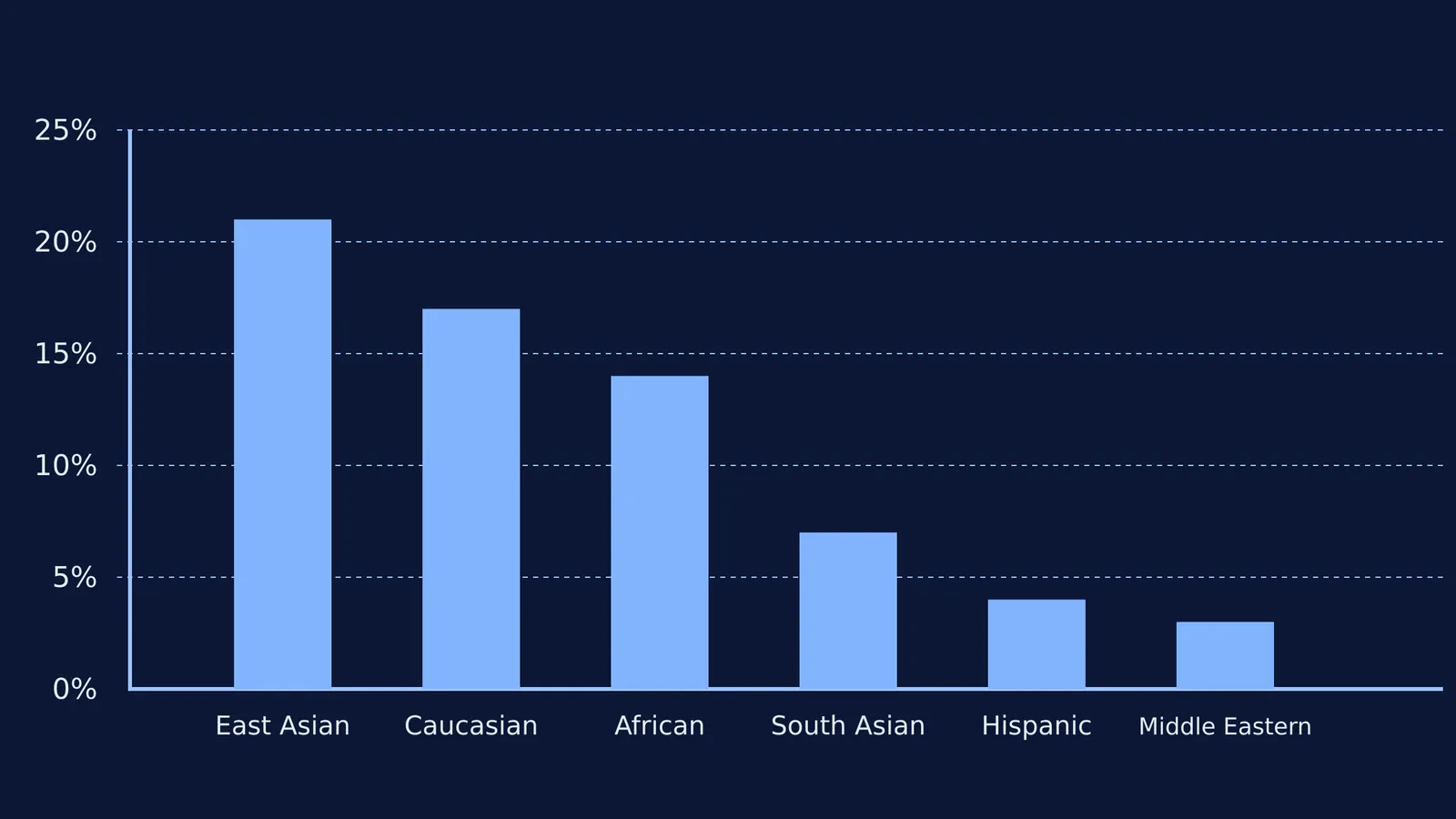
The prevalence of this genetic trait is not evenly distributed across the globe. The dislike of coriander varies significantly depending on a person's ancestry, which may explain why the herb is heavily used in some regional cuisines but entirely absent in others.
According to a 2012 study, 21% of East Asians, 17% of Caucasians, and 14% of people of African descent report that coriander tastes like soap. In contrast, the aversion is far less common in regions where the herb is an ancient, staple ingredient. Only 7% of South Asians, 4% of Hispanics, and 3% of Middle Easterners share this dislike.
Can you learn to like it?
While genetics lay a strong foundation for this aversion, DNA is not the sole deciding factor. Environmental factors, cultural upbringing, and repeated exposure can also alter your perception of flavour over time. The brain is highly neuroplastic, meaning that repeated positive experiences with coriander can sometimes override the initial genetic aversion.
However, if you genuinely cannot stand the taste of coriander, you are not imagining it. You can confidently point to the aldehydes on your plate and blame your OR6A2 gene rather than your culinary palate.


