

On this page
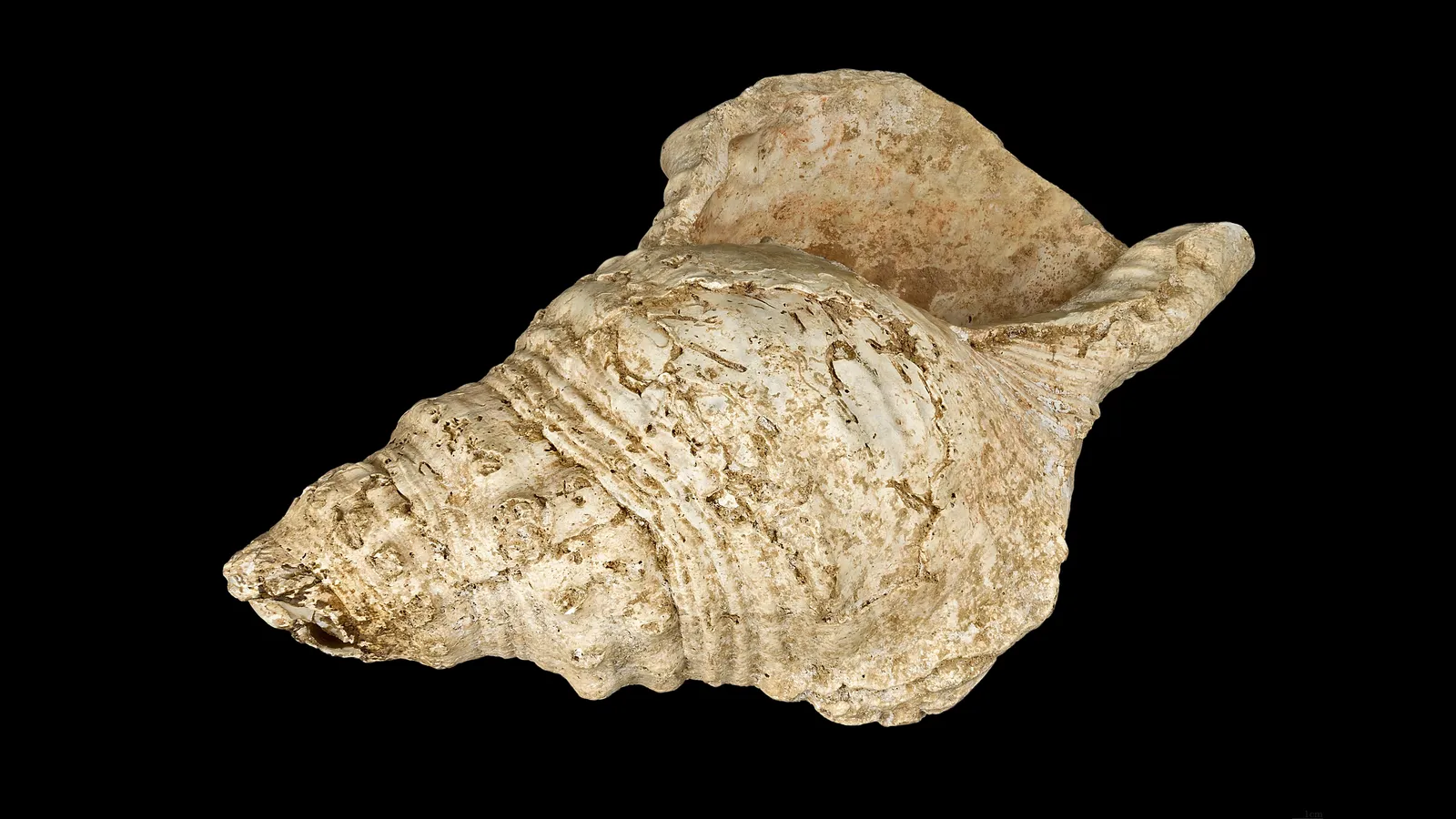
When you hold a conch shell to your ear, you hear a rushing sound that closely mimics the ocean. A common folk myth is that you are hearing the echo of your own blood, or even the magical sound of the sea itself. In reality, the sound is a classic demonstration of acoustic resonance and the amplification of ambient noise.
According to a Wikipedia article on seashell resonance, the shell acts as a resonant cavity that filters and amplifies external noise. If you were to take the shell into a perfectly soundproof room, it would produce no sound at all.
Why does a conch shell act as a resonator?
A conch shell is essentially a complex, naturally occurring Helmholtz resonator. A Helmholtz resonator is a container with a wide cavity and a narrow opening. When air moves past or into the opening, the volume of air inside the cavity begins to vibrate.
The hard, curved interior of the conch shell is excellent at reflecting sound waves. As ambient noise—such as the wind, a distant conversation, or the low hum of an air conditioner—enters the shell's hollow cavity, the sound waves bounce repeatedly against the internal walls. Because of the shell's specific volume, shape, and narrow opening, it naturally vibrates at certain preferred frequencies. The shell amplifies the frequencies that match its own natural resonance and strongly dampens all the others.
This selective amplification creates standing waves inside the shell, following the same physics as standing waves in strings and pipes. The resulting sound is a broad-spectrum, multi-tonal noise that happens to sound a lot like crashing ocean waves.
Is it the sound of your blood?
One of the most persistent myths is that the shell amplifies the sound of blood flowing through the tiny vessels in your ear.
If this were true, the "ocean" sound would speed up and grow considerably louder after you exercise, as your heart rate increases and your blood pressure changes. However, the sound remains constant regardless of your pulse. A HowStuffWorks explanation notes that the sound is entirely dependent on the ambient noise present in your environment, not on the internal workings of your circulatory system.
When you press the shell firmly against your ear, you also create what acousticians call an occlusion effect. This physical seal blocks out many of the higher-frequency external sounds from reaching your eardrum. Without those high pitches competing for your attention, the lower-frequency internal resonance of the shell becomes much more prominent and clear.
How does cavity volume change the sound?
The specific pitch of the "sea" you hear depends entirely on the size of the shell. In a Helmholtz resonator, the resonant frequency is inversely proportional to the square root of the cavity's volume.
A larger conch shell contains a larger volume of air, which vibrates more slowly. This produces a deeper, lower-pitched roar. A smaller shell, like a small snail shell, contains less air and will resonate at a higher frequency, producing a sound more like a high-pitched hiss than a deep ocean wave.
If you have multiple shells of different sizes, you can hold them to your ear one by one to hear how the pitch of the resonance drops as the cavity volume increases.
How can you visualise this acoustic resonance?
The physics governing a conch shell is identical to the physics of air columns in musical instruments, or the displacement and pressure waves in sound that you study in physics class.
To truly understand how sound waves reflect, interfere, and create standing waves, you need to see them move in real time. The Fermi Simulation Lab provides interactive simulations for the ideas that are easier to see than to read.
The next time you pick up a large shell at the beach, remember that it is not holding onto a memory of the sea. It is simply catching the subtle noises of the world around you and playing them back as an acoustic illusion.


