

On this page
The Enemy is chapter 4 of Vistas, the NCERT supplementary reader for Class 12, and you can read the full text free on the NCERT textbook site. The author, Pearl S. Buck, won the Nobel Prize in Literature in 1938.
What happens in The Enemy?
Dr Sadao Hoki, a Japanese surgeon trained in America, lives in a stone house above a narrow beach on the Japanese coast with his wife Hana and their two children. He is kept at home because the old General may need an operation, as the NCERT text explains.
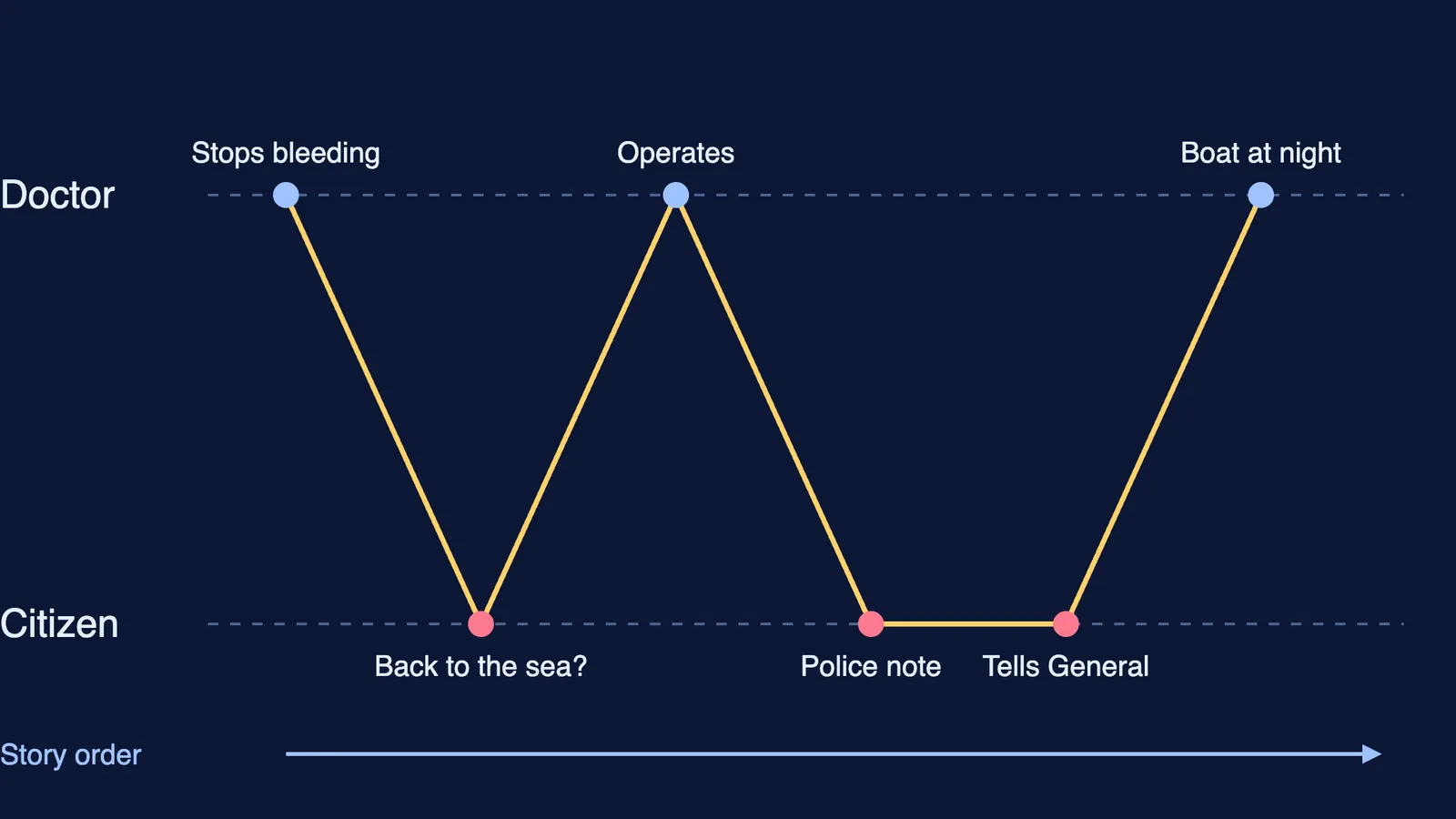
One foggy evening a young white man is thrown out of the sea onto their beach, with a reopened gunshot wound in his back. His cap shows he is from the US Navy: an escaped prisoner of war. Sadao thinks of putting him back in the sea, but neither he nor Hana can do it, so they carry him inside.
Sadao operates and takes out the bullet. The servants refuse to help and later leave together. The American, Tom, recovers. Sadao types a letter to the police but hides it unfinished.
The General offers to send his private assassins to kill the prisoner at night, and Sadao agrees. For three nights nothing happens. So Sadao gives Tom a boat, food and his own flashlight, and tells him to row to a small island and wait for a Korean fishing boat. Tom escapes. The General later admits he forgot his promise because he was in pain. The story ends with Sadao asking himself, "I wonder why I could not kill him?"
What are the main themes of The Enemy?
Duty as a doctor against duty as a citizen. Sadao tells Hana, "Americans are our enemies. But I have been trained not to let a man die if I can help it."
Humanity above hatred. Hana washes the man herself, asking, "Is this anything but a man? And a wounded helpless man!"
Prejudice on both sides. Sadao had great difficulty finding a place to live in America because he was Japanese, yet he saves an American.
Self-interest in power. The General forgets the killing because, in his words, "I thought of nothing but myself."
Who are the main characters in The Enemy?
Dr Sadao: skilled, proud, loyal to Japan, but bound by his training. He never says he likes the prisoner; he acts for him anyway.
Hana: frightened yet steady. She backs her husband when the servants defy them and gives the anaesthetic though she has never seen an operation.
Tom: young, scarred, afraid of being handed over, and grateful.
The General: self-absorbed; he wants the prisoner quietly killed mainly so that his own surgeon is not arrested.
The servants: they voice the public view that the enemy should be left to die.
What questions come in the board exam from The Enemy?
The Enemy is one of six Vistas chapters on the CBSE English Core syllabus for 2026-27. Vistas questions appear in three forms there: a prose extract worth 4 marks, short answers of 40-50 words worth 2 marks each, and one long answer of 120-150 words worth 5 marks.
The CBSE 2026-27 sample question paper uses The Enemy for one of its two 5-mark Vistas options, asking whether Sadao's decision to shelter an enemy soldier is moral courage. The NCERT chapter's "Reading with Insight" questions point the same way. Likely questions:
Discuss the conflict between Sadao's role as a doctor and as a patriot.
Why did Hana support her husband when the servants refused to help?
Was the General's attitude loyalty, neglect of duty or self-absorption?
Was Sadao's final solution the best one possible?
How do you write the 5-mark answer on Sadao's dilemma?
Use a four-part plan:
Take a side in one line. Yes, it was moral courage.
Show the citizen's pull. Arrest risk, the servants leaving, the report to the General.
Show the doctor's pull. The operation and his line about not letting a man die.
Close with the ending. The boat, the flashlight, and his final question.
A sample answer:
"Yes, Sadao's choice is moral courage, because he acts against every pressure around him. As a Japanese citizen in wartime, he knows sheltering an American prisoner could get him arrested, and his servants leave in protest. Yet his surgeon's training wins: he operates and saves the sailor, saying he has been trained not to let a man die if he can help it. His courage is not perfect. He agrees to let the General's assassins kill the man, which shows his loyalty to Japan pulling hard. But when no killing happens, he acts alone, giving Tom a boat, food and his flashlight. Courage here means choosing humanity while feeling its cost."
Reread the chapter with this plan beside you, then write one timed answer. The same plan-first habit helps in science: Fermi's AI tutor can work out what you already know and build a plan for the session, so you sit down to a clear next step.


