

On this page
In Chapter 9 of the Class 11 NCERT Biology textbook, a concise summary titled Table 9.5 lists six proteins alongside their physiological duties: collagen, trypsin, insulin, antibody, receptor, and GLUT-4. While simple at first glance, this single table generates a disproportionate number of objective questions in the National Testing Agency NEET examination.
Exam setters rely on Table 9.5 because it bridges elementary biochemistry with animal physiology, endocrinology, and human health. Understanding the precise terminology and functional classifications used in this table helps you secure high-yield marks on matching questions that regularly trip up candidates under time pressure.
Which proteins and functions are listed in NCERT Table 9.5?
The textbook establishes six representative proteins to show that proteins are dynamic heteropolymers rather than passive structural matter:
Collagen functions as intercellular ground substance. As reviewed by Shoulders and Raines (2009), collagen is a fibrous triple-helical protein that forms the scaffolding of connective tissues, skin, tendon, and bone matrix.
Trypsin acts as a digestive enzyme. Synthesised by the pancreas as the inactive zymogen trypsinogen, it hydrolyses peptide bonds in the small intestine, operating as one of the six enzyme classes categorised by the International Union of Biochemistry.
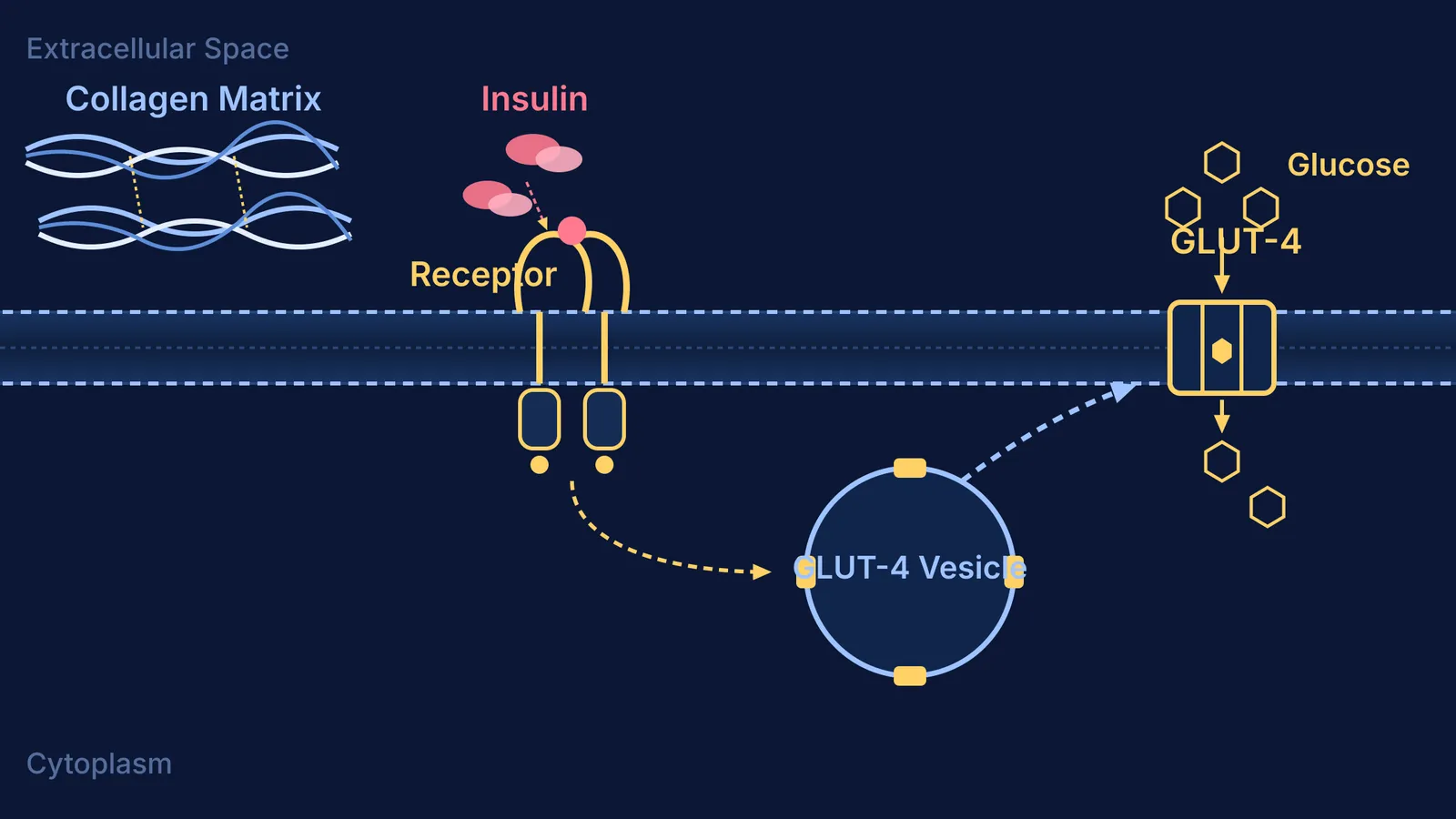
Insulin functions as a hormone. Comprising two disulfide-linked polypeptide chains, it is released by pancreatic beta cells to regulate blood glucose homeostasis, as detailed in our guide to recombinant insulin production.
Antibody acts to fight infectious agents. Secreted by plasma B cells, these Y-shaped immunoglobulin molecules recognise specific antigens to neutralise bacteria, viruses, and toxins.
Receptor mediates sensory reception, detecting smell, taste, and hormones. These include membrane-bound G-protein-coupled receptors in olfactory epithelium and receptor tyrosine kinases such as the human insulin receptor characterized by Ullrich et al. (1985).
GLUT-4 enables glucose transport into cells. Expressed in skeletal muscle, cardiac muscle, and adipose tissue, this transporter facilitates passive glucose uptake across the plasma membrane down its concentration gradient.
Why is GLUT-4 so frequently tested in NEET?
Among the six entries in Table 9.5, GLUT-4 appears repeatedly in NEET because of its unusual physiological regulation. While baseline glucose transporters such as GLUT-1 maintain basic cellular uptake independently of hormones, GLUT-4 is strictly insulin-dependent. First cloned by James et al. (1989), GLUT-4 consists of 509 amino acids crossing the membrane in 12 alpha-helices.
In resting muscle and adipose cells, roughly 90% of GLUT-4 molecules remain sequestered within intracellular storage vesicles (James et al., 1989). When circulating insulin binds to its cell-surface receptor, an intracellular signaling cascade triggers the translocation and fusion of these vesicles with the plasma membrane. This mechanism allows glucose entry by facilitated diffusion without direct expenditure of ATP. The 2019 NEET paper asked specifically which glucose transporter is insulin-dependent, making GLUT-4 a compulsory fact for medical aspirants.
When connecting membrane transport mechanisms to systemic endocrinology, the Fermi Concept Library maps every concept in physics, chemistry, biology, mathematics and computing, each with its own lesson and its place in the map.
How do collagen and RuBisCO differ in biological abundance?
Directly below Table 9.5, NCERT highlights two critical abundance records that frequently appear as distractor statements in competitive tests. Collagen is the most abundant protein in the animal world, while RuBisCO (ribulose-1,5-bisphosphate carboxylase-oxygenase) is the most abundant protein in the whole of the biosphere.
In animal bodies, collagen constitutes approximately one-third of total protein mass, providing structural tensile strength across organs (Shoulders and Raines, 2009). Across the planet, photosynthetic carbon fixation relies on RuBisCO. A global quantitative census by Bar-On and Milo (2019) estimated total global RuBisCO mass at approximately 0.7 gigatonnes, with more than 90% residing in the leaves of terrestrial plants where it accounts for roughly 3% of total leaf dry mass.
How should you solve NEET match-the-column protein questions?
When facing match-the-column questions built around Table 9.5, standard elimination techniques allow you to navigate the question rapidly:
Identify the high-specificity anchors first. Pair GLUT-4 with "enables glucose transport into cells" or collagen with "intercellular ground substance". Because these two pairings rarely overlap with other chapters, matching one often eliminates competing options in the code key immediately.
Filter out secondary metabolite distractors. Question papers often mix secondary metabolites, such as concanavalin A, abrin, or ricin, with Table 9.5 proteins. Reviewing the distinction between primary and secondary metabolites prevents confusing a plant lectin or toxin with an animal transport protein.
Verify dual-role keywords like receptors. Remember that NCERT explicitly defines receptors as handling both chemical hormones and sensory stimuli like smell and taste, rather than restricting them to neural synapses.
To practice multi-step reasoning across biology and chemistry without relying on rote memorisation, the Fermi Problem Library provides worked problems with a step-by-step solver that explains the reasoning rather than printing an answer.


