

On this page
Prophase 1 is the longest and most complex phase of meiosis. Unlike the quick prophase of mitosis, Prophase 1 in meiosis has a massive job: it must find matching chromosomes from each parent, pair them up, and swap pieces of their DNA. This exchange, known as crossing over, is why every gamete (and every person) is genetically unique.
Because this process takes time, biologists divide Prophase 1 into five distinct substages based on what the chromosomes are doing, as detailed in Molecular Biology of the Cell.
What are the 5 stages of prophase 1?
Each stage is defined by one major cellular event. During these stages, the cell's main goal is to ensure that when it eventually divides, each new cell will receive exactly one copy of each chromosome. To do this without errors, homologous chromosomes must be tightly paired. The entire sequence is driven by the assembly and disassembly of the synaptonemal complex, a protein framework that aligns the chromosomes along their entire length.
Leptotene: The chromatin threads begin to condense and coil. Under a microscope, the chromosomes gradually become visible as thin threads.
Zygotene: Homologous chromosomes (the matching pair, one from each parent) find each other and begin to zip together. This pairing process is called synapsis. A protein structure called the synaptonemal complex forms between them to hold the pair tightly as a bivalent or tetrad.
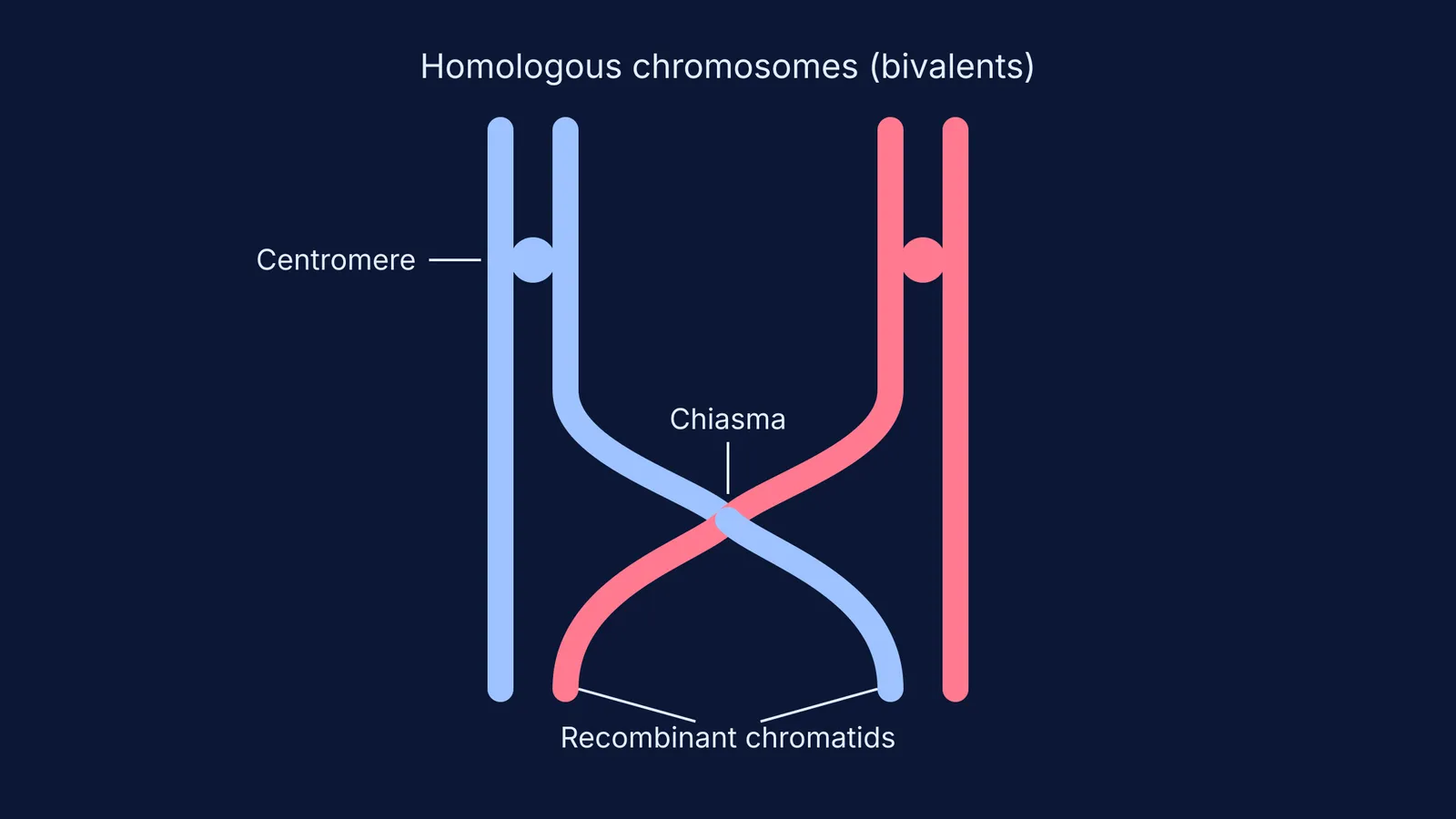
Pachytene: The chromosomes are now thick and fully synapsed. Crossing over occurs: non-sister chromatids break and exchange segments of DNA at large protein assemblies called recombination nodules. These nodules mediate the physical exchange of DNA strands between maternal and paternal chromosomes. This step is the primary source of genetic variation.
Diplotene: The synaptonemal complex dissolves, and the homologous chromosomes begin to separate. However, they remain pinned together at X-shaped structures called chiasmata—the exact physical sites where crossing over just happened.
Diakinesis: The chromosomes reach their maximum thickness. Finally, the nuclear envelope breaks down and the meiotic spindle forms, readying the cell for Metaphase 1.
How to remember the order of prophase 1 stages?
Because these stages always happen in the exact same sequence (Leptotene, Zygotene, Pachytene, Diplotene, Diakinesis), using a memory line is the easiest way to lock them in.
A very common and effective Hindi mnemonic is: "Lata Zara Paani De Do"
Lata = Leptotene
Zara = Zygotene
Paani = Pachytene
De = Diplotene
Do = Diakinesis
If you prefer an English memory line, try: "Little Zebras Ponder Difficult Dreams"
Which stages do exams mix up?
If you are facing multiple-choice questions on cell division, the examiner is almost certainly going to test if you know the difference between the middle three stages.
Synapsis vs. Crossing over: Zygotene is when the chromosomes pair up (synapsis). Pachytene is when they actually exchange material (crossing over). A common trap is asking "In which stage does the synaptonemal complex form?" (Zygotene) versus "In which stage do recombination nodules appear?" (Pachytene).
Seeing the chiasmata: While the physical crossing over happens in pachytene, you cannot see the X-shaped chiasmata until the chromosomes start pulling apart. Therefore, chiasmata become clearly visible in diplotene.
If you need a complete refresher on cell division or are struggling to visualise chromosome types by centromere position, the Fermi Concept Library covers every concept in physics, chemistry, biology, mathematics and computing, each with its own lesson and its place in the map.
When you are ready to test yourself, the Fermi Problem Library has worked problems with a step-by-step solver that explains the reasoning rather than printing an answer. This helps you catch exactly where you mixed up your stages before exam day, whether you are revising human reproduction or the stages of microsporogenesis and the structure of a pollen grain.


