

On this page
When studying the Animal Kingdom for NEET or board exams, Phylum Mollusca stands out as the second largest animal phylum. In the NCERT Class 11 Biology curriculum, *Pila*—commonly known as the apple snail—is a primary example given to illustrate the phylum's key features. Molluscs are diverse, ranging from tiny snails to octopuses, yet they all share a common fundamental body plan. *Pila* provides a tangible model of this plan. It has a soft, unsegmented body, a hard protective shell, and an organ-system level of organisation. By examining the specific anatomy of the apple snail, you can better grasp the abstract characteristics of the entire phylum.
Why is Pila the standard Mollusca example?
*Pila* demonstrates the core characteristics of molluscs. It is an amphibious) creature, meaning it can survive both in freshwater and on land. It has a bilaterally symmetrical, triploblastic, and coelomate body plan.
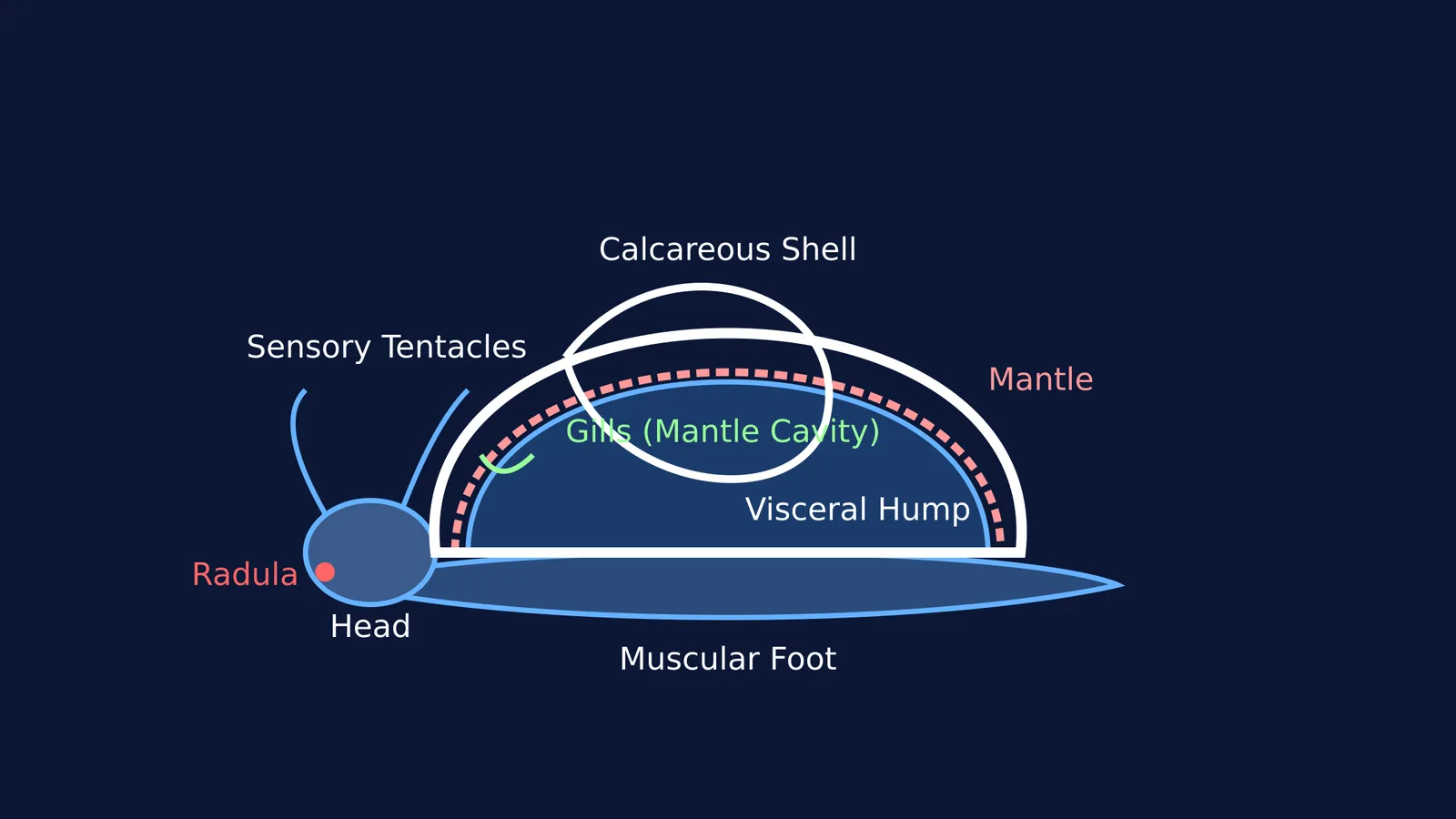
It also displays the three major body divisions that define a mollusc. According to the NCERT textbook, the body of a mollusc is clearly divided into three parts:
Head: The anterior head region contains sensory tentacles that help the animal navigate its environment.
Muscular foot: This is a broad, flattened structure located on the ventral side. It is used for locomotion, allowing the snail to move over surfaces. It is a highly developed organ that helps the snail maintain a firm grip on the substrate.
Visceral hump: Also known as the visceral mass, this dorsal structure houses the internal organs of the animal. This includes the digestive, excretory, and reproductive systems, neatly coiled to fit inside the shell.
What are the main body parts of Pila?
Exam questions often test your knowledge of specific terms related to the anatomy of *Pila*. Understanding these structures helps in answering matching or multiple-choice questions in competitive exams.
Calcareous shell: The soft body of *Pila* is protected by a coiled, globose shell made of calcium carbonate. The shell is typically right-handed (dextral) with a short spire) and a distinctly large body whorl.
Mantle and mantle cavity: A soft and spongy layer of skin forms a mantle over the visceral hump. The space between the hump and the mantle is called the mantle cavity, which houses respiratory and excretory organs.
Radula: Located in the mouth, this is a file-like rasping organ used for feeding. It contains transverse ossicles, which work alongside cartilaginous mandibles in the mouth to grind up aquatic plants and vegetation.
Operculum: This is a horny lid located on the dorsal side of the foot. When the snail retracts its body into the shell, it uses the operculum to seal the aperture. This structure prevents water loss during periods of drought, an adaptation known as aestivation.
If you are struggling to picture how these different structures fit together in three dimensions, the Fermi Concept Library contains every concept in biology, each with its own lesson and its place in the map.
How does Pila breathe on land and in water?
Because *Pila* is amphibious, its respiratory system is adapted for two entirely different environments. This dual respiratory capability is one of the reasons it is a standard specimen for study.
Inside the mantle cavity, there are feather-like gills (also known as ctenidia) that function in aquatic respiration. These gills extract dissolved oxygen from the water and also assist in excretory functions.
When the snail is on land or in oxygen-poor water, it needs to breathe atmospheric air. To do this, it draws air into a large, sac-like pulmonary chamber) located within the mantle cavity. The snail uses a specialized structure called a left siphon to reach above the water's surface and inhale air directly into this chamber.
How can you remember Pila's structure for exams?
When you review this topic, build a mental checklist of the "Mollusca Big Five" using *Pila* as your anchor point. Memorizing these five traits will help you answer questions about this phylum:
Shell: Calcareous (made of calcium carbonate) for protection.
Body Divisions: The unsegmented body is divided into a head, a muscular foot, and a visceral hump.
Skin Cover: A soft, spongy mantle forms over the visceral hump, creating the mantle cavity.
Feeding Organ: The mouth features a radula, a rasping organ used for feeding.
Respiration and Excretion: The mantle cavity houses feather-like gills that handle both breathing and waste removal.
Whenever you learn a new phylum, mapping the abstract characteristics onto a concrete animal makes the facts much stickier. Fermi's AI tutor can work out what you already know about the Animal Kingdom and build a plan for the session, so you sit down to a clear next step instead of simply re-reading the same textbook pages. This active approach to learning ensures you are always moving forward in your exam preparation.


