

On this page
Animals with exoskeletons or rigid outer skin face a basic physics problem: they cannot grow without shedding their armour. This process, called ecdysis, occurs across the animal kingdom. While the result looks similar in arthropods and reptiles, the biological triggers and hormonal controls differ completely.
Why do insects shed their exoskeletons?
For arthropods like insects, spiders and crustaceans, the exoskeleton is a non-living shell made of chitin. As the animal grows inside, the shell becomes too tight.
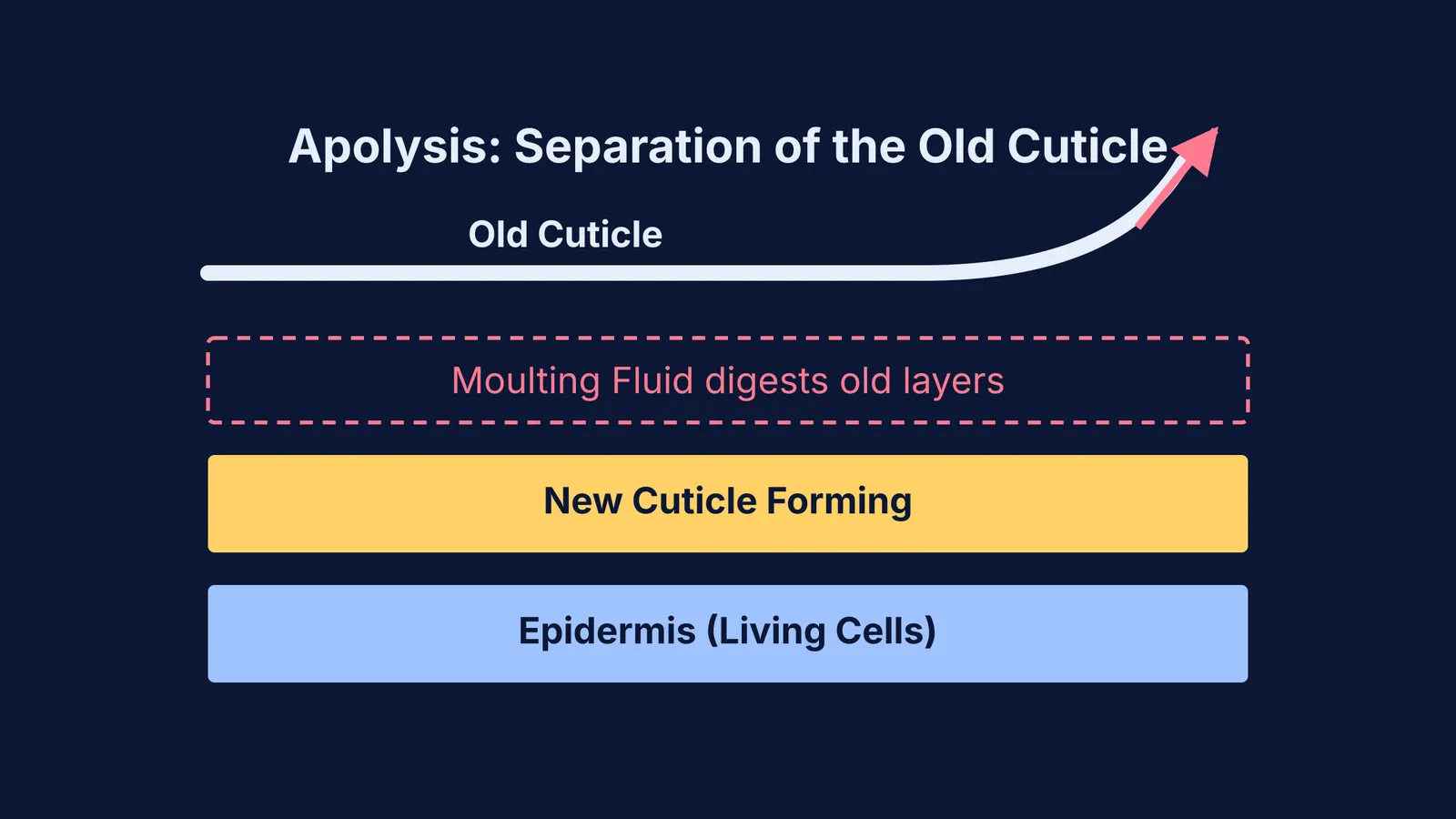
To grow, the animal must shed it. The stages between these moults are called instars. A typical insect that undergoes complete metamorphosis, such as a fly or beetle, has 4 to 5 instars before it pupates, according to Wikipedia. The physical shedding process begins with apolysis, where the epidermal cells detach from the old cuticle.
After this separation, a moulting fluid containing enzymes digests the inner layers of the old skin. To emerge, the insect uses crawling movements and increased pressure to split the old exoskeleton down the back. Once the crack forms, the insect extricates itself and must expand its new, soft covering before it hardens.
How do hormones control ecdysis in arthropods?
Insects run on a precise chemical clock that dictates when and how they moult. The entire process is controlled by hormones rather than just the physical size of the growing insect.
Ecdysone: Often called the moulting hormone, a surge in ecdysone initiates the moult.
Ecdysis revision checklist
When preparing for questions on animal growth and moulting, make sure you can answer these three points:
Name the hormone that initiates the moult in insects (ecdysone).
Explain what happens during apolysis and how the old cuticle splits.
Describe why snakes shed their skin and how their eyes change beforehand.
If you are revising biology and stuck on endocrine questions, the Fermi Problem Library has worked problems with a step-by-step solver that explains the reasoning rather than printing an answer.
Understanding these chemical messages is essential for exams. You can read more about how the body maintains these balances in our guide to hormonal feedback loops. If you are struggling to piece these concepts together, Fermi's AI tutor can work out what you already know and build a plan for the session, so you sit down to a clear next step.
Why do snakes shed their skin?
Reptiles also moult, but for different reasons. A snake's skin does not stop it from growing in the same rigid way an insect's shell does. Instead, the outer layer of keratinised skin wears down over time.
Snakes typically shed four to five times a year to replace this worn skin, accommodate growth, and remove parasites. The process can also be synchronised with mating cycles to release pheromones and refresh the snake's colours.
What triggers skin shedding in snakes?
The snake begins to prepare for the shed by seeking shelter and adjusting its diet.
During this pre-moult stage, the snake's eyes turn cloudy and silvery as the inner surface of the old skin liquefies, causing it to separate from the new skin forming underneath. After a few days, the eyes clear, and the snake rubs its head against a rough surface to break the old skin. It then crawls out, typically leaving the shed skin in one complete piece, peeled backward like a sock being turned inside out.
Students with concept gaps in how different animals regulate their bodies can use the Fermi Concept Library to explore these topics, as it maps out every concept in biology with its own lesson. You can also trace the history of endocrine discoveries in our post on Bayliss, Starling and secretin.


