

On this page
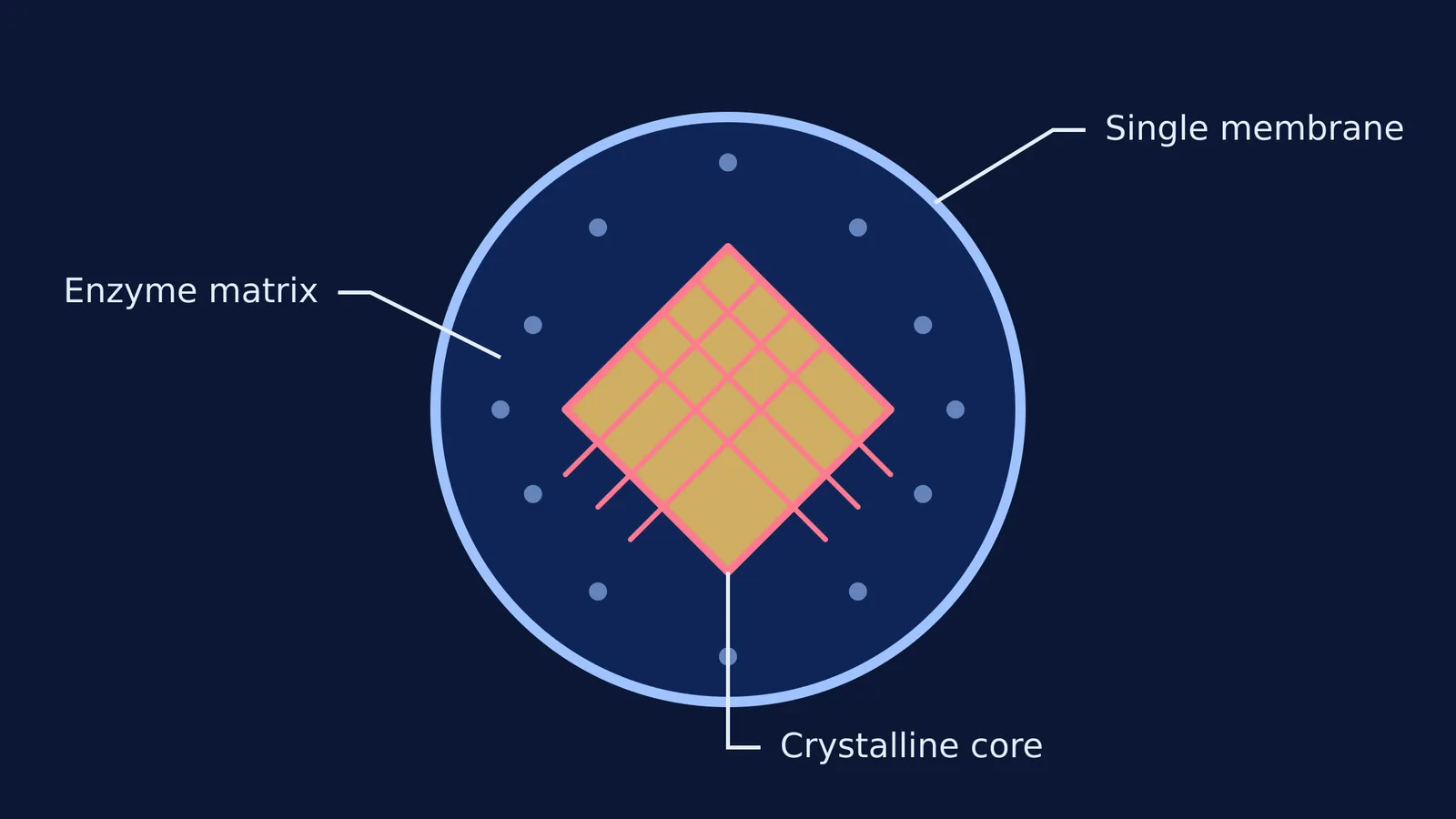
A microbody is a tiny, single-membrane organelle found in the cells of plants, animals, fungi, and protozoa. Unlike mitochondria or the nucleus, which are bounded by double membranes, a microbody is surrounded by just one phospholipid bilayer. Inside this protective membrane lies a dense matrix packed with highly specific enzymes, which sometimes form a visible crystalline core.
They are remarkably small structures, typically measuring between 0.2 and 1.5 micrometers in diameter. Because they do not contain their own DNA or ribosomes, microbodies cannot synthesize their own proteins. Instead, they rely entirely on the cell’s endoplasmic reticulum and free ribosomes to help form them and import their essential enzymes. The two most commonly studied types of microbodies are peroxisomes and glyoxysomes, and each is tailored for very different metabolic tasks within the cell.
What are microbodies in a eukaryotic cell?
Peroxisomes act as the cell’s primary detoxification centres, and they are present in virtually all eukaryotic cells. They contain a variety of oxidative enzymes that strip hydrogen atoms from different organic molecules and transfer them directly to molecular oxygen. This specific chemical reaction produces hydrogen peroxide (H₂O₂), a substance that is highly reactive and potentially dangerous to cellular structures.
Since hydrogen peroxide is toxic to the cell, peroxisomes also contain large amounts of the enzyme catalase. Catalase immediately breaks down the accumulated H₂O₂ into harmless water and oxygen gas. Beyond detoxification, peroxisomes play a crucial role in breaking down very long-chain fatty acids into shorter segments, so that the mitochondria can subsequently use them to generate cellular energy. In the leaves of higher plants, peroxisomes also work closely with chloroplasts to participate in photorespiration, a metabolic process that occurs alongside standard photosynthesis.
What makes glyoxysomes different from peroxisomes?
Glyoxysomes are highly specialised peroxisomes found primarily in plants, and they are especially abundant in the fat-storage tissues of germinating seeds like those of the peanut, sunflower, and castor plant. They can also be found in certain types of filamentous fungi.
When a seed is just beginning to germinate, it remains underground and cannot yet perform photosynthesis to manufacture its own food. Instead, it must rely entirely on stored fats for nourishment. Glyoxysomes contain the specialized enzymes required for the glyoxylate cycle, which allows the growing seedling to convert its stored fatty acids directly into simple sugars. These sugars provide the necessary energy and carbon building blocks for the seedling to grow. Once the plant breaks through the soil and matures enough to produce its own sugars via photosynthesis, the glyoxysomes often transition functionally into regular peroxisomes.
How to study cell organelles efficiently?
Keeping track of organelle functions, membrane structures, and sizes can feel overwhelming during your biology revision. A proven method to simplify this is to group them systematically by their membrane type. You have zero-membrane structures (like ribosomes and the cytoskeleton), single-membrane organelles (which include microbodies, vacuoles, and lysosomes), and double-membrane organelles (such as mitochondria, chloroplasts, and the nucleus).
You can also group these cellular structures by their specific functions, such as linking both cilia and flagella to the concept of cell movement.
When you get stuck trying to picture exactly how the glyoxylate cycle fits into the broader picture of cell biology, the Fermi Concept Library maps out every topic in biology and chemistry. Fermi's AI tutor can walk you through these intricate connections, highlighting exactly where different metabolic pathways overlap and checking your understanding as it goes.


