

On this page
Newspapers in India write "2 crore", while international reports on the same topic say "20 million". Class 7 students are expected to move between the two without slipping a zero. This post covers what Chapter 1 of NCERT's new Class 7 book teaches, gives a conversion method that works every time, works through examples from the book and beyond, and ends with a practice routine.
What does the Class 7 Large Numbers chapter cover?
NCERT's Class 7 mathematics book, Ganita Prakash, comes in two parts. Part 1 was first published in April 2025, and the current copy is marked "Reprint 2026-27". Its Chapter 1, Large Numbers Around Us, has six sections:
A lakh varieties (how big a lakh really is)
Land of tens (place value and powers of ten)
Of crores and crores (the Indian and international naming systems)
Exact and approximate values (rounding and estimation)
Patterns in products (quick ways to multiply)
Did you ever wonder…? (thought experiments with big numbers)
How big is a lakh, really?
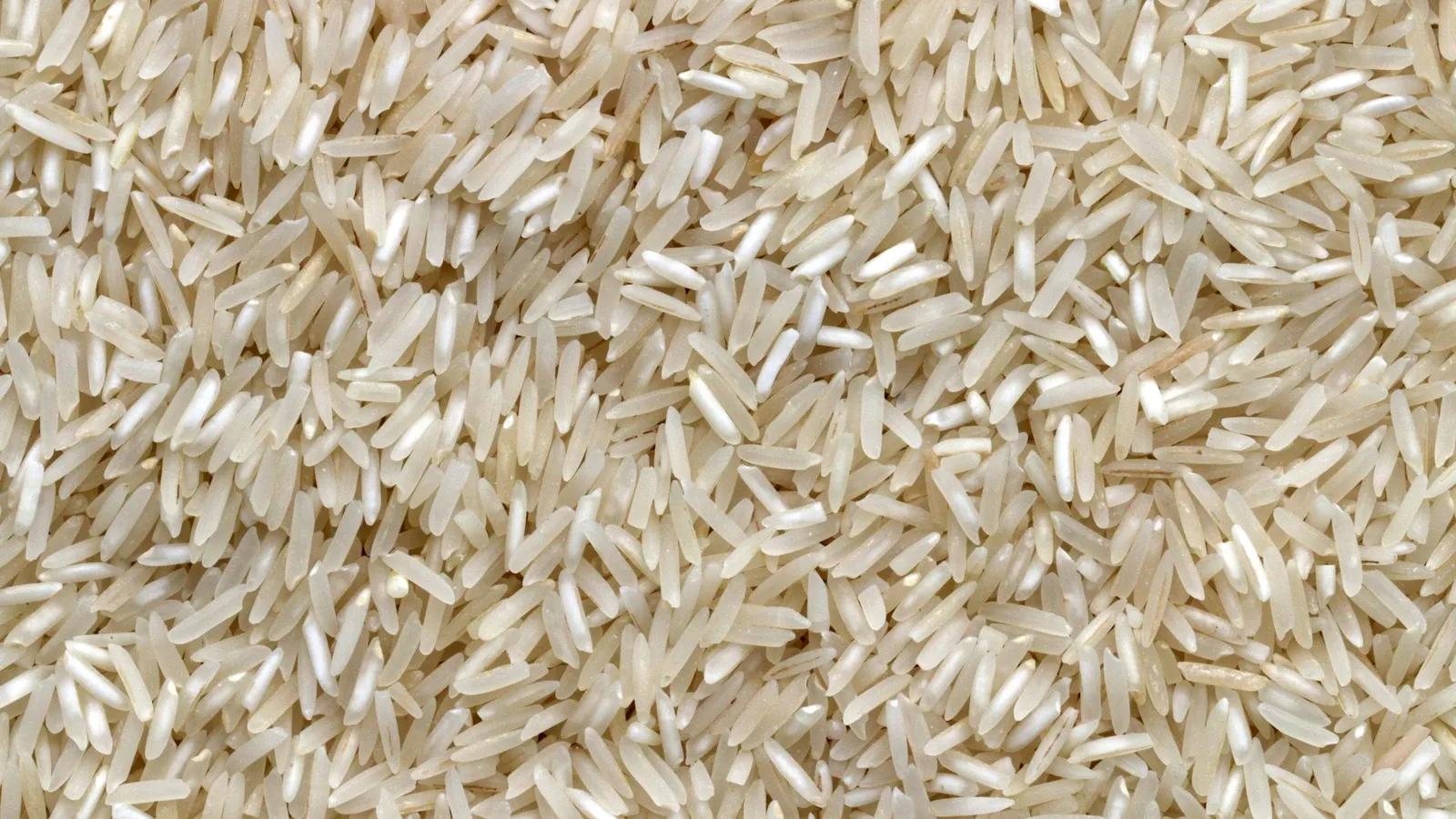
The chapter opens with a farmer who hears that India once had about a lakh varieties of rice. His son wonders whether he could taste them all, one a day, in a lifetime of 100 years.
Worked example 1. 100 years is about 100 × 365 = 36,500 days. A lakh is 1,00,000. Even tasting a new variety every single day for 100 years, he would manage only about a third of them.
Two more ways to feel the size:
1 lakh seconds is 1,00,000 ÷ 3600 ≈ 27.8 hours, a little over a day.
1 crore seconds is 1,00,00,000 ÷ 86,400 ≈ 116 days, nearly four months.
The chapter summary makes the same point: to get a sense of a large number, compare it with something familiar.
How do the Indian and international systems differ?
The chapter calls the second system the American or International system. The key difference is where the commas go.
Indian system: group the last 3 digits, then pairs: 3-2-2-2 from the right. Names: thousand, lakh, crore, arab.
International system: group in threes all the way: 3-3-3 from the right. Names: thousand, million, billion.
The book's summary lists the anchor values:
1 lakh = 1,00,000 (1 followed by 5 zeros)
1 crore = 1,00,00,000 (1 followed by 7 zeros)
1 million = 1,000,000, which is ten lakh
1 arab = 1,000,000,000, which is 100 crore or 1 billion
It also notes that the words lakh and crore come from the Sanskrit lakṣha and koṭi.
Worked example 2 (from the book). Read 9876501234.
Indian: 9,87,65,01,234 → 9 arab 87 crore 65 lakh 1 thousand 234 (or 987 crore 65 lakh 1 thousand 234)
International: 9,876,501,234 → 9 billion 876 million 501 thousand 234
Worked example 3. Read 48121620.
Indian: 4,81,21,620 → 4 crore 81 lakh 21 thousand 620
International: 48,121,620 → 48 million 121 thousand 620
How do you convert between lakh, crore, million and billion?
Remember three links and you can handle any conversion:
10 lakh = 1 million
1 crore = 10 million
100 crore = 1 billion
Worked example 4 (from the book's exercises). Compare 500 lakh and 5 million. 500 lakh = 5 crore = 5 × 10 million = 50 million. So 500 lakh > 5 million.
Worked example 5. Compare 640 crore and 60 billion. 60 billion = 60 × 100 crore = 6000 crore. So 640 crore < 60 billion.
When should you round, and how?
The chapter says we generally round large numbers, because often it is enough to know roughly how big something is. Its table for 6,72,85,183 shows the nearest neighbours:
Nearest thousand: 6,72,85,000
Nearest ten thousand: 6,72,90,000
Nearest lakh: 6,73,00,000
Nearest ten lakh: 6,70,00,000
It also discusses when to round up and when to round down. A school with 732 people might order 750 sweets, rounding up so that nobody misses out.
Why does estimation matter?
Seeing how big a number is takes practice. Siegler and Opfer (2003) studied number estimation in second, fourth and sixth graders and adults. They found that children often used a "logarithmic" sense of size, in which larger numbers seem closer together than they really are, in situations that need a linear one, and that with age and experience they used the right representation more often. Comparing big numbers with familiar ones, as this chapter does, builds that linear sense.
Which mistakes cost the most marks?
Mixing comma systems. 48,121,620 and 4,81,21,620 are the same number; 4,812,1620 is neither.
Losing a zero. 1 crore has 7 zeros; check by counting.
Wrong conversion factor. 1 crore is 10 million, not 1 million.
Reading place names wrongly. In 9,87,65,01,234 the "01" is 1 thousand, not 10 thousand.
Rounding the wrong place. Find the digit you are rounding to, then look only at the digit to its right.
How should you practise this week?
Day 1: Write ten numbers from a newspaper in both systems, with commas and words.
Day 2: Convert five values from lakh or crore into million or billion, and back.
Day 3: Round 3,45,67,891 to the nearest thousand, lakh and crore.
Day 4: Work out how long 1 lakh minutes and 1 crore minutes are, in days.
Day 5: Make up a "would it be possible?" question, like the book's, and answer it with estimation.
If one step keeps tripping you up, the Fermi Concept Library covers every concept in physics, chemistry, biology, mathematics and computing, so you can look up an idea before trying again. The next chapters move to the other end of the scale; see our post on decimals in Class 7.
Find one large number in today's news, and write it in both the Indian and international systems.


