

On this page
Journey to the End of the Earth is chapter 3 of Vistas, the Class 12 English Core supplementary reader, and it is still a prescribed chapter in the CBSE English Core curriculum for 2026-27.
What happens in Journey to the End of the Earth?
All details here are from the NCERT text of the chapter.
Tishani Doshi travels from Madras to Antarctica on a Russian research ship, the Akademik Shokalskiy. The trip takes over 100 hours by car, aeroplane and ship, across nine time zones and six checkpoints. Her first feeling is relief, then wonder: how could India and Antarctica once have been one landmass?
She explains that 650 million years ago a southern supercontinent, Gondwana, was centred roughly on present-day Antarctica, with a warmer climate and rich plant and animal life. It thrived for 500 million years, then broke apart, shaping the globe much as we know it; India pushed north into Asia and raised the Himalayas.
Antarctica today stores 90 per cent of the Earth's total ice. Human civilisations are only about 12,000 years old, yet in that short time burning fossil fuels has wrapped the planet in carbon dioxide that is slowly raising the average temperature.
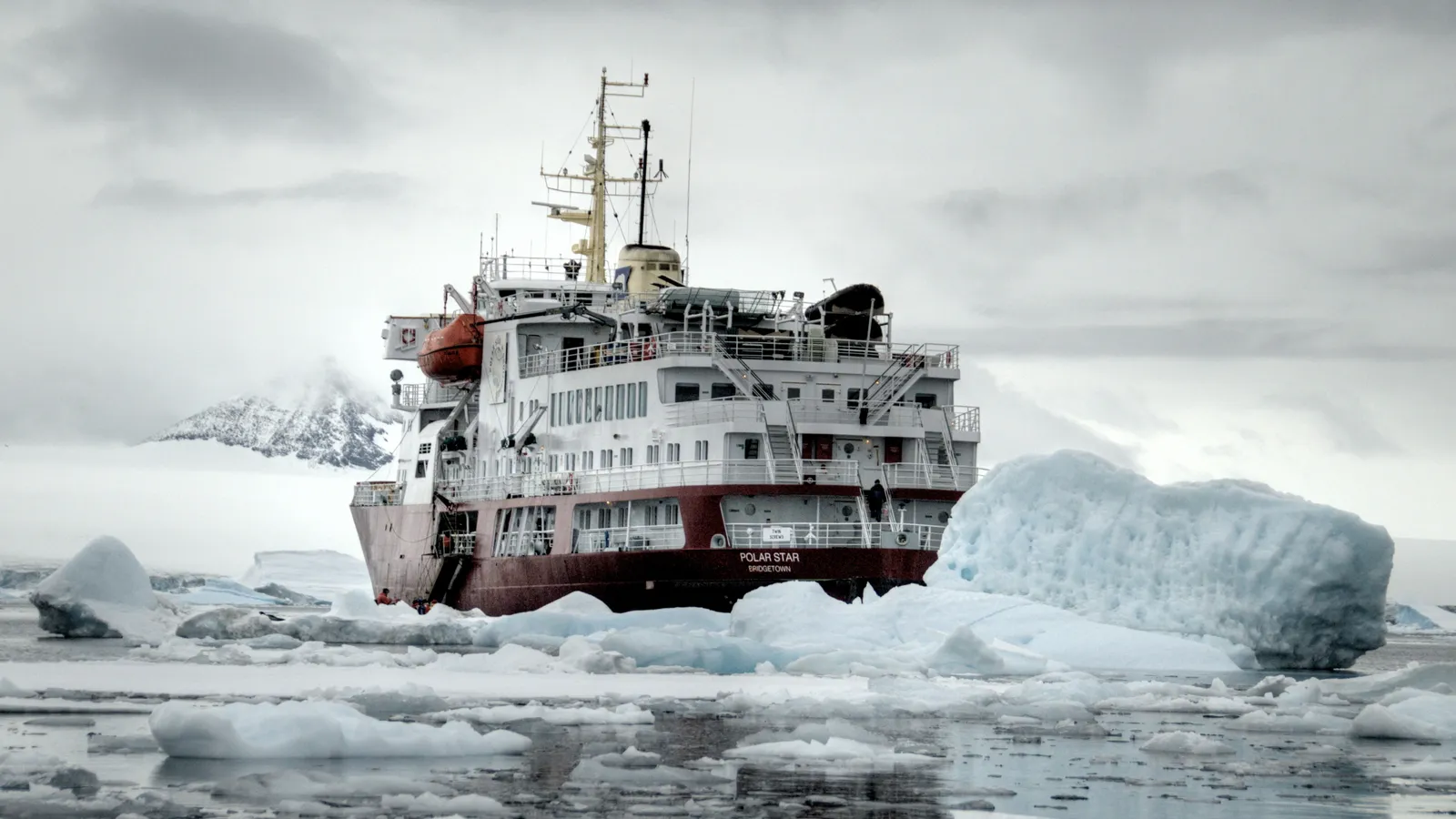
Doshi is working with Students on Ice, a programme that takes high school students to the ends of the world. The high point comes at 65.55 degrees south, when the ship is stuck in ice and all 52 people on board climb down to "walk on the ocean", with a metre of ice under them and 180 metres of sea water below. She ends: "a lot can happen in a million years, but what a difference a day makes!"
What are the main themes of the chapter?
Each theme below comes straight from the chapter text.
Deep time. Gondwana and the Himalayas show the Earth changing over millions of years; human history is a tiny slice.
Climate change. Burning fossil fuels is slowly warming the planet, and growing human populations compete with other species for resources; Doshi asks whether the West Antarctic ice sheet will melt.
Antarctica as a record. Never home to a human population, it stays relatively pristine, and its ice cores hold half-million-year-old carbon records.
Small things, big effects. Phytoplankton feed the whole Southern Ocean food chain; further ozone loss would harm them, and through them the region's animals and the global carbon cycle.
Seeing is believing. Melting ice caps are easy to ignore from home; watching glaciers retreat makes the threat real.
Hope in young people. The trip shows future policy-makers the evidence while they are young enough to act.
Who are the main people in the chapter?
Tishani Doshi (the narrator). Curious, observant and honest about herself: a "sun-worshipping South Indian" facing two weeks on the ice. She blends science with wonder and is realistic ("the prognosis isn't good") without losing hope.
Geoff Green. The Canadian who heads Students on Ice. Tired of taking celebrities and retired, rich curiosity-seekers who could only give back in a limited way, he chose high school students, who are ready to absorb, learn and act.
The students. Unnamed, but their idealism is what leaves Doshi hopeful.
Which board questions come up from this chapter?
The CBSE 2026-27 curriculum sets three kinds of Vistas questions: one prose extract (one out of two, 4 marks), short answers of 40-50 words (two out of three, 2 marks each) and one long answer of 120-150 words (one out of two, 5 marks).
Likely questions; the first four reword the chapter's own Reading with Insight questions:
Why is Antarctica the place to go to understand the Earth's past, present and future?
How is studying Antarctica useful, given that the world's geological history is trapped there?
Why does Geoff Green take high school students on the expedition?
Explain "take care of the small things and the big things will take care of themselves" in the Antarctic context.
What did walking on the ocean teach the narrator?
Worked example: planning a 5-mark answer
For question 1, jot four points first:
Opening: Antarctica is a record of the planet, not just a cold place.
Past: it was the centre of Gondwana; its ice cores hold half-million-year-old carbon records.
Present: it is relatively pristine, and its simple ecosystem shows small changes rippling outward, as ozone loss would through phytoplankton.
Future: retreating glaciers show where warming is heading; close with Doshi's line about what a difference a day makes.
The Fermi Concept Library has a lesson for every concept in physics, chemistry, biology, mathematics and computing. And if you are unsure where to start with that science, Fermi's AI tutor can work out what you already know and build a plan for the session, so you sit down to a clear next step.


