

On this page
Many JEE aspirants skip the last unit of the physics syllabus because it looks like school practical work. It is short and listed separately, and its questions can be quick marks once you have practised the readings. This post explains what Unit 20 contains, how each experiment becomes a written question, works through the most common calculations and gives a revision plan.
What does Unit 20 actually list?
The NTA Syllabus for JEE (Main) 2026 titles Unit 20 "Experimental Skills" and asks for "familiarity with the basic approach and observations of the experiments and activities". It lists 18 items:
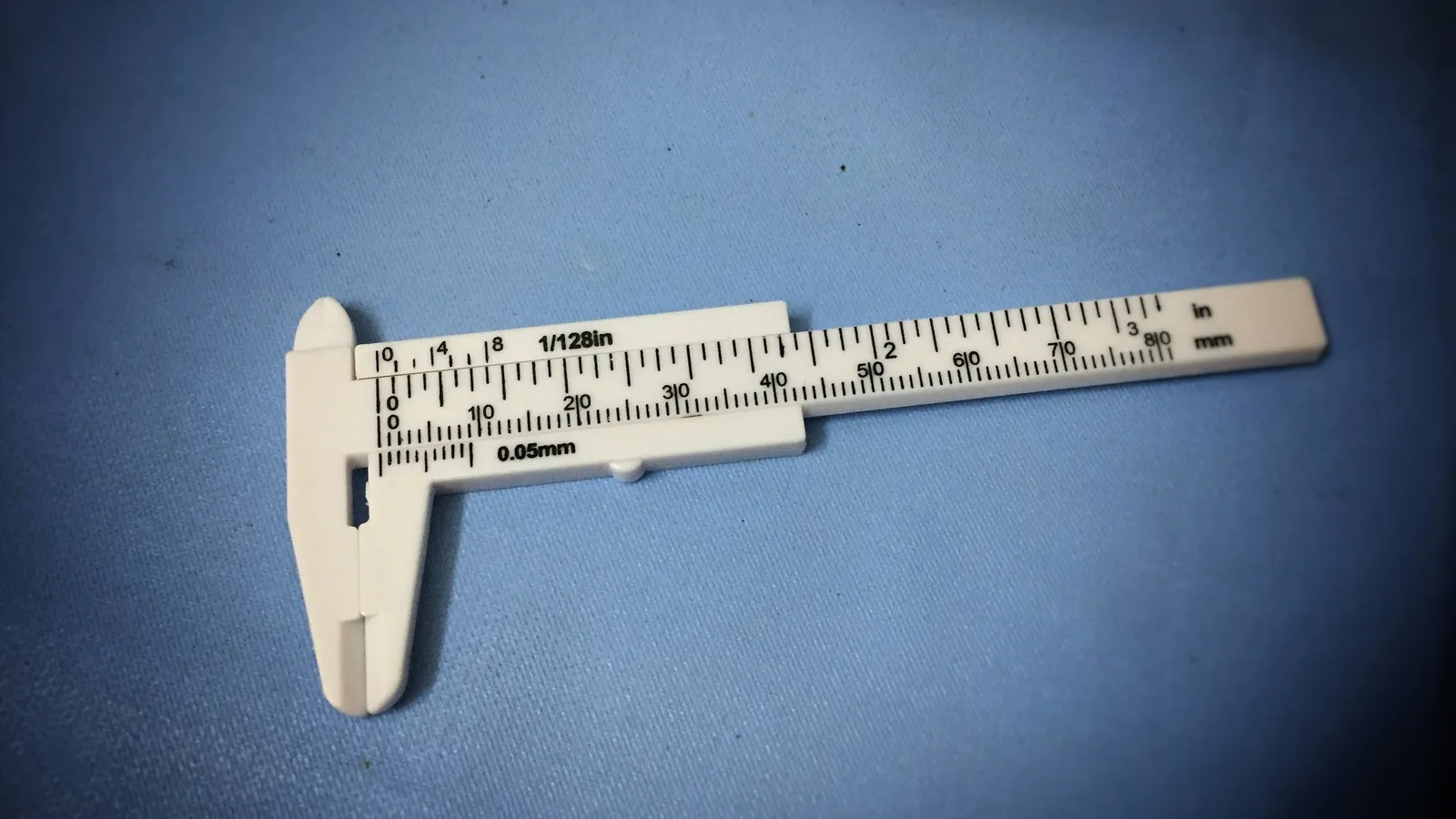
Vernier calipers, for internal and external diameter and depth of a vessel.
Screw gauge, for thickness or diameter of a thin sheet or wire.
Simple pendulum: dissipation of energy by plotting the square of amplitude against time.
Metre scale: mass of an object by the principle of moments.
Young's modulus of a metallic wire.
Surface tension of water by capillary rise, and the effect of detergents.
Viscosity of a liquid from the terminal velocity of a sphere.
Speed of sound in air using a resonance tube.
Specific heat capacity of a solid and a liquid by the method of mixtures.
Resistivity of a wire using a metre bridge.
Resistance of a wire using Ohm's law.
Resistance and figure of merit of a galvanometer by half deflection.
Focal length of a convex mirror, a concave mirror and a convex lens, using the parallax method.
Angle of deviation against angle of incidence for a prism.
Refractive index of a glass slab using a travelling microscope.
Characteristic curves of a p-n junction diode.
Characteristic curves of a Zener diode and its reverse breakdown voltage.
Identifying a diode, LED, resistor and capacitor from a mixed collection.
NTA publishes a new syllabus each cycle, so check the one for your exam year before you plan. If you are also preparing for JEE Advanced, its 2026 Information Brochure covers a similar set under "General", including least count, significant figures and error analysis for experiments such as the vernier, screw gauge, simple pendulum, resonance column and metre bridge.
Why practise experiments on paper, not just in the lab?
Doing an experiment once in a school lab does not automatically teach you the physics behind it. In a study across nine introductory university lab courses at three institutions, Holmes, Olsen, Thomas and Wieman (2017) found that taking labs meant to reinforce lecture content added no measurable benefit to students' exam performance on that content. The skills JEE tests here, reading a scale, correcting an error, interpreting a graph, need their own practice.
Worked example 1: vernier calipers with a zero error
These are sample readings. A vernier has 10 vernier divisions equal to 9 main scale divisions of 1 mm.
Least count = 1 MSD − 1 VSD = 1 mm − 0.9 mm = 0.1 mm = 0.01 cm.
Measuring a rod: main scale reads 2.3 cm, and the 6th vernier division lines up. Reading = 2.3 + 6 × 0.01 = 2.36 cm.
With the jaws closed, the vernier zero sits to the right of the main zero and the 3rd division lines up. Zero error = +3 × 0.01 = +0.03 cm.
Corrected length = 2.36 − (+0.03) = 2.33 cm.
The rule that trips students: subtract the zero error with its sign.
Worked example 2: screw gauge
Sample readings again. Pitch = 0.5 mm, and the circular scale has 50 divisions.
Least count = 0.5 ÷ 50 = 0.01 mm.
Main scale reading 3.5 mm, circular scale reading 27. Reading = 3.5 + 27 × 0.01 = 3.77 mm.
Worked example 3: resonance tube
A 512 Hz tuning fork gives first and second resonance at 16.0 cm and 50.0 cm (sample numbers).
The difference between successive resonances is half a wavelength: λ/2 = 50.0 − 16.0 = 34.0 cm, so λ = 68.0 cm = 0.680 m.
Speed of sound: v = fλ = 512 × 0.680 ≈ 348 m/s.
End correction e: the first resonance satisfies l1 + e = λ/4 = 17.0 cm, so e = 1.0 cm. Using the difference cancels e, which is why the method uses two resonances.
Worked example 4: metre scale and moments
A metre scale balances on a knife-edge at its 50 cm mark. An unknown mass hangs at 30 cm and a 50 g mass at 80 cm keeps it balanced (sample numbers).
Taking moments about 50 cm: m × (50 − 30) = 50 × (80 − 50).
m × 20 = 1,500, so m = 75 g.
What mistakes cost marks in experimental questions?
Adding a zero error instead of subtracting it with its sign.
Using one resonance length and forgetting the end correction.
Wrong graph. For the pendulum item, the syllabus asks for the square of amplitude against time, because energy is proportional to amplitude squared.
Ignoring least count in the answer. A vernier result should be written to 0.01 cm, not 2.3 or 2.3600 cm. Our guide to significant figures and units covers this.
Mixing up diode graphs. Know the shape of forward and reverse curves for an ordinary diode and the sharp breakdown of a Zener.
A four-week revision plan
Week 1: instruments (items 1, 2, 4). Do ten scale-reading problems with zero errors.
Week 2: mechanics and heat (items 3, 5, 6, 7, 9). Write the formula and the graph each one uses.
Week 3: sound, electricity and optics (items 8, 10 to 15). Solve two numericals per item.
Week 4: electronics (items 16 to 18) and one timed mixed set from past papers.
If you are taking CBSE practicals in the same year, our post on board practical exams and the viva overlaps with several of these experiments. When a reading or a graph question goes wrong and you cannot see why, the Fermi Problem Library has a step-by-step solver that explains the reasoning behind each step.
This week, print the Unit 20 list and tick off each experiment once you have solved one written question on it.


