

On this page
Organic identification questions in JEE Main, NEET and CBSE often come down to one test: warm the compound with iodine and sodium hydroxide and see whether a yellow solid appears. The test is simple, but students lose marks by applying the rule to the wrong part of a molecule. This post gives you the rule in the form NCERT states it, a two-question check, a sorted list of common compounds, a worked identification, a quick quantity calculation, and the traps to watch for.
Where is the test in NCERT and the syllabus?
The current NCERT Class 12 Chemistry Part II chapter Aldehydes, Ketones and Carboxylic Acids (2026-27 reprint) describes the haloform reaction: methyl ketones are oxidised by sodium hypohalite to the sodium salt of an acid with one carbon fewer, and the methyl group becomes haloform. It then says the iodoform reaction "is also used for detection of CH₃CO group or CH₃CH(OH) group which produces CH₃CO group on oxidation". The Haloalkanes and Haloarenes chapter covers iodoform itself (triiodomethane) in Section 6.8.3.
The JEE (Main) 2026 syllabus lists the "haloform reaction" and "chemical tests to distinguish between aldehydes and ketones", and includes iodoform among the preparations in its practical chemistry unit. The NEET (UG) 2026 syllabus lists the haloform reaction and the same tests. Check your exam year's syllabus.
For the wider chapter (aldol, Cannizzaro, Tollens' and Fehling's), see our guide to reactions of aldehydes and ketones. This post goes deeper on the one test.
What does the reaction do?
For a methyl ketone, with R as the rest of the molecule:
CH₃COR + 3I₂ + 4NaOH → CHI₃ + RCOONa + 3NaI + 3H₂O
The three hydrogens on the methyl group next to C=O are replaced by iodine one at a time, and the CI₃ group then breaks off as iodoform. Count the atoms: iodine is 6 on each side, sodium 4, and oxygen 5. A CH₃CH(OH) group passes because the hypoiodite first oxidises it to CH₃CO. For ethanol the overall equation is:
CH₃CH₂OH + 4I₂ + 6NaOH → CHI₃ + HCOONa + 5NaI + 5H₂O
The two-question check
Look at the carbon carrying the oxygen.
Is it a C=O with a CH₃ on one side and H or carbon on the other? If yes, positive.
Is it a CH(OH) with a CH₃ on one side and H or carbon on the other? If yes, positive.
If neither, negative. The CH₃ must be attached to that same carbon, not further along the chain.
Which compounds pass and which fail?
Positive:
Ethanal, CH₃CHO (the only aldehyde that passes).
Ethanol, CH₃CH₂OH (the only primary alcohol that passes).
Propanone, butan-2-one, pentan-2-one, and acetophenone (C₆H₅COCH₃).
Propan-2-ol, butan-2-ol, and 1-phenylethanol (C₆H₅CH(OH)CH₃).
Negative:
Methanal and methanol: one carbon, so no CH₃ next to the functional carbon.
Propanal and propan-1-ol: the CH₃ is two carbons away.
Pentan-3-one and pentan-3-ol: ethyl groups on both sides.
Benzaldehyde and benzophenone: no methyl group at all.
2-methylpropan-2-ol: the carbon bearing OH has no H, so it cannot be oxidised to a ketone.
Worked example: naming a C₄H₁₀O alcohol
An alcohol C₄H₁₀O gives a yellow precipitate with I₂ and NaOH. Which isomer is it?
The alcohols of C₄H₁₀O are butan-1-ol, butan-2-ol, 2-methylpropan-1-ol and 2-methylpropan-2-ol. Apply the check to each. Only butan-2-ol, CH₃CH(OH)CH₂CH₃, has a CH₃ directly on the carbon bearing OH, with an H on that carbon. The answer is butan-2-ol. On oxidation it gives butan-2-one, which also passes.
A pair question works the same way: pentan-2-one gives iodoform and pentan-3-one does not, so the test tells these isomers apart.
How much iodoform can form?
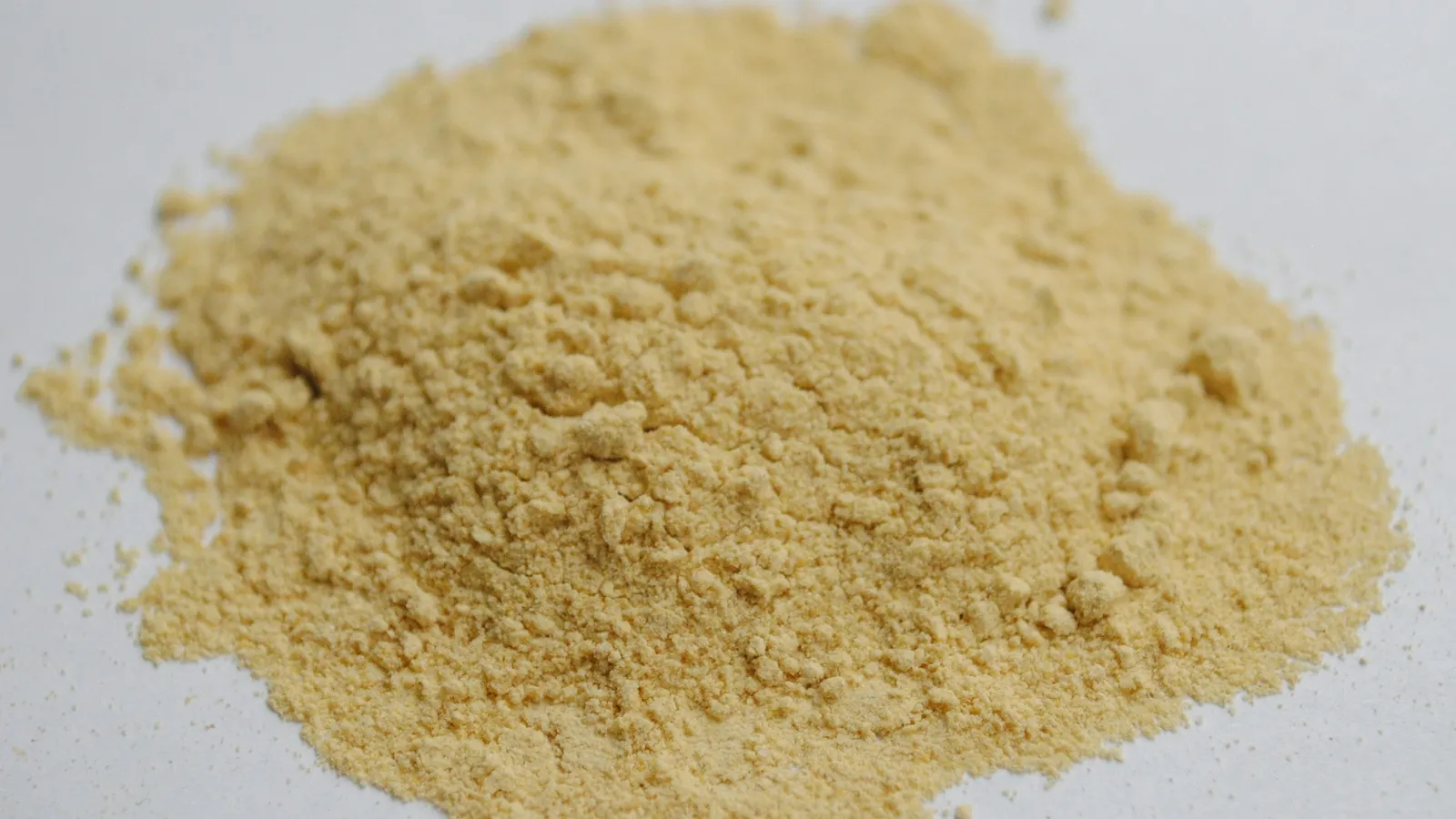
From 1.16 g of propanone (M = 58.08 g/mol), moles = 1.16/58.08 ≈ 0.0200 mol. The equation gives one CHI₃ per propanone, and CHI₃ has M = 393.7 g/mol, so the maximum mass is 0.0200 × 393.7 ≈ 7.9 g. It also needs 3 × 0.0200 = 0.0600 mol of I₂, about 15.2 g. A heavy yellow solid from a small sample is one reason the test is easy to see.
Which traps do examiners use?
Esters and acids with CH₃CO. Ethyl ethanoate and ethanoic acid contain CH₃CO, but the test is meant for aldehydes, ketones and these alcohols. Treat them as negative unless your textbook says otherwise.
Counting the wrong methyl. In propanal, the CH₃ sits on the wrong carbon.
Forgetting ethanol and ethanal. They are the one primary alcohol and the one aldehyde that pass.
Losing a carbon. The acid salt formed has one carbon fewer than the ketone. Propanone gives sodium ethanoate, not propanoate.
Confusing iodoform with iodine. NCERT notes that iodoform's old antiseptic action came from the free iodine it releases.
If several reagents are given at once and you cannot see where to start, Fermi's AI tutor can work out what you already know and build a plan for the session, so you can practise one test at a time.
A practice routine
Write ten carbonyl compounds and alcohols and sort them into pass and fail in under two minutes.
For each pass, write the acid salt formed, checking it has one carbon fewer.
Solve three identification questions that combine the iodoform test with Tollens' or 2,4-DNP results, like NCERT's Example 8.4.
Balance the ethanol equation from scratch and check the iodine count.
This week, write out the C₄H₁₀O example without notes and explain why each of the other three isomers fails.


