

On this page
When you eat, your digestive system does not just churn food mechanically; it uses chemical signals to time the release of enzymes and acids. The gastrointestinal tract acts as an endocrine organ, secreting four major peptide hormones (if you need a refresher on how peptides signal cells, see How hormones act: membrane receptors vs intracellular receptors) to coordinate digestion.
In the Class 11 biology syllabus, the chemical coordination chapter highlights these four messengers: gastrin, secretin, cholecystokinin (CCK) and gastric inhibitory peptide (GIP). If you are preparing for NEET or board exams, you need to know exactly which organ each hormone targets and what it makes that organ do. If you find yourself confusing their roles, you can explore the Fermi Concept Library to connect these facts visually.
What does gastrin do?
Gastrin is the hormone that gets the stomach ready to digest a meal. When food enters the stomach, specialised G cells in the stomach lining and the duodenum release gastrin into the bloodstream.
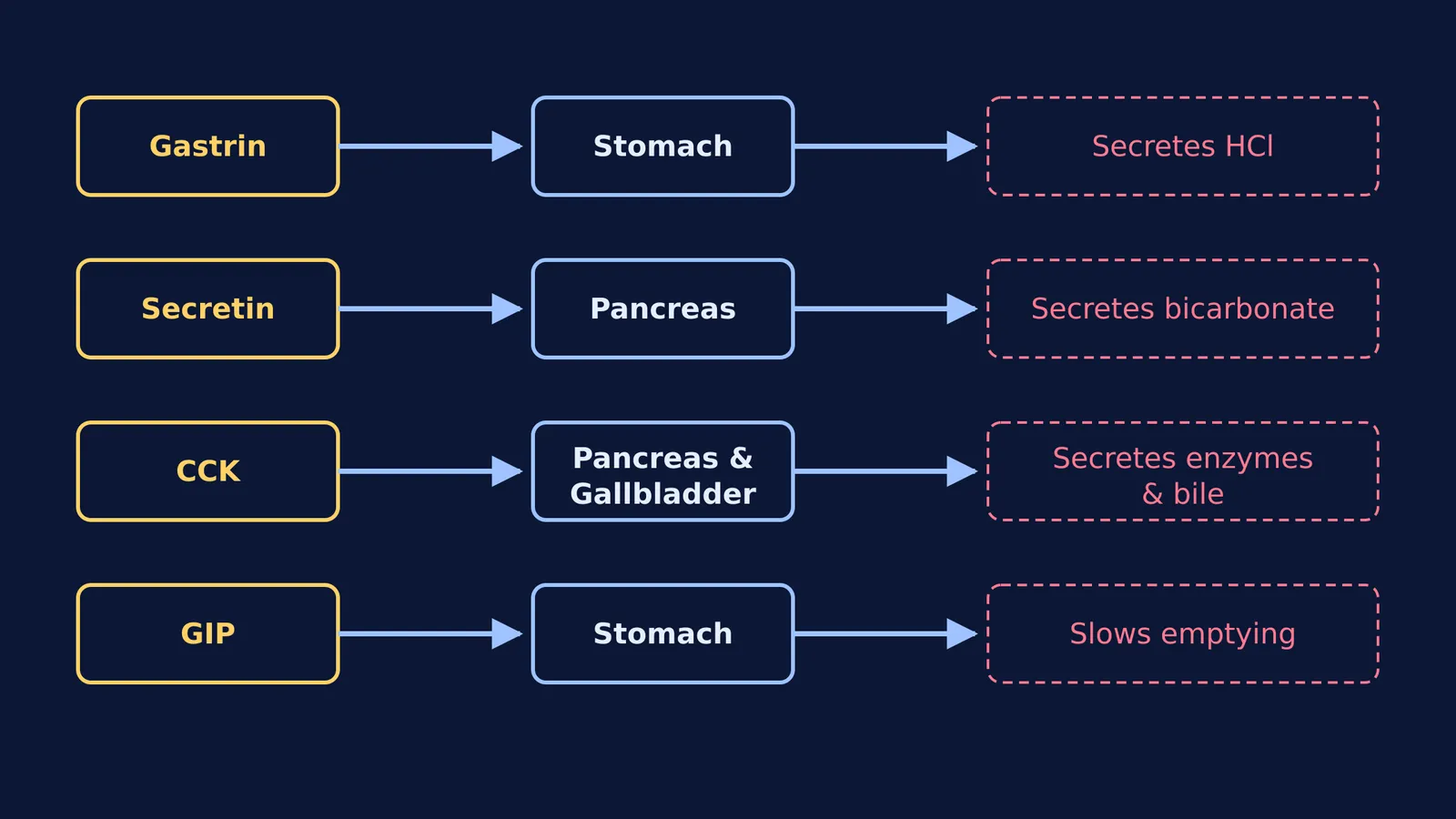
Gastrin acts directly on the gastric glands. It stimulates the parietal cells to secrete hydrochloric acid (HCl), which creates the highly acidic environment needed to break down proteins. It also triggers the release of pepsinogen, an inactive enzyme that the acid then converts into active pepsin. In addition, gastrin promotes gastric motility and supports the growth of the gastric mucosa, ensuring the stomach lining remains healthy enough to handle the strong acid.
What is the function of secretin?
Secretin was the first hormone ever discovered in 1902, and it acts as a chemical fire extinguisher. When acidic, partially digested food (chyme) leaves the stomach and enters the duodenum, the low pH triggers the release of secretin.
Secretin acts primarily on the exocrine pancreas. It stimulates the pancreas to secrete water and bicarbonate ions into the duodenum. This bicarbonate neutralises the stomach acid, protecting the delicate intestinal lining and creating the slightly alkaline pH that other digestive enzymes require to function effectively.
To read more about how this mechanism was uncovered, see our post on Bayliss, Starling and secretin: the experiment behind hormones.
What does cholecystokinin (CCK) do?
Cholecystokinin (CCK) handles the heavy lifting of digesting fats and proteins. Its name translates from Greek to "move the bile sac", which perfectly describes one of its main jobs as cholecystokinin.
When fats and proteins enter the small intestine, CCK is released and travels to two different target organs:
The pancreas: It stimulates the release of pancreatic juice, which is rich in digestive enzymes like amylase, lipase and trypsin.
The gallbladder: It causes the gallbladder to contract, squeezing stored bile into the duodenum to help emulsify fats.
By stimulating both the gallbladder and the pancreas at the same time, CCK ensures that the necessary substances for digestion are present in the small intestine at exactly the correct time to break down the meal.
What is the role of GIP?
Gastric inhibitory peptide (GIP) acts as a brake on the digestive process. As its original name suggests, GIP inhibits gastric acid secretion and motility. By slowing down the stomach, it ensures that food does not empty into the small intestine faster than it can be digested and absorbed.
In addition to slowing the stomach, GIP also plays an incretin role. It stimulates the release of insulin from pancreatic beta cells in response to glucose. For this reason, biologists also call it glucose-dependent insulinotropic polypeptide, a name that reflects its primary physiological role at normal levels.
Keeping the hormones straight
A common mistake in exams is swapping the functions of secretin and CCK, because both act on the pancreas. A useful trick is to remember that secretin deals with the acid (by releasing water and bicarbonate), while CCK deals with the food (by releasing enzymes and bile).
If you are struggling to picture how these feedback loops connect the gut, pancreas and liver, Fermi's AI tutor can help. Rather than handing you a list to memorise, the tutor builds a plan for your session and asks you questions to check your understanding as it goes. You can also review how these chemical messengers compare to nerve signals in our guide to Chemical coordination for NEET: glands, hormones and their actions.


