

On this page
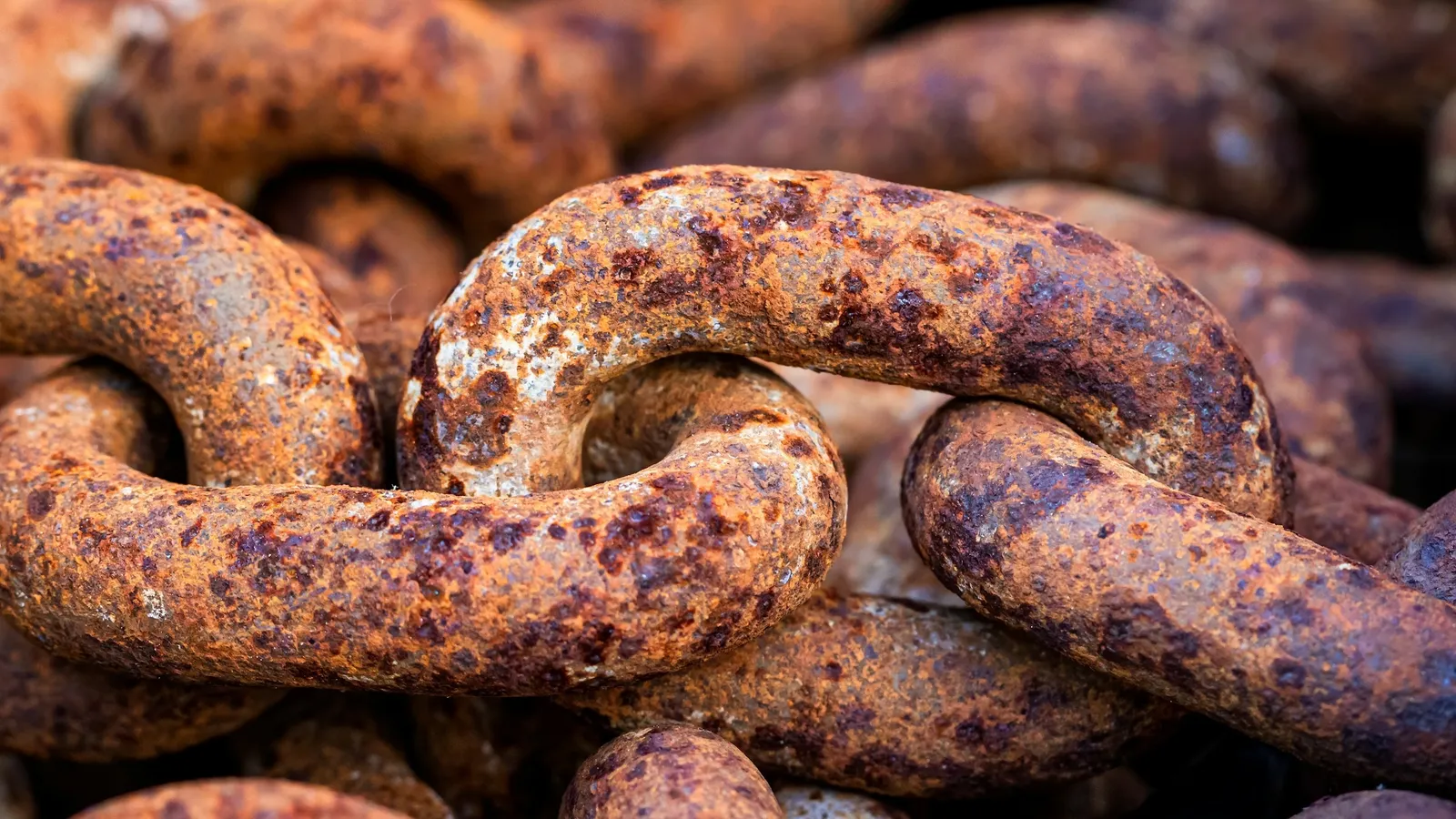
Iron rusts on its own, yet the reaction makes the system more ordered. Ice melts on a warm day but not in a freezer. Neither enthalpy nor entropy alone tells you which way a change will go. Gibbs energy combines the two, and JEE uses it every year. This post gives you the equation, three worked examples with real numbers, and the slips that turn a right method into a wrong answer.
What decides whether a reaction is spontaneous?
The NCERT Class 11 chapter on thermodynamics defines Gibbs energy as G = H - TS. At constant temperature, the change is:
ΔG = ΔH - TΔS
At constant temperature and pressure, a process is spontaneous when ΔG is negative and non-spontaneous when ΔG is positive. At equilibrium, ΔG = 0. The JEE (Main) 2026 syllabus lists "Δ S of the universe and Δ G of the system as criteria for spontaneity" and "ΔG° (Standard Gibbs energy change) and equilibrium constant" under Chemical Thermodynamics. Check the syllabus for your exam year.
"Spontaneous" means the change can happen without outside work. It says nothing about speed: a spontaneous reaction can still be very slow, and rate is a question for chemical kinetics.
How do the signs of ΔH and ΔS decide it?
NCERT's Table 5.4 sums it up. Learn it as reasoning, not a grid:
ΔH negative, ΔS positive: both terms help. Spontaneous at all temperatures.
ΔH positive, ΔS negative: both terms oppose. Non-spontaneous at all temperatures.
ΔH negative, ΔS negative: spontaneous at low temperature, where the TΔS penalty is small.
ΔH positive, ΔS positive: spontaneous at high temperature, where TΔS outweighs ΔH.
NCERT notes that "high" and "low" are relative. For some reactions, room temperature already counts as high.
Worked example 1: why does iron rust when entropy falls?
NCERT's Problem 5.11 gives, for 4Fe(s) + 3O2(g) → 2Fe2O3(s) at 298 K, ΔH = -1648 kJ/mol and ΔS = -549.4 J/K/mol.
Convert ΔS to kJ: -549.4 J/K/mol = -0.5494 kJ/K/mol.
TΔS = 298 × (-0.5494) = -163.7 kJ/mol.
ΔG = ΔH - TΔS = -1648 - (-163.7) = -1484.3 kJ/mol.
ΔG is large and negative, so the reaction is spontaneous. The entropy of the system falls, but the heat released raises the entropy of the surroundings by far more. NCERT works the same problem through ΔS of the surroundings and reaches the same verdict.
Worked example 2: at what temperature does a reaction become spontaneous?
Take a reaction with ΔH = +178 kJ/mol and ΔS = +160 J/K/mol. Both are positive, so it should become spontaneous above some temperature.
At 298 K: ΔG = 178 - 298 × 0.160 = 178 - 47.7 = +130.3 kJ/mol. Not spontaneous.
The crossover is where ΔG = 0, so T = ΔH / ΔS = 178000 J/mol ÷ 160 J/K/mol = 1112.5 K, about 1113 K.
Check at 1200 K: ΔG = 178 - 1200 × 0.160 = 178 - 192 = -14 kJ/mol. Spontaneous.
This estimate assumes ΔH and ΔS stay roughly constant with temperature, which is the standard assumption in JEE questions.
Worked example 3: from ΔG° to the equilibrium constant
NCERT gives the link between standard Gibbs energy and equilibrium: ΔG° = -RT ln K = -2.303 RT log K.
Suppose ΔG° = +10.0 kJ/mol at 298 K.
2.303 × R × T = 2.303 × 8.314 × 298 = 5706 J/mol.
log K = -ΔG° / (2.303 RT) = -10000 / 5706 = -1.753.
K = 10^-1.753 ≈ 1.77 × 10^-2.
A positive ΔG° gives K less than 1: at equilibrium, reactants are favoured. Flip the sign to ΔG° = -10.0 kJ/mol and K ≈ 56.6. A modest change in ΔG° shifts K a lot, because K depends on it exponentially.
Is entropy really "disorder"?
NCERT describes entropy as a measure of disorder, and for exam questions that is the language to use. One useful extra picture comes from the chemist Frank Lambert. In a 2002 article in the Journal of Chemical Education, he argued that "order to disorder" drawings can mislead students, and that entropy is better seen as a measure of how widely energy is spread out over the available microstates. That picture explains, for example, why entropy rises when a substance is warmed even though nothing looks messier. Use it to reason, then answer in your textbook's terms.
Common slips in Gibbs energy questions
Mixing J and kJ. Convert before you multiply.
Using °C. T is always in kelvin.
Confusing ΔG° with ΔG. ΔG° is for standard states and sets K. ΔG for real conditions also depends on concentrations or pressures.
Reading "spontaneous" as "fast". Gibbs energy gives direction, not rate.
Sign slips in -TΔS. When ΔS is negative, -TΔS is positive. Write the bracket out.
A practice routine for this chapter
Write the four sign cases from reasoning, not memory.
Do five "is it spontaneous at T?" questions with unit conversion written out.
Do five crossover temperature questions, then check each at a temperature on either side.
Do five ΔG° to K and K to ΔG° conversions both ways.
Finish with a mixed set that also uses enthalpy data from Hess's law.
If the ΔH values themselves are the problem, our guide to Hess's law and thermochemistry builds them step by step. When a numerical goes wrong and you cannot see where, the Fermi Problem Library has worked problems with a step-by-step solver that explains the reasoning rather than printing an answer.
This week, redo the iron rusting example without notes, keeping every unit on every line.


