

On this page
Without friction you could not walk, write or hold a pencil. With too much of it, machines wear out and waste energy. This post explains where friction comes from, when we want more or less of it, works a spring-balance example, and lists the mistakes Class 8 students make.
Where is friction in the current book?
NCERT's current Class 8 book, Curiosity, is marked "Reprint 2026-27". Friction is a sub-section of Chapter 5, "Exploring Forces", listed under contact forces. The older Class VIII book gave friction a full chapter, with static, sliding and rolling friction, lubricants and ball bearings. If your school uses Curiosity, the core is in Chapter 5. The extra ideas from the older chapter are still useful, and they come back in higher classes.
Why does friction happen at all?
Curiosity's activity is simple. Push a lunch box across a table and it stops. Something must act against its motion. The book calls this force friction and says it always acts opposite to the direction in which an object moves or tries to move.
The cause is roughness you cannot see. Even surfaces that look smooth have many tiny irregularities. When two surfaces touch, these bumps lock into each other and resist sliding. That is why the same box slides further on glass than on cloth or sand. The book concludes that friction depends on the nature of the surfaces, and is greater on rough ones.
The older chapter adds one more factor: friction increases when the surfaces are pressed together harder. Dragging a mat is harder when someone is sitting on it.
Static, sliding and rolling: which is largest?
The older chapter compares three cases:
Static friction acts when you try to move an object from rest.
Sliding friction acts once it is sliding. It is slightly smaller than static friction, because the bumps do not have time to lock as firmly. That is why a heavy box is easier to keep moving than to start.
Rolling friction acts when one body rolls over another. It is much smaller than sliding friction, which is why suitcases have wheels and fans and bicycles use ball bearings.
Friction also acts in air and water. Curiosity notes that aeroplanes, ships and high-speed trains are shaped to reduce it. The older chapter calls this fluid friction, or drag.
Worked example: reading friction from a spring balance
Curiosity's Chapter 5 shows a spring balance with a range of 0 to 10 N, where five small divisions cover 1 N, so one division is 0.2 N.
Suppose you hook this balance to a box on a table and pull gently, increasing the pull slowly.
The pointer reaches 3.0 N (15 divisions) just as the box starts to move. The pull needed to start it is a measure of static friction, so about 3.0 N.
Once the box is sliding, you only need 2.6 N (13 divisions) to keep it moving at a steady speed. At steady speed the box is not speeding up, so your pull and friction balance. Sliding friction is about 2.6 N.
You put the box on three round pencils and pull again. At steady speed the balance reads 0.6 N (3 divisions). Rolling friction is far smaller.
These readings are made up for practice, but they follow the pattern the older chapter describes. The step students miss is the second: the reading equals friction only when the speed is steady. If you jerk the balance, the box speeds up and the reading is larger than the friction.
When do we want more friction, and when less?
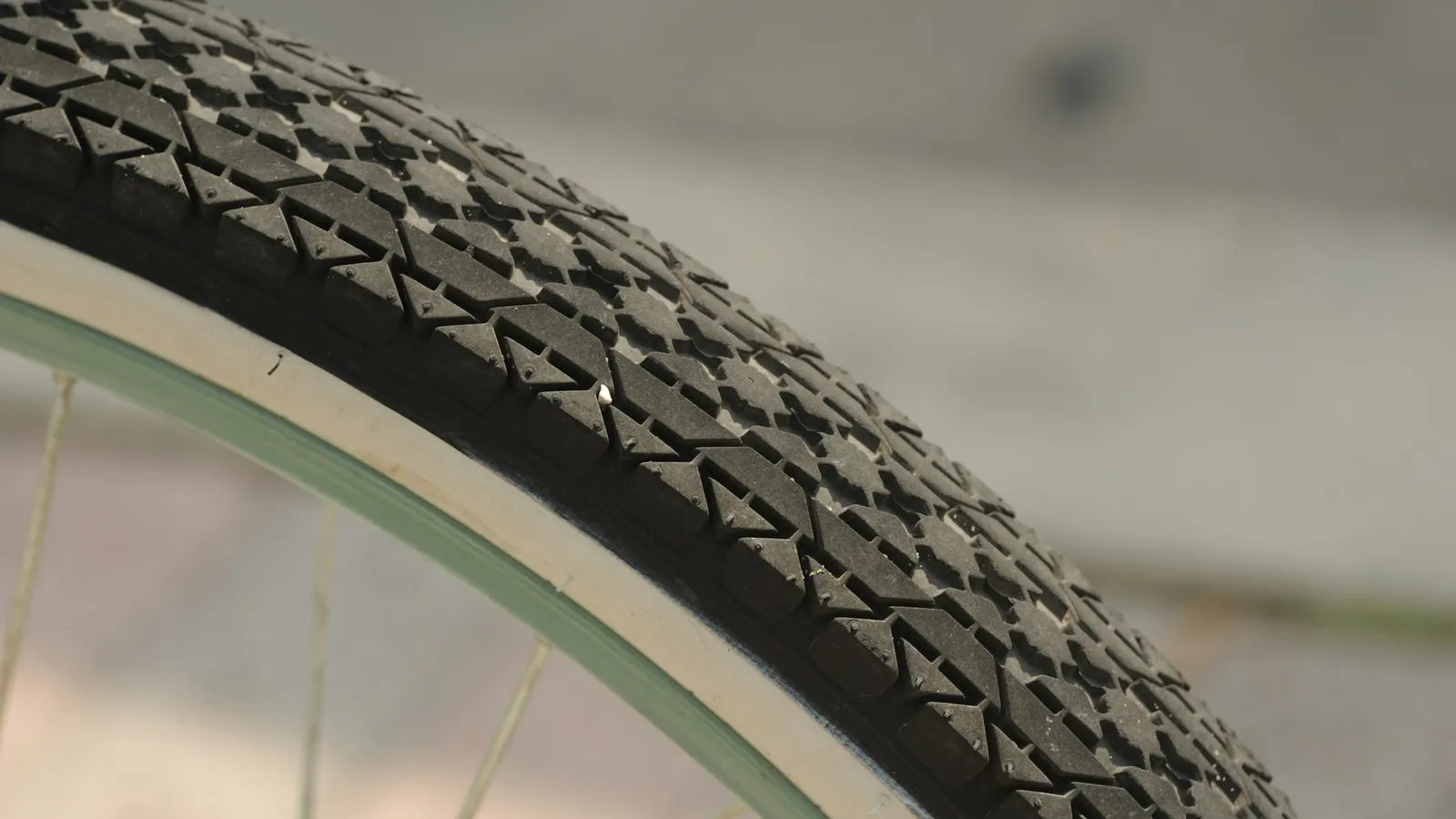
The older chapter calls friction "a necessary evil". We increase it with treaded tyres, grooved shoe soles and brake pads. We reduce it with lubricants such as oil and grease, wheels and ball bearings, smooth polished surfaces, and powder on a carrom board. It also notes that friction produces heat: rub your palms and they warm up.
Which mistakes cost marks?
"Friction only acts on moving objects." Static friction acts on an object at rest that you are trying to move.
"Friction always slows things down." It is what lets your shoes push you forward when you walk.
"Friction is non-contact." It needs surfaces to touch.
Reading the spring balance while the speed is changing. Pull steadily.
A practice routine for this chapter
Day 1: List four ways to increase friction and four ways to reduce it, from memory.
Day 2: Do the box activity on two surfaces at home and record which one stops the box sooner.
Day 4: Write the static, sliding and rolling order and one example of each.
Day 7: Explain why a car tyre needs treads but a bicycle hub needs ball bearings.
When you want to watch how surfaces and forces change motion, the Fermi Simulation Lab has interactive simulations for ideas that are easier to see than read. For the full picture of contact and non-contact forces, see our post on force and pressure in Class 8, and for the Class 11 version with numbers, try friction block problems.
Find one object at home that uses friction and one that fights it, and write a sentence on how each works.


