

On this page
Preparing a double salt is one of the shorter experiments in the Class 12 chemistry practical, and one of the easiest to rush. Students mix the salts, heat until something appears and lose marks on crystal quality, yield and viva questions about why the acid was added. This post explains the chemistry, works through the mass calculations and lists the questions examiners ask.
Where does this experiment sit in the syllabus?
The CBSE Chemistry curriculum for 2026-27 lists "Preparation of double salt of Ferrous Ammonium Sulphate or Potash Alum" in the Class 12 practical syllabus. The 30 practical marks are split as volumetric analysis 8, salt analysis 8, content-based experiment 6, project 4, and class record and viva 4. Mohr's salt also appears in the titration against KMnO4. The JEE (Main) 2026 syllabus and the NEET (UG)-2026 syllabus ask for "the chemistry involved in the preparation" of Mohr's salt and potash alum. Check the documents for your own year.
What makes a double salt different from a complex?
NCERT's Class 12 chapter Coordination Compounds draws the line. Double salts such as Mohr's salt, FeSO4·(NH4)2SO4·6H2O, and potash alum, KAl(SO4)2·12H2O, "dissociate into simple ions completely when dissolved in water". A complex ion such as [Fe(CN)6]⁴⁻ in K4[Fe(CN)6] does not break into Fe²⁺ and CN⁻.
So a solution of Mohr's salt gives the tests for Fe²⁺, NH4⁺ and SO4²⁻, just like a mixture of its two parent salts. Potash alum is often written K2SO4·Al2(SO4)3·24H2O, which is the same formula doubled.
How is each salt prepared?
The outline is the same for both. Follow your school's manual for exact quantities.
Weigh equimolar amounts of the two salts.
Dissolve them in the minimum amount of warm water containing a little dilute sulphuric acid.
Filter if the solution is not clear.
Concentrate by gentle heating until a drop on a glass rod shows crystals forming (the crystallisation point).
Let the solution cool slowly without disturbing it.
Separate the crystals, wash with a little cold water and dry between filter papers.
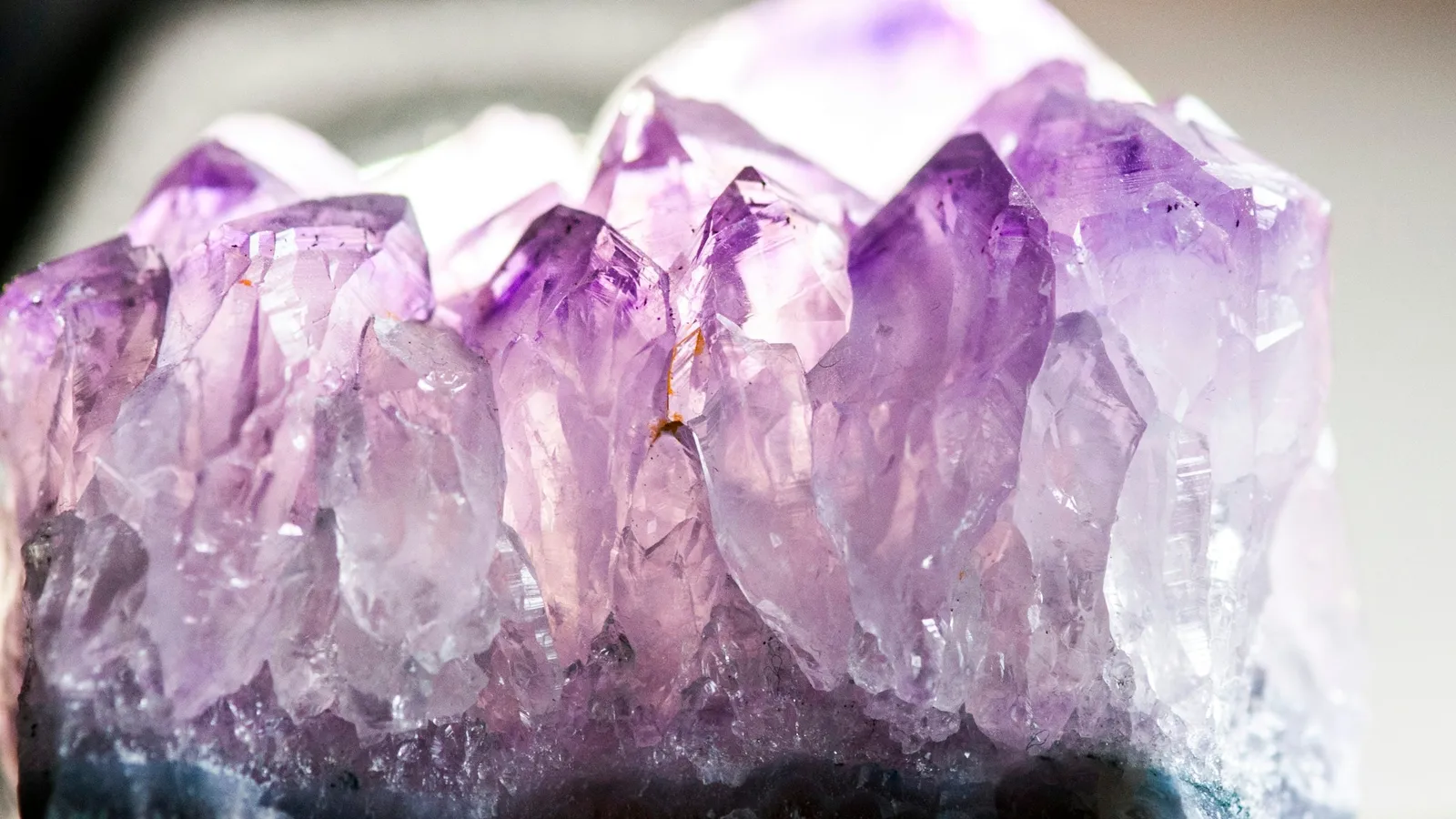
Why the dilute acid? Fe²⁺ and Al³⁺ ions hydrolyse in water and can form insoluble basic salts that make the solution cloudy. The acid suppresses this. For Mohr's salt there is a second reason not to heat for long: hot, air-exposed solutions oxidise Fe²⁺ to Fe³⁺, and the crystals turn yellowish instead of pale green. Potash alum crystals are colourless and octahedral.
How do you work out the masses and the yield?
Molar masses from PubChem: FeSO4·7H2O 278.02 g/mol, (NH4)2SO4 132.14 g/mol and Mohr's salt 392.1 g/mol.
Worked example 1: Mohr's salt. You start with 7.0 g of FeSO4·7H2O.
Moles: 7.0 / 278.02 = 0.0252 mol.
Ammonium sulphate needed (1 : 1): 0.0252 × 132.14 = 3.33 g.
Theoretical yield (one mole of Mohr's salt per mole of FeSO4): 0.0252 × 392.1 = 9.87 g.
If you collect 7.4 g of dry crystals (a sample figure), percentage yield = 7.4 / 9.87 × 100 = 75%.
Worked example 2: potash alum. You start with 2.0 g of K2SO4 (174.26 g/mol). The equation is
K2SO4 + Al2(SO4)3·18H2O + 6H2O → 2KAl(SO4)2·12H2O
Moles of K2SO4: 2.0 / 174.26 = 0.01148 mol.
Al2(SO4)3·18H2O needed (666.4 g/mol): 0.01148 × 666.4 = 7.65 g.
Each mole of K2SO4 gives two moles of alum (474.4 g/mol): 2 × 0.01148 × 474.4 = 10.89 g.
The water count balances: 18 + 6 = 24 on the left, 2 × 12 = 24 on the right. Yields below 100% are normal, because some salt stays dissolved in the mother liquor and some is lost on transfer.
Why plan before you enter the lab?
A review of more than 60 reports on pre-laboratory work in chemistry by Agustian and Seery (2017) argues, using cognitive load theory, that students cope better when the concepts and technique are introduced before the lab session, leaving attention free for the task. For this experiment, that means arriving with the equation, the masses and the reason for each step already written in your notebook.
What will the viva ask?
Why is dilute sulphuric acid added? (To prevent hydrolysis of Fe²⁺ or Al³⁺.)
Why not heat the Mohr's salt solution for long? (Fe²⁺ is oxidised to Fe³⁺.)
How is a double salt different from a complex? (It gives all its simple ions in solution.)
What is the crystallisation point, and how did you find it?
Why should cooling be slow?
What is the colour and shape of your crystals?
The ion tests behind the first answer are covered in our guide to salt analysis in the chemistry practical.
A practice routine before the practical
Write both preparation equations from memory and balance the water.
Do the mass and theoretical yield calculation for a starting mass your teacher gives you.
Write one line explaining each of the six steps.
Answer the viva questions aloud, in under 20 seconds each.
When a mole calculation goes wrong, look at the method, not just the answer. The Fermi Problem Library has worked problems with a step-by-step solver that explains the reasoning rather than printing an answer.
Before your next lab, write the equation and the expected yield for your double salt in your notebook.


