

On this page
A common household example of microbes at work is setting curd from milk. While it might just look like milk thickening overnight, a precise sequence of biological and chemical changes is taking place, driven by millions of microscopic workers. This transformation from a liquid to a semi-solid food not only extends its shelf life but also fundamentally alters its nutritional chemistry.
How does milk turn into curd?
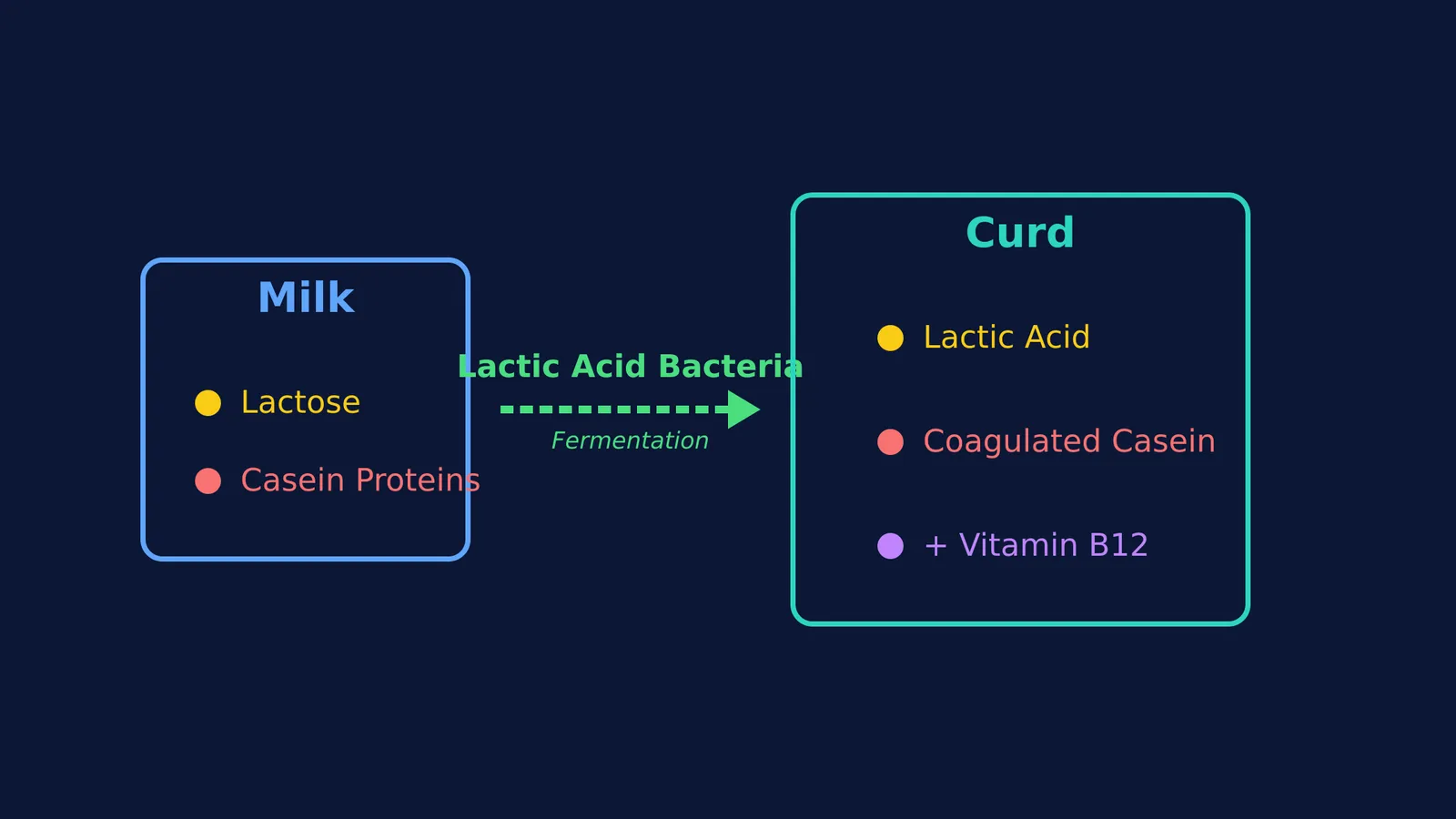
The process begins with an inoculum or "starter"—a small amount of curd added to fresh milk. This starter contains millions of lactic acid bacteria (LAB), such as *Lactobacillus*. When kept at a suitable temperature, these bacteria multiply rapidly.
As the LAB grow in the milk, they consume lactose, which is the primary sugar found in milk. Through the process of fermentation, the bacteria convert this lactose into lactic acid. The continuous production of lactic acid causes the pH of the milk to drop steadily.
Milk contains a group of proteins called casein, which normally remain suspended in the liquid. However, as the milk becomes more acidic and approaches a pH of around 4.6, the casein proteins lose their electrical charge and begin to clump together. The acidic environment causes the milk proteins to coagulate and partially digest. This coagulation turns the liquid milk into the semi-solid curd you see the next morning.
Why is curd more nutritious than milk?
Setting curd does not just change the texture of milk; it upgrades its nutritional profile. The conversion process carried out by the lactic acid bacteria significantly improves the nutritional quality of the milk by increasing its vitamin B12 content.
Vitamin B12, also known as cobalamin, is essential for DNA synthesis, red blood cell formation, and proper nerve function, but the human body cannot make it. The daily Recommended Dietary Allowance for vitamin B12 for adults is 2.4 mcg.
Because vitamin B12 is primarily found in animal products or fortified foods, vegetarians must carefully manage their intake. A typical 100 g serving of plain, nonfat Greek yogurt contains about 0.75 mcg of vitamin B12, making fermented dairy a valuable source of this nutrient. The bacterial synthesis of vitamins during fermentation means that a bowl of curd can deliver more of this vital nutrient than the equivalent volume of unfermented milk.
What happens to LAB in your stomach?
The benefits of lactic acid bacteria do not stop once the curd is eaten. When these bacteria reach your stomach, they play a highly beneficial role. LAB help check the growth of disease-causing microbes, acting as a natural defence line in the digestive tract.
The human digestive system is home to a complex community of microorganisms. When you consume foods rich in live lactic acid bacteria, these beneficial microbes enter this ecosystem. They compete with harmful pathogens for nutrients and attachment sites on the intestinal walls. Furthermore, by continuing to produce lactic acid and other antimicrobial substances, LAB create a local environment that makes it difficult for harmful bacteria to survive and multiply. This probiotic effect is one of the reasons fermented foods have been valued for digestive health across different cultures for centuries.
Studying microbes for the exam?
Questions about the exact sequence of how milk turns into curd—and the specific benefits of LAB in the stomach—are a regular feature in board exams and NEET-UG. Rote learning the facts is one approach, but understanding the chain of events makes it much harder to forget. Once you recognise that the conversion is simply bacterial fermentation lowering the pH to coagulate casein, the entire process logically follows.
If you want to see exactly how these ideas connect, the Fermi Concept Library explains every concept in physics, chemistry, biology, mathematics and computing, each with its own lesson and its place in the map. And when you are practising and get stuck on a tricky assertion-reason question about microbes, the Fermi Problem Library has worked problems with a step-by-step solver that explains the reasoning rather than printing an answer.


