

On this page
Why is it dangerous to touch a switch with wet hands, and how does a cheap metal get a shiny chromium coat? Both answers come from the same chapter. This post explains which liquids conduct, what current does inside a solution, how electroplating works, works one mass-balance example, and tells you where the topic sits in the NCERT books.
Is this chapter in the 2026-27 Class 8 book?
Not as a chapter. NCERT's current Class 8 book, Curiosity, is marked "Reprint 2026-27". Its electricity chapter, Chapter 4, "Electricity: Magnetic and Heating Effects", covers electromagnets, heating and how a battery works. "Chemical Effects of Electric Current" was Chapter 11 of the older Class VIII book, which some schools and boards may still use. Check with your teacher.
The two books meet in the middle. Curiosity's voltaic cell uses a chemical reaction to make electricity. The older chapter does the opposite: it uses electricity to drive a chemical reaction.
Which liquids conduct electricity?
The older chapter builds a tester from a cell, wires and a bulb or LED. Dip the free ends into a liquid; if the bulb glows, the liquid conducts. Its findings:
Most liquids that conduct are solutions of acids, bases and salts. Lemon juice and vinegar conduct.
Distilled water is a poor conductor, because it has no dissolved salts. Add a pinch of salt and it conducts.
Tap, well and pond water conduct, because they contain small amounts of dissolved mineral salts.
That last point is the safety lesson. The chapter says never to handle electrical appliances with wet hands or while standing on a wet floor. It also suggests calling materials good or poor conductors rather than conductors and insulators, since most materials conduct under some conditions.
What does current do inside a solution?
The chapter states that current through a conducting solution causes chemical reactions. You may see:
Gas bubbles on the electrodes,
Metal deposits on an electrode,
A change in the colour of the solution.
It describes William Nicholson's 1800 result: with electrodes in water, oxygen bubbles formed on the electrode joined to the positive terminal and hydrogen on the other. These changes are the chemical effects of electric current. For the scientist who used this idea to find new elements, see our post on Humphry Davy and electrolysis.
How does electroplating work?
Electroplating means depositing a layer of one metal on another material using electricity. The older chapter's activity:
Dissolve copper sulphate in distilled water and add a few drops of dilute sulphuric acid to help it conduct. This needs an adult or teacher present.
Clean two copper plates with sandpaper and connect them to a battery.
Dip them in the solution and pass current for about 15 minutes.
The plate joined to the negative terminal gets a copper coating. The chapter explains that copper from the solution is drawn to that plate, and an equal amount of copper dissolves from the other plate, so the solution keeps its copper. In effect, copper moves from one plate to the other. It also notes that a carbon rod works in place of the negative plate and still gets coated.
Why do we electroplate things?
The chapter gives four uses:
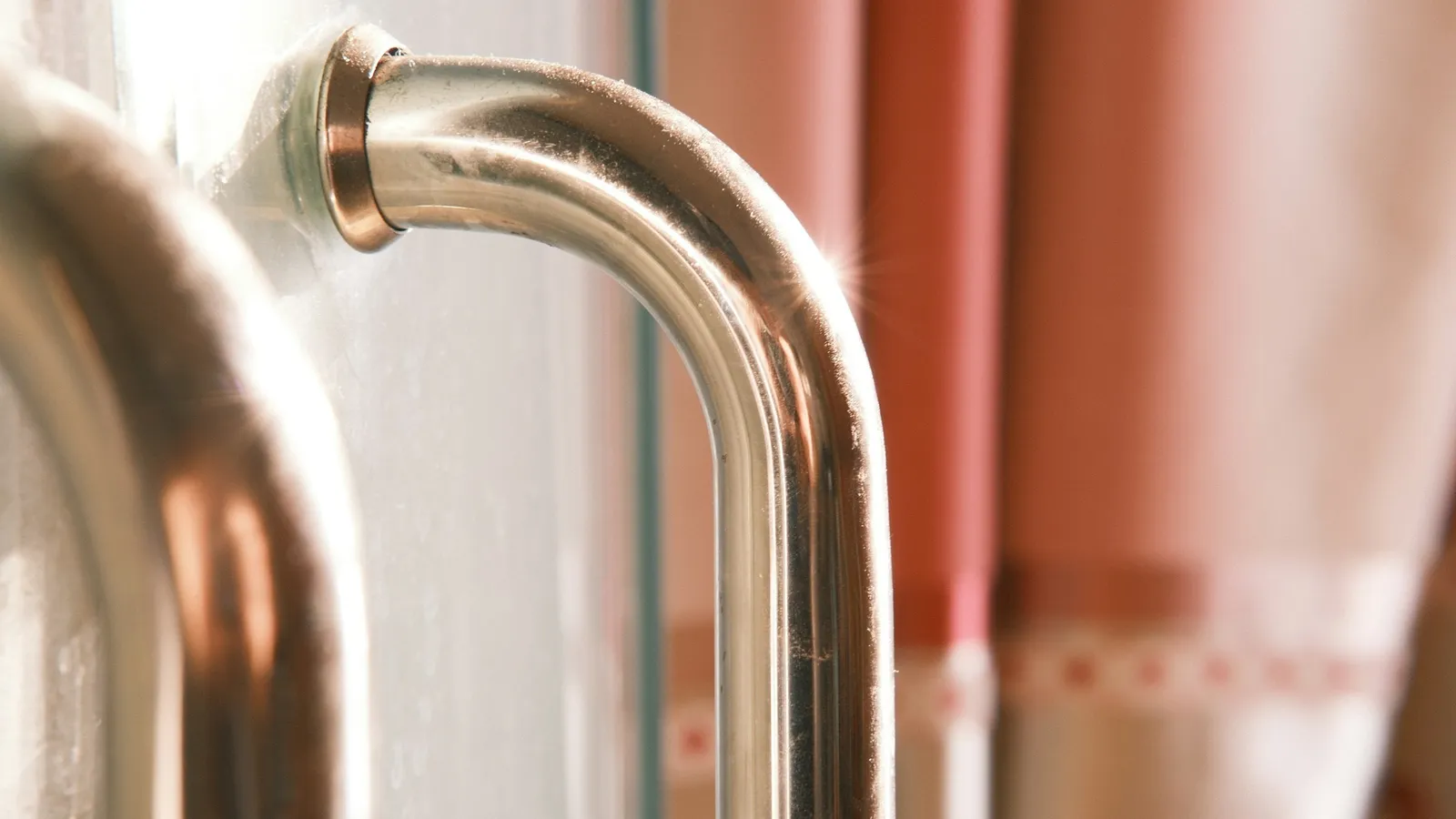
Chromium on taps, bicycle handlebars and car parts: shiny, does not corrode, resists scratches. Chromium is expensive, so only a coat is used.
Silver and gold on cheaper metals for jewellery.
Tin on iron for food cans, because tin is less reactive than iron.
Zinc on iron to protect it from rusting.
It also warns that the used solution from plating factories is polluting waste with specific disposal rules.
Worked example: where did the copper go?
You copper-plate a carbon rod using a copper plate as the other electrode. Before you start, the rod weighs 12.40 g and the copper plate weighs 25.00 g. After 15 minutes, the rod weighs 12.58 g.
Copper gained by the rod = 12.58 − 12.40 = 0.18 g.
If copper simply moves from plate to rod, the plate loses the same amount: 0.18 g.
Expected mass of the plate = 25.00 − 0.18 = 24.82 g.
Total mass of both electrodes before = 37.40 g; after = 12.58 + 24.82 = 37.40 g. Nothing is created or lost; it only moves.
The numbers are made up for practice, but the reasoning follows the chapter's explanation. In a real experiment the plate's loss may not match exactly, because some copper can fall off or the solution can change slightly. Later, in higher classes, you will calculate the mass deposited from the current and time. Our guide to electrolysis and Faraday's laws shows how.
Which mistakes cost marks?
Coating on the positive terminal. The deposit forms on the negative one.
"Pure water conducts well." Distilled water is a poor conductor; impurities make tap water conduct.
Calling electroplating a physical change. It works through chemical reactions at the electrodes.
Forgetting why chromium is used as a thin coat. It is expensive.
A practice routine for this chapter
Day 1: From memory, list three signs of a chemical effect of current.
Day 2: Draw the copper plating set-up and label the positive and negative plates.
Day 4: Redo the worked example with a rod that gains 0.25 g (answer: plate 24.75 g).
Day 7: Explain to someone why wet hands and switches do not mix.
If you mix up which electrode does what, the Fermi Problem Library has a step-by-step solver that explains the reasoning rather than printing an answer.
This week, look around your home for one chromium-plated object and one zinc-coated one, and write why each was plated.


