

On this page
The anterior pituitary (or adenohypophysis) is the master control centre for much of your endocrine system. According to the Cleveland Clinic, the anterior lobe accounts for approximately 80% of the pituitary gland's total weight. It regulates a vast array of the body's functions by dispatching chemical messengers through the bloodstream to other glands and tissues.
There are six primary hormones produced by this lobe, along with a seventh produced by the vestigial intermediate layer.
What are the 6 anterior pituitary hormones?
FSH (Follicle-Stimulating Hormone)
LH (Luteinizing Hormone)
ACTH (Adrenocorticotropic Hormone)
TSH (Thyroid-Stimulating Hormone)
PRL (Prolactin)
GH (Growth Hormone)
(The "e" in the mnemonic stands for endorphins, which are also produced here but are generally treated separately from the six primary regulators.)
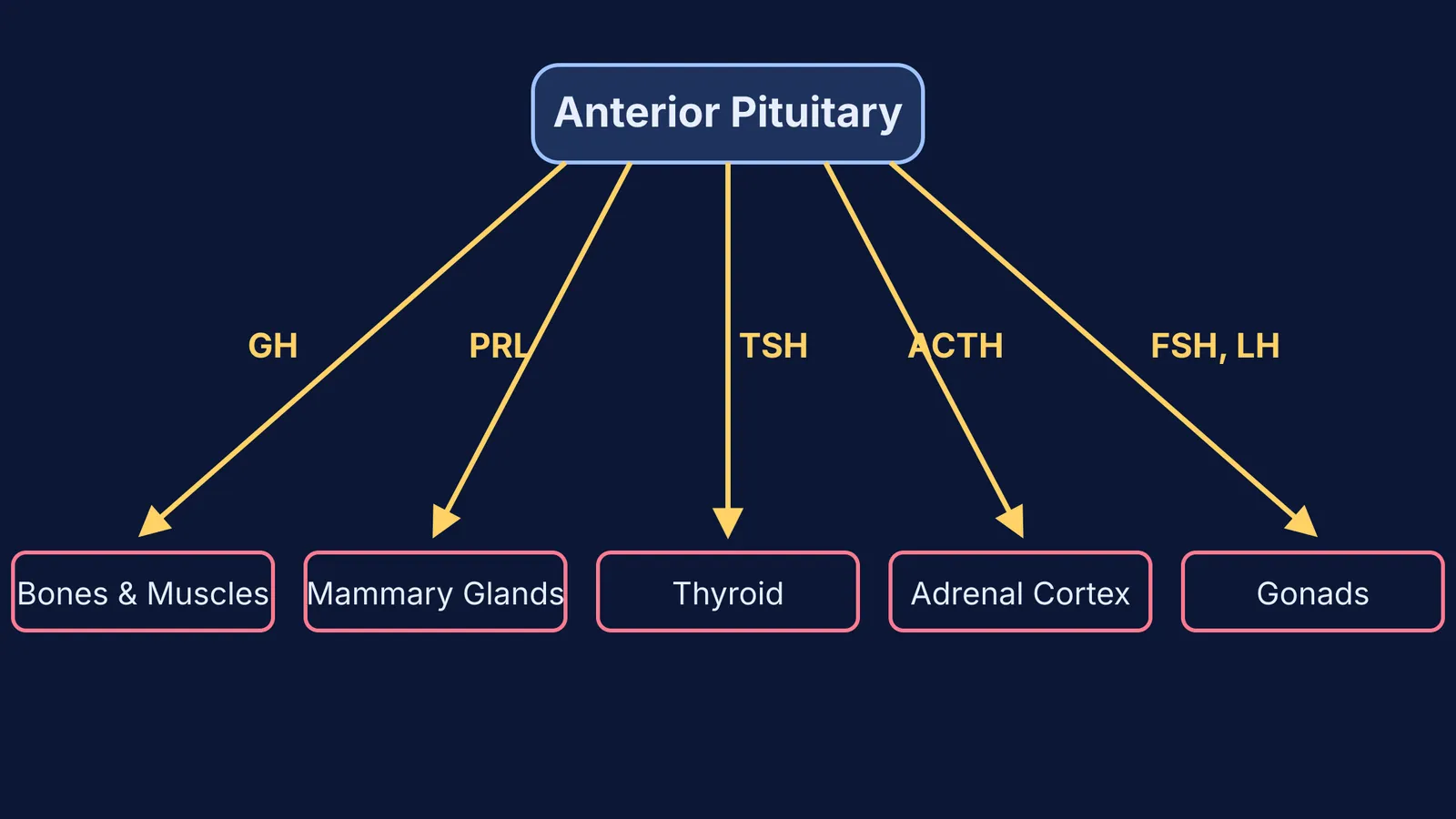
What does each anterior pituitary hormone target?
The hormones are categorised by whether they stimulate another endocrine gland (tropic hormones) or act directly on non-endocrine tissues (direct hormones).
Tropic hormones
TSH targets the thyroid gland: It triggers the thyroid's follicular cells to synthesize and release T3 and T4, the hormones that control your basal metabolic rate.
ACTH targets the adrenal cortex: It travels to the adrenal glands sitting on top of the kidneys, stimulating them to produce cortisol (your primary stress hormone) and adrenal androgens.
LH and FSH target the gonads: In females, these hormones control the ovarian cycle, triggering ovulation, progesterone production, and estrogen synthesis. In males, they act on the testes to regulate testosterone and sperm production.
Direct hormones
GH targets bones, muscles and the liver: Growth hormone promotes cellular growth and protein synthesis across the body. It also stimulates the liver to produce Insulin-like Growth Factor-1 (IGF-1), which drives bone and tissue growth.
PRL targets the mammary glands: Prolactin's primary role is to stimulate breast tissue development and milk production after childbirth.
If you are reviewing human physiology for exams and struggling to link these pathways together, the Fermi Concept Library covers every concept in physics, chemistry, biology, mathematics and computing, each with its own lesson and its place in the map.
Where does MSH from the pars intermedia fit in?
While the anterior lobe secretes the six primary hormones, the pituitary gland has a distinct intermediate layer called the pars intermedia. According to the medical literature summarised on Wikipedia, the pars intermedia produces melanocyte-stimulating hormone (MSH).
Because it originates here, MSH is sometimes referred to as an intermedin. Its target is the melanocytes in the skin, where it stimulates the production of melanin—the pigment responsible for skin darkening. In adult humans, the pars intermedia is vestigial (reduced to just a few scattered cells), but MSH is still produced and plays a role in hyperpigmentation, such as the temporary skin darkening that happens during pregnancy.
How does the hypothalamus control this list?
The anterior pituitary does not act alone; it takes its orders directly from the hypothalamus above it.
Unlike the posterior pituitary, which stores hormones like ADH and oxytocin sent directly through nerve axons, the anterior lobe is a true glandular tissue. The hypothalamus secretes releasing and inhibiting factors (such as TRH or GnRH) into a dedicated blood vessel network called the hypophyseal portal system. These factors flow down to the anterior pituitary, telling it exactly which of the six hormones to release and when, perfectly tuning your hormone receptors to the physiological demands of the moment.


