

On this page
What happens when aluminium meets concentrated nitric acid?
Normally, acids dissolve metals. But concentrated nitric acid is a powerful oxidising agent (Nitric acid, Wikipedia). When it touches aluminium, it oxidises the surface atoms immediately, following this chemical reaction:
2Al + 6HNO₃ → Al₂O₃ + 6NO₂ + 3H₂O
Aluminium is oxidised, meaning its oxidation state increases from 0 in the elemental metal to +3 in the aluminium oxide. At the same time, the nitrogen in the nitric acid is reduced. The oxidation state of nitrogen drops from +5 in HNO₃ to +4 in nitrogen dioxide (NO₂), which is a toxic brown gas often seen during the initial, fleeting reaction.
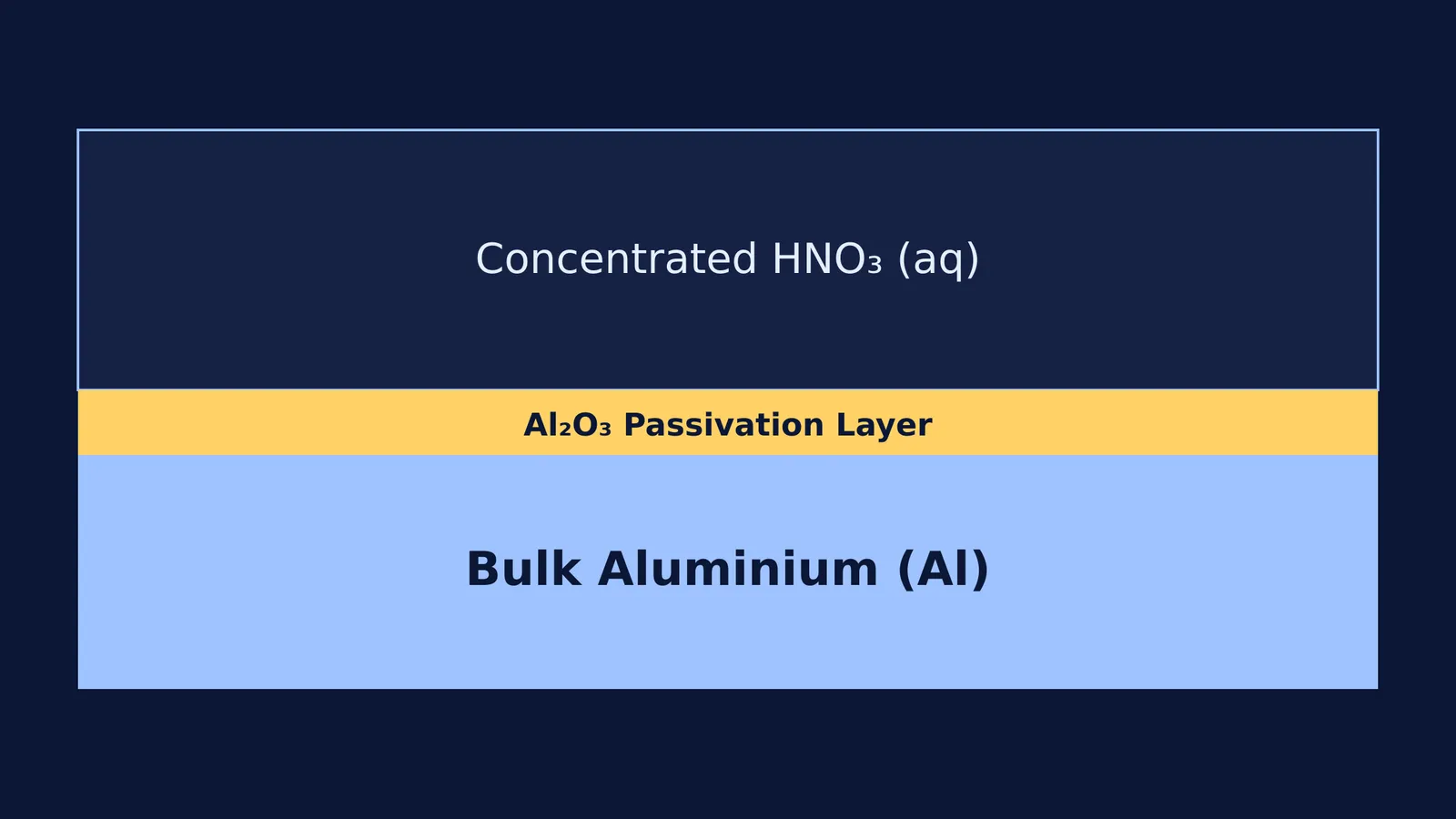
This rapid oxidation creates a continuous barrier of aluminium oxide (Al₂O₃) that is roughly 5 nanometres thick (Aluminium, Wikipedia). Because this oxide layer is highly dense and insoluble in the acid, it tightly seals the bulk metal off from the liquid above. The reaction stops almost as soon as it begins, rendering the metal entirely passive.
If you are unsure how to track the movement of electrons or balance the oxidation states in redox equations like this, the Fermi Problem Library has worked problems with a step-by-step solver that explains the reasoning rather than printing an answer.
What happens with dilute nitric acid?
To understand passivity fully, it helps to compare it with the behaviour of dilute nitric acid. When aluminium is placed in a dilute solution, the oxidising power of the acid is much lower. Instead of forming a dense, self-sealing oxide layer in an instant, the acid slowly attacks the metal surface.
This slower reaction produces aluminium nitrate in solution and, depending on the exact concentration and temperature, various reduction products like nitrogen monoxide (NO) or even ammonium nitrate. The key difference lies entirely in the concentration. It is the strong, immediate oxidising power of the concentrated acid that forces the instantaneous formation of the protective Al₂O₃ barrier before the metal has a chance to dissolve.
Why are aluminium containers used for transport?
In industry, transporting highly corrosive chemicals is a serious logistical challenge. Standard carbon steel corrodes rapidly, and many synthetic plastics will structurally degrade or melt when exposed to strong oxidising agents.
Aluminium offers a lightweight, affordable, and structurally strong alternative. Because the concentrated nitric acid inherently maintains the metal's passive oxide layer, the inside of an aluminium transport tank continuously repairs its own protective lining. If a tiny scratch occurs, the exposed metal is instantly oxidised by the acid, sealing the breach. As long as the concentration remains high, the tank is practically immune to corrosion from the inside.
This passivity is not unique to aluminium. Iron and chromium also become passive in concentrated nitric acid, which is why stainless steel (an alloy containing chromium and iron) is another excellent material for acid storage. In the p-block of the periodic table, beryllium shares this passive trait, providing one of the classic examples of the diagonal relationship between beryllium and aluminium.
Can the passive layer be removed?
Yes, passivity is a surface state, not a permanent change to the bulk metal. The passivity lasts only as long as the oxide layer remains intact.
If you physically scratch the surface deep enough, the metal will react briefly until a new oxide layer forms. More importantly, if you expose the passivated metal to substances that chemically dissolve the oxide, the barrier breaks down and the bulk metal is exposed again. Hot, concentrated hydrochloric acid or strong aqueous alkalis like sodium hydroxide are known to destroy the aluminium oxide layer, stripping away the metal's passive defence.
A quick checklist for the exam
When answering questions about the passivity of aluminium, ensure you hit the key marking points examiners look for:
State that concentrated nitric acid is a strong oxidising agent.
Name the protective layer that forms (aluminium oxide or Al₂O₃).
Explain that the layer is non-porous and physically stops further contact between the acid and the metal.
Mention the practical, real-world use: transporting and storing the acid in aluminium containers.
To see how aluminium is separated from its ore before it ever sees an acid, read about how electrolysis made aluminium cheap. For more on the wider chemistry of nitrogen's oxoacids, review the trends in p-block groups 15 to 17.


