

On this page
Aestivation questions look like pure memory: four names, a handful of plants. But diagram-based questions show a bud cross-section and ask you to name the type, and that needs a method. This post gives a margin-checking method, a worked identification, and the confusions that cost marks.
Where is it in the NEET syllabus and NCERT?
The NEET (UG) 2026 syllabus lists the morphology of the flower under Unit 2, "to be dealt along with the relevant practical", and names five families: Malvaceae, Cruciferae, Leguminosae, Compositae and Gramineae. The NCERT Class 11 chapter Morphology of Flowering Plants (2026-27 reprint) defines aestivation in section 5.5.1.2, but now describes only one family in detail, Solanaceae, whose calyx and corolla it gives as valvate. So for the families in the syllabus list, your practical manual and teacher's notes matter.
What exactly is aestivation?
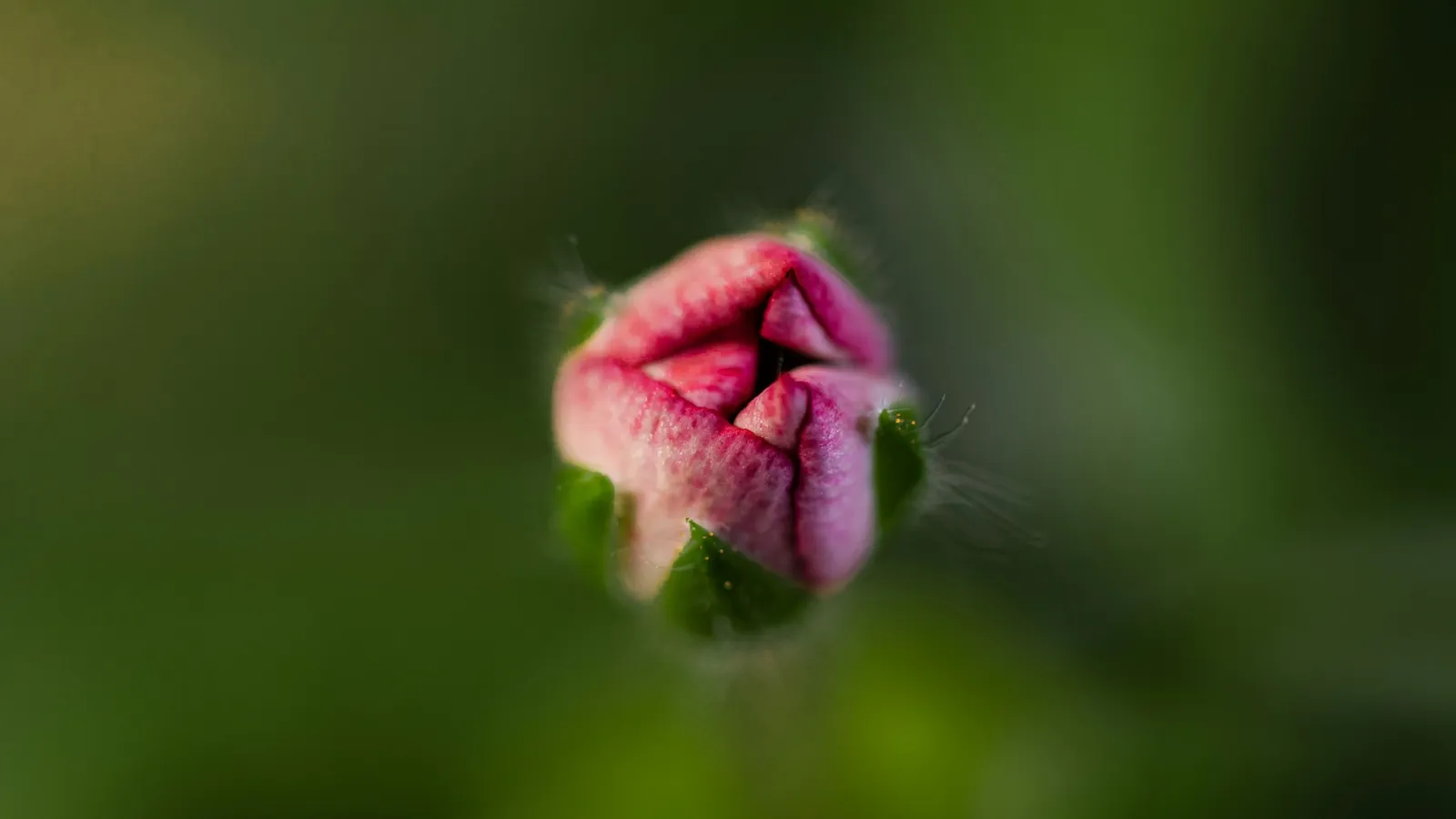
NCERT defines it as "the mode of arrangement of sepals or petals in floral bud with respect to the other members of the same whorl". Two words carry the marks: bud, because the arrangement is seen before the flower opens, and same whorl, because it compares petals with petals, not petals with stamens.
What are the four types?
From NCERT:
Valvate: margins just touch, without overlapping. Example: *Calotropis*.
Twisted: one margin of each overlaps the next, and so on round the whorl. Examples: china rose, lady's finger, cotton.
Imbricate: margins overlap, but not in any particular direction. Examples: *Cassia*, gulmohur.
Vexillary (papilionaceous): in pea and bean, five petals; the largest (standard) overlaps the two wings, which overlap the two smallest (keel).
How can you tell them apart from a diagram?
Look at each of the five places where neighbouring petals meet, and mark which petal is on top. Then ask, for each petal: are both of its margins on top, both underneath, or one of each?
No overlap anywhere: valvate.
Every petal has one margin on top and one underneath: twisted. The overlaps all run in the same direction round the bud.
At least one petal has both margins on top, and at least one has both underneath: imbricate. When the direction of overlap reverses as you go round, it creates one petal that is outside on both sides and one that is inside on both. So these two kinds of petal always come in equal numbers.
One large petal outside on both margins, two side petals over two small inner ones: vexillary.
Worked example
A bud diagram shows five petals, numbered clockwise. Petal 1 overlaps petals 2 and 5. Petal 3 is overlapped by petals 2 and 4. Petals 2, 4 and 5 each overlap one neighbour and are overlapped by the other. What type is it?
Petal 1 is outside on both margins.
Petal 3 is inside on both margins.
One fully outside, one fully inside: the direction of overlap changes, so it is not twisted.
The petals are not described as standard, wings and keel, so it is not vexillary.
Answer: imbricate, as in *Cassia* or gulmohur. Now change the description so that every petal overlaps its clockwise neighbour. Every petal is then one-in, one-out, and the answer becomes twisted, as in china rose.
Which mistakes cost marks?
Calling *Calotropis* twisted. It is NCERT's valvate example.
Counting vexillary petals wrongly. There are five: one standard, two wings and two keel petals.
Mixing aestivation with placentation, which is about ovules in the ovary.
Describing an open flower; aestivation is read in the bud.
Why draw the buds yourself?
In seven experiments, Wammes, Meade and Fernandes (2016) found that people recalled words they had drawn better than words they had written out, and the benefit held across settings and instructions. Drawing four small bud diagrams is a fast way to use that.
A practice routine
Draw the four bud cross-sections from memory, with arrows showing each overlap.
Under each, write NCERT's example plants.
Make up two bud descriptions like the worked example and identify them using the margin test.
Revisit the whole chapter with our guide to floral formulas and plant morphology.
If a term in the chapter still feels vague, the Fermi Concept Library covers every concept in biology with its own lesson, so you can look up one idea and come back.
Today, draw the four bud diagrams without the book, then check them against NCERT Figure 5.11.


